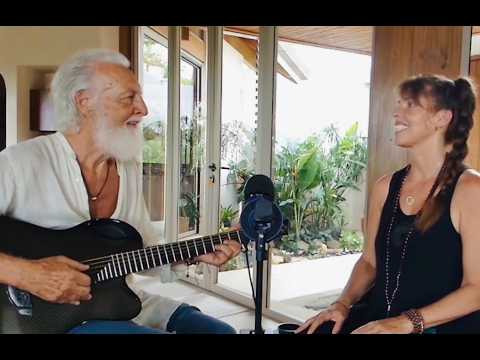
This video documents Deva Premal singing the Gayatri Mantra—one of Hinduism's most sacred and ancient chants—across 32 different countries worldwide. The project visually illustrates how this 3,000+ year-old Sanskrit invocation transcends cultural and geographic boundaries, uniting practitioners from diverse traditions under a single spiritual intention. The mantra invokes the universal source of all light and wisdom, asking for illumination and true happiness across all planes of existence. By presenting the mantra in varied landscapes and communities, the video demonstrates that certain spiritual practices possess inherent universality and can resonate equally in temples, nature, and urban centers globally.
What Is the Gayatri Mantra and Why Is It Revered?
The Gayatri Mantra is one of the oldest and most revered chants in Hindu and broader Indian spiritual traditions. Composed in Sanskrit, it appears in the Rig Veda and has been recited for thousands of years as a foundational practice in yoga, meditation, and daily worship. The mantra itself reads:
Om bhur bhuvah svaha
Tat savitur varenyam
Bhargo devasya dhimahi
Dhiyo yonah prachodayat
The traditional translation conveys:
Praise to the source of all things. It is due to you that we attain true happiness on all planes. It is due to your transcendent nature that you are being worshipped and adored. Ignite us with your all pervading light.
The mantra addresses Savitur, the solar deity, as a symbol of universal consciousness and the source of all existence. Rather than a petitionary prayer, the Gayatri is structured as an invocation of light and wisdom. The opening "Om" sets the vibrational foundation; "bhur bhuvah svaha" establishes the three planes of existence (physical, subtle, and causal). The remaining verses ask for divine illumination and the activation of higher intelligence (represented by the word "dhiyo," meaning intellect or consciousness).
Its reverence stems partly from its cosmological structure—it encodes within its words a complete spiritual philosophy about the nature of reality and humanity's relationship to the divine source. Many practitioners recite it at dawn, when the sun rises, aligning the physical phenomenon with the metaphorical awakening of inner light.
How Does Deva Premal's Global Performance Demonstrate Universal Spiritual Practice?
By performing the Gayatri Mantra in 32 different countries, Deva Premal creates a visual and sonic testament to the mantra's capacity to transcend cultural, linguistic, and geographic specificity. The video shows the chant being sung in temples, natural landscapes, cities, and rural areas—each setting a different backdrop yet the mantra remaining unchanged in its Sanskrit form and essential meaning.
This approach speaks to a core spiritual insight: certain practices and utterances possess intrinsic power that does not depend on the singer's or listener's native language or cultural context. The Gayatri Mantra, when intoned with clear pronunciation and conscious intention, carries its vibration and meaning regardless of whether the practitioner is a Hindu priest in India, a yoga student in California, or a spiritual seeker in Brazil. The multiplicity of locations underscores that spiritual aspiration—the longing for light, wisdom, and true happiness—is not confined to any one geography or tradition.
The project also reflects a broader shift in how ancient practices migrate globally. Rather than presenting the mantra as exotic or foreign, Deva Premal normalizes it as a tool available to sincere practitioners anywhere. The diverse communities shown singing or listening to the mantra suggest that the hunger for connection to something transcendent is genuinely universal.
What Do the Four Lines of the Gayatri Mantra Mean?
Breaking down the mantra line by line reveals layers of spiritual meaning:
Om bhur bhuvah svaha: This opening invocation establishes the three realms of consciousness. "Bhur" refers to the physical plane and our embodied experience; "bhuvah" points to the subtle realm of emotions, thoughts, and energies; "svaha" represents the causal realm, the seat of pure consciousness and spiritual truth. By invoking all three, the mantra acknowledges that seekers inhabit multiple dimensions of existence simultaneously and require illumination at each level.
Tat savitur varenyam: This line addresses the source of all light and energy (Savitur, the sun deity symbolizing cosmic consciousness). "Tat" means "that"—pointing to something beyond ordinary comprehension; "varenyam" means worthy of worship and adoration. The line recognizes that there exists a supreme source worthy of reverence and acknowledgment.
Bhargo devasya dhimahi: "Bhargo" translates as the radiant, transcendent light or glory of the divine. "Devasya" means divine or of the gods. "Dhimahi" means to meditate upon or contemplate. This line asks: may we contemplate and meditate upon the transcendent radiance of the divine source. It is an invitation to turn the mind toward higher reality.
Dhiyo yonah prachodayat: "Dhiyo" refers to intellect, intelligence, and consciousness. "Yonah" means "our" and "prachodayat" means to impel, ignite, or awaken. The final line is a direct request: may that divine light awaken and enliven our consciousness, ignite our intellect, and propel us toward truth and wisdom. This is the practical, transformative aspect of the mantra—it is not merely praise but a petition for inner awakening.
Why Does Chanting the Gayatri Mantra Create Spiritual Effect?
In the Sanskrit and yoga traditions, mantra is understood not as mere recitation of words but as a vibrational technology. The specific sounds, syllables, and meter of the Gayatri Mantra are believed to resonate with cosmic frequencies and to attune the practitioner's nervous system to higher states of consciousness.
When chanted aloud or internally, the mantra engages several aspects of being simultaneously. The vocal cords and mouth produce precise articulations; the breath carries intention; the mind focuses on meaning; and the emotional body opens to reverence. This integration of body, breath, mind, and spirit creates a state of coherence that is thought to facilitate spiritual development.
The 24-syllable structure of the Gayatri is not arbitrary; it reflects sacred numerology and is said to correspond to aspects of cosmic order. Some traditions teach that each line addresses a different plane or dimension, so reciting the complete mantra creates a comprehensive spiritual transmission. Modern research on chanting has shown that rhythmic vocalization can stabilize heart rate, lower cortisol, and increase parasympathetic tone—effects that align with the subjective reports of peace and clarity that practitioners often describe.
Deva Premal's approach, with her trained voice and conscious intention, magnifies these effects. Her renditions are not performed casually but with reverence and musicality, inviting listeners to a state of receptivity rather than passive consumption.
How Can Beginners Start Practicing the Gayatri Mantra?
For those new to mantra practice, the Gayatri Mantra offers both accessibility and depth. A simple approach is to listen to recordings—such as Deva Premal's—and allow the vibration to work on the nervous system without forcing understanding. Many practitioners find that simply hearing the mantra repeatedly begins to create familiarity and resonance.
Beginners can also learn the correct pronunciation and recite it silently or aloud. The traditional practice is to chant the mantra 108 times, a number considered sacred in Hindu and yoga traditions. Some practitioners do this once daily, often at sunrise. Others integrate a few repetitions into their meditation or yoga practice.
The mantra does not require belief in Hindu theology to be effective; many secular practitioners and those from other traditions use it as a tool for focus, calm, and connection to something greater than the individual self. The key is sincere intention and consistent practice. Over time, many report that the mantra becomes internalized, arising spontaneously in moments of stress or when seeking clarity.
What Is the Historical and Spiritual Significance of the Gayatri Mantra?
The Gayatri Mantra appears in the Rig Veda, Hinduism's oldest sacred text, estimated to have been composed between 1500 and 1200 BCE. Its presence in such an ancient source attests to its centrality in Indian spiritual culture. Historically, the mantra was recited by Brahmin priests as part of their daily ritual obligations, and it remains a cornerstone of many Hindu spiritual practices.
Beyond its religious significance, the Gayatri Mantra has been embraced by major spiritual movements and teachers. Sri Aurobindo, Swami Vivekananda, and other modern Indian philosophers elevated the mantra as a practice available to all seekers, not only priests. Maharishi Mahesh Yogi integrated Gayatri-like mantra practices into Transcendental Meditation. In the West, yoga and meditation teachers have presented the Gayatri as a bridge between ancient wisdom and contemporary spiritual seeking.
The mantra's universality lies in what it addresses—light, consciousness, wisdom, and the desire for awakening—themes that transcend culture and era. In an age of information overload and spiritual fragmentation, the Gayatri offers a simple, direct practice rooted in thousands of years of human spiritual aspiration.
Where to Go From Here
Exploring the Gayatri Mantra can begin with listening to Deva Premal's recordings, available through her music platforms and the Gayatri Sangha App. For deeper study, texts like the Yoga Sutras of Patanjali and commentaries on the Upanishads provide philosophical context for mantra practice. Practitioners interested in learning correct pronunciation and traditional recitation methods may benefit from studying with a yoga or Sanskrit teacher. The key is to approach the practice with curiosity and openness, allowing the mantra to reveal its effects through consistent, sincere engagement rather than intellectual analysis alone. Many find that the Gayatri becomes a lifelong companion in spiritual practice, a touchstone to return to in moments of confusion, fatigue, or spiritual seeking.