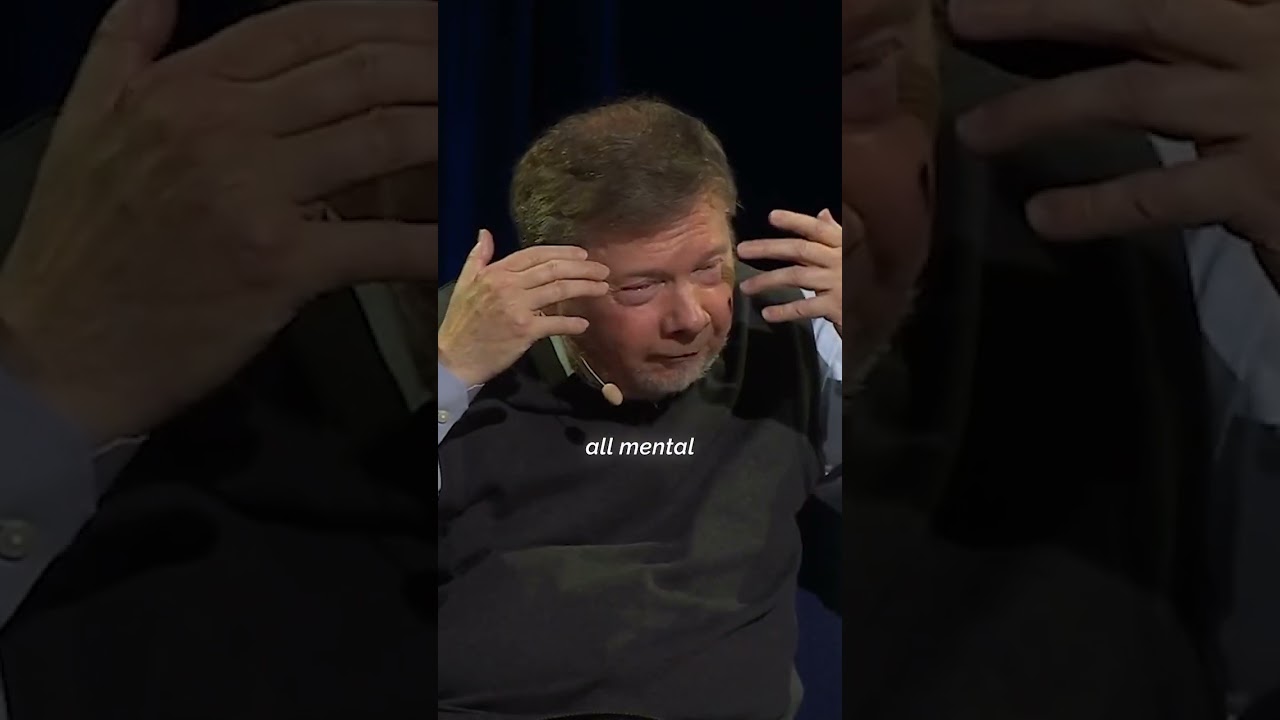
This teaching focuses on the central insight that life exists only in the present moment—the now—and that our conceptual overlay of time (past, future, narrative identity) creates suffering and disconnects us from our actual aliveness. The instruction is to recognize that "your life is now," not somewhere in an imagined timeline, and to practice returning attention to direct sensory and felt experience rather than mental time-travel. This is foundational to Tolle's non-dual approach to presence and consciousness.
Why Does the Concept of Time Create Suffering?
Eckhart Tolle's core teaching begins with a simple observation: the mind creates a sense of time by constantly narrating a story about past and future. We rehearse what has happened, anticipate what might occur, and build an identity around these mental narratives. This perpetual time-traveling keeps consciousness fragmented across memory and projection, leaving the present moment seemingly empty or boring by comparison.
The problem is not time itself as a practical measurement, but the psychological identification with time. When we collapse our sense of self into a timeline—believing "I am the one to whom things happened, and I am the one who must prepare for what's coming"—we lose touch with the aliveness of now. The present moment, by contrast, contains no problem. It is simply what is happening. Pain, difficulty, and resistance arise only when the mind compares the present to how it thinks things should be (a past reference) or what it fears might occur (a future projection).
What Does It Mean That "Your Life Is Now"?
When Tolle says "your life is now," he is not making a poetic or metaphorical claim. He is pointing to a literal truth: every actual experience—every sight, sound, sensation, thought, emotion—occurs in the present. There is no experience in the past; memory is a present-moment phenomenon. There is no experience in the future; anticipation is a present-moment mental event. Even the moment you call "now" cannot be held or owned; it slips away immediately into the past as the mind names it.
This teaching invites a shift in where you locate your life. Instead of living in the story about your life (the psychological timeline), you are invited to recognize that your actual, living presence is always here. The now is not a thin slice of time sandwiched between past and future; it is the only place consciousness ever operates. Everything you have ever truly experienced has happened in a now. Everything you will ever experience will happen in a now. To live your life fully, then, is to stop treating the present as a means to an end (a stepping stone to some future state) and to recognize it as the substance of existence itself.
How Does Presence Differ From Mental Thinking About the Present?
A critical distinction in this teaching is the difference between thinking about being present and being present. The mind can make an object out of the present moment—creating a concept of "the now I should be in"—but this is still thought. True presence is more direct and less mediated. It is the felt sense of aliveness in the body, the sensory immediacy of breath, the spaciousness of awareness itself, the simple fact of experiencing.
When you are fully present, there is often no sense of a separate "I" standing apart and observing. There is just seeing, hearing, breathing, knowing. The contracted, narrative self temporarily dissolves, and what remains is a kind of open awareness. This is why Tolle emphasizes returning attention to sensation and feeling—not emotion, but the felt aliveness of the body and senses. These are portals to the now because they cannot exist outside of the present. You cannot smell yesterday's coffee or feel tomorrow's pain in any experiential way; these can only occur as mental images in the now.
What Happens When You Stop Fighting Time?
Much of human suffering stems from resistance to what is. We tell ourselves "this shouldn't be happening right now," or "I'm not ready," or "this is not the right time." In each case, we are comparing the present moment to an imagined alternative and declaring the actual situation inadequate. This resistance creates an emotional and psychological knot. Paradoxically, when we stop resisting the present and simply meet it—without the demand that it be different—the sense of struggle eases.
This does not mean passivity or defeat. It means accepting the raw fact of what is (you are here, this is happening) while remaining free to respond, plan, and act. The difference is subtle but crucial: you respond from presence rather than from reactivity rooted in resentment about the past or fear about the future. Action taken from this place tends to be clearer and more effective because it is not clouded by the emotional charge of resistance.
How Can You Anchor Awareness in the Present?
Tolle's teaching is not abstract philosophy but practical instruction. To move from conceptual understanding to direct realization, he often points to simple anchors: the breath, the five senses, the felt aliveness of hands and feet, the space of awareness itself. When the mind is caught in time-based thinking, these sensory and somatic focuses act as a return ticket to the now.
For instance, noticing three sounds you can hear right now, or feeling the texture of the surface beneath your hands, or observing the natural breath without trying to change it—these redirect attention from the mental timeline back to direct experience. They are not techniques to achieve a special state but rather ways of ceasing to resist the aliveness that is already occurring. The present is not far away or hard to find; it is obscured only by the thickness of thought.
What Is the Relationship Between Presence and Egoic Identity?
One of Tolle's key insights is that the egoic sense of self—the "I" that has a history, a reputation, a future to secure—exists entirely in time. The ego is a time-bound construct, a story the mind tells. When you step into genuine presence, this constructed identity loosens. You are still here, still functioning, but "you" as a psychological entity have temporarily receded.
This creates freedom. The ego is always worried about maintaining its story, defending its image, ensuring its survival and significance. These concerns all rest on time-based anxiety. But in the present moment, absent the narrative about who you are, there is simply being. From this place, you can act without the heavy baggage of self-concern. Ironically, this often leads to more authentic, more effective, and more genuinely connected living because you are no longer performing for an audience (even the audience of your own mind's judgment).
How Does This Teaching Relate to Daily Life and Responsibility?
A common misunderstanding is that living in the now means ignoring consequences or abandoning planning. Tolle's teaching does not require this. You can plan for the future and learn from the past while remaining rooted in presence. The shift is in your consciousness while you do these things, not in the activities themselves.
When you plan, you do so in the present moment, using memory (which is accessed now) and imagination (which occurs now). But you are not lost in the plan, not believing that your real life will begin when the plan succeeds. When you work toward a goal, you do so with full engagement now, not as a dutiful trudge toward some future payoff. This is the difference between purposeful action and ambition-driven striving. Both can look similar from the outside, but the inner quality of consciousness is entirely different.
Where to go from here
Begin with a simple experiment: for a few minutes each day, deliberately withdraw attention from thoughts about past and future. Place it instead on direct sensation—breath, sounds, the feeling of your body in space. Notice what shifts in your sense of self and peace when you do this. You will likely find that presence is not as difficult to access as the mind suggests; it is more often obscured by the sheer habit of thinking. As this practice deepens, the intellectual understanding that "your life is now" begins to transform into a lived recognition. From there, the way you meet each moment—and therefore the texture of your entire existence—begins to change.