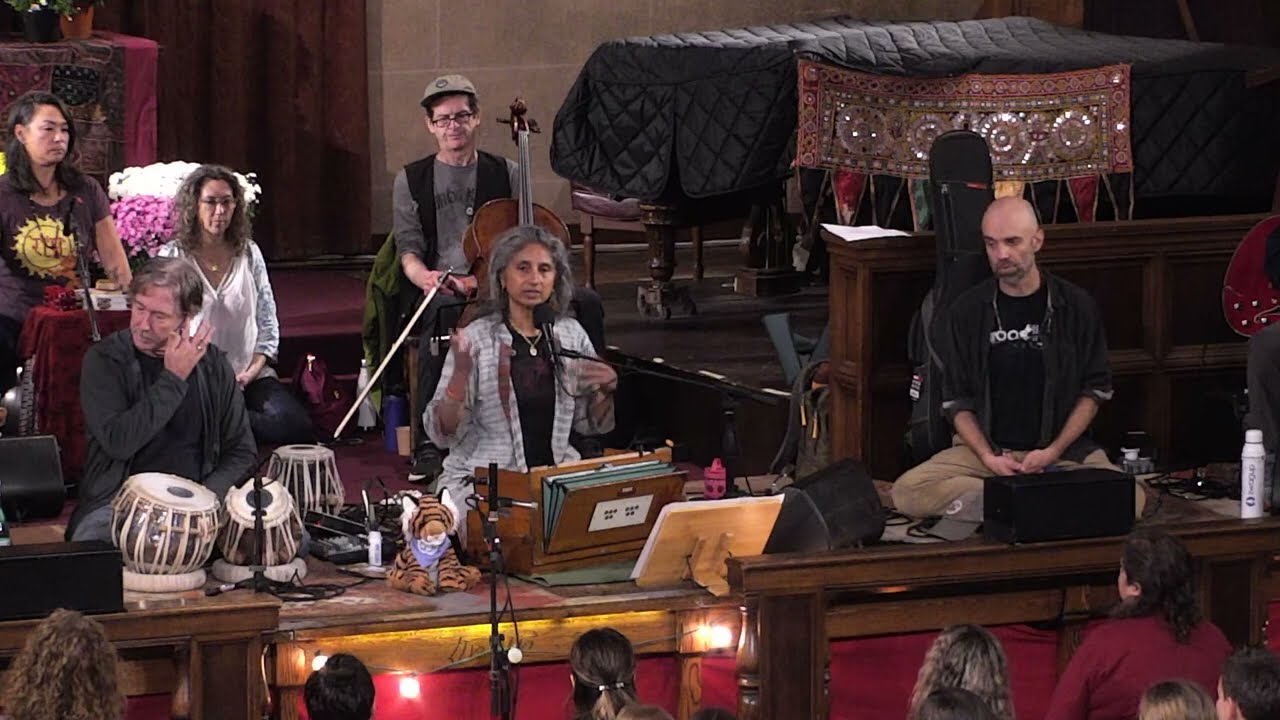
Trevor Hall's "To Zion" is a contemporary spiritual song that uses natural imagery, Rastafarian references, and non-dual philosophy to articulate a journey of inner awakening and the recognition of unity consciousness. The track weaves together themes of growth and cultivation, inner clarity through self-reflection, and the dissolution of separation between self and other—presenting Zion as both a metaphorical destination and a state of enlightened awareness accessible through conscious living and love.
What does "To Zion" mean as a spiritual destination?
In the song, Zion functions on multiple levels: as a biblical and Rastafarian reference to a promised land of peace and liberation, and as an inner state of enlightenment and unity consciousness. Hall uses the repeated refrain "I'll fly on to Zion" not as literal travel but as a statement of intention toward spiritual evolution. The destination itself is less important than the trajectory—the commitment to move toward higher consciousness and away from illusion.
The opening imagery sets this tone immediately. "Up with the sunrise / breeze through the wind chimes / open my eyes as the images rush my mind" establishes awakening as a natural process aligned with natural cycles. Sunrise is not merely dawn but the beginning of clarity, and the wind chimes suggest receptivity—a consciousness that resonates with subtle frequencies. This is Zion beginning to manifest in present awareness.
How does natural imagery reveal the spiritual growth process?
Hall employs gardening and cultivation as extended metaphors for spiritual practice. "Plant the seed watch it sprout / watch it grow watch it bloom / in tune sun and moon / we finally break through" describes inner work as a natural unfoldment that requires both effort and surrender. The seed is potential; the sprouting is practice; the blooming is realization. The sun and moon reference—complementary forces—suggests that enlightenment balances active and receptive energies.
"Never knew this tree could bloom so many flowers" captures the surprise of spiritual unfolding: when attention is placed on inner cultivation, capacities emerge that the surface mind did not anticipate. The surprise is essential because the ego cannot plan enlightenment; it can only tend the conditions that allow it to arise.
The watering of roots—"yes I water the roots as I lace up my boots / strap on my parachute"—combines grounding (roots in earth) with readiness for flight. This is not escapism but preparation. To truly ascend in consciousness, one must first establish a stable foundation in embodied awareness. The parachute suggests both trust in the fall and safety in descent—the willingness to let go while held by something greater.
What does polishing the mirror reveal about self-knowledge?
The refrain "polish the mirror so we can see clearer / push back the clouds and reflect love superior / within the lotus it all comes in focus" encodes the Advaita Vedanta teaching that the true self is already present but obscured by mental patterns and conditioning. The mirror is consciousness itself; the dirt on the mirror is vasanas (mental impressions) and ignorance; polishing it is the work of meditation, inquiry, and self-awareness.
"Within the lotus" invokes the lotus as a symbol of enlightenment—a flower that blooms from mud and murky water without being stained by it. It suggests that clarity is not about achieving something new but recognizing what has always been present beneath the surface turbulence. The lotus is where "it all comes in focus"—not through effort alone but through alignment with natural law and the heart's deepest knowing.
"Reflect love superior" does not mean a superior kind of love but love that transcends the ego's conditional preferences. It is the love that recognizes itself in all beings—the non-dual love that is neither mine nor yours but the substratum of existence itself.
How does the song articulate non-dual consciousness?
"I am I you are you / you are me we are we / family on the road to unity" is a direct statement of Advaitic realization: the apparent separation between subject and object, self and other, dissolves under scrutiny. The repetition—I am I, you are you—first honors the apparent individual forms. Then the paradox emerges: you are me. Not metaphorically, but literally, in the sense that there is one consciousness appearing as many forms.
"Family on the road to unity" contextualizes this not as abstract philosophy but as lived relationship. In the recognition that "you are me," conflict loses its ground. The road to unity is not escape from the world but the progressive recognition that the world is not separate from consciousness—that the observer and observed are one continuum.
"These melodies are telling me to see it all the same" suggests that music is a direct path to this recognition. Music does not require intellectual belief; it bypasses the rational mind and speaks to the heart. When the heart recognizes unity, the mind follows—or falls silent.
What role does fire and intensity play in the spiritual work?
"Swallow the ocean / drink of its potion / the wheels are turning and burning / set it in motion fire fire / well baby I'm up in flames" introduces the intensity of devotion and the heat of transformation. Fire in spiritual traditions—whether Hindu tapas, Sufi love, or Christian passion—is not destruction but purification. The ego, with all its beliefs about separation and safety, must burn away.
To swallow the ocean and drink its potion is to immerse oneself completely in the divine—to take in the vastness until there is no separation between the ocean and the one who drinks. The wheels turning and burning suggest momentum; practice begins to feed itself, the seeker becomes indistinguishable from the seeking.
What is the significance of Rastafarian and reggae resonance?
Trevor Hall's sound draws from reggae and Rastafarian tradition, which carries its own theology of liberation and return to the divine source. Zion in Rastafarianism is Ethiopia, Africa, and ultimately the kingdom of God within. Hall taps into this tradition not as cultural appropriation but as alignment with a lineage of music-as-spirituality that extends from Bob Marley onward—artists who use contemporary forms to address eternal questions of freedom, consciousness, and divine love.
The relaxed groove and syncopated rhythm of the arrangement reinforce the message: enlightenment is not grim effort but natural, rhythmic unfolding. The body itself becomes part of the spiritual practice when sound moves through it.
Where to go from here
Listeners drawn to "To Zion" might deepen their practice through several pathways. First, engage the song itself as a meditation object—listen repeatedly, allowing the lyrics to bypass intellectual analysis and speak directly to the heart. Notice which images resonate most; they point to aspects of your own spiritual unfolding.
Second, explore the philosophical traditions Hall alludes to: Rastafarianism, Advaita Vedanta, and the perennial philosophy that underlies many spiritual traditions. Reading Ramana Maharshi's teachings on "Who am I?" or Nisargadatta Maharaj's "I Am That" will provide conceptual scaffolding for the non-dual insights embedded in the lyrics.
Third, begin a cultivation practice. Whether gardening, meditation, or dedicated spiritual practice, tend something consciously. Notice how attention changes what grows. Recognize that the tree blooming in the song is also you—when the roots are watered through discipline and presence, capacities emerge that the surface mind did not know were possible.
Finally, investigate the claim that "you are me." In quiet moments, look at another person—a loved one, a stranger—and sit with the possibility that the awareness looking out through their eyes is the same awareness looking through yours. This is not belief but direct investigation. Where does the boundary between self and other actually exist? Can you find it?