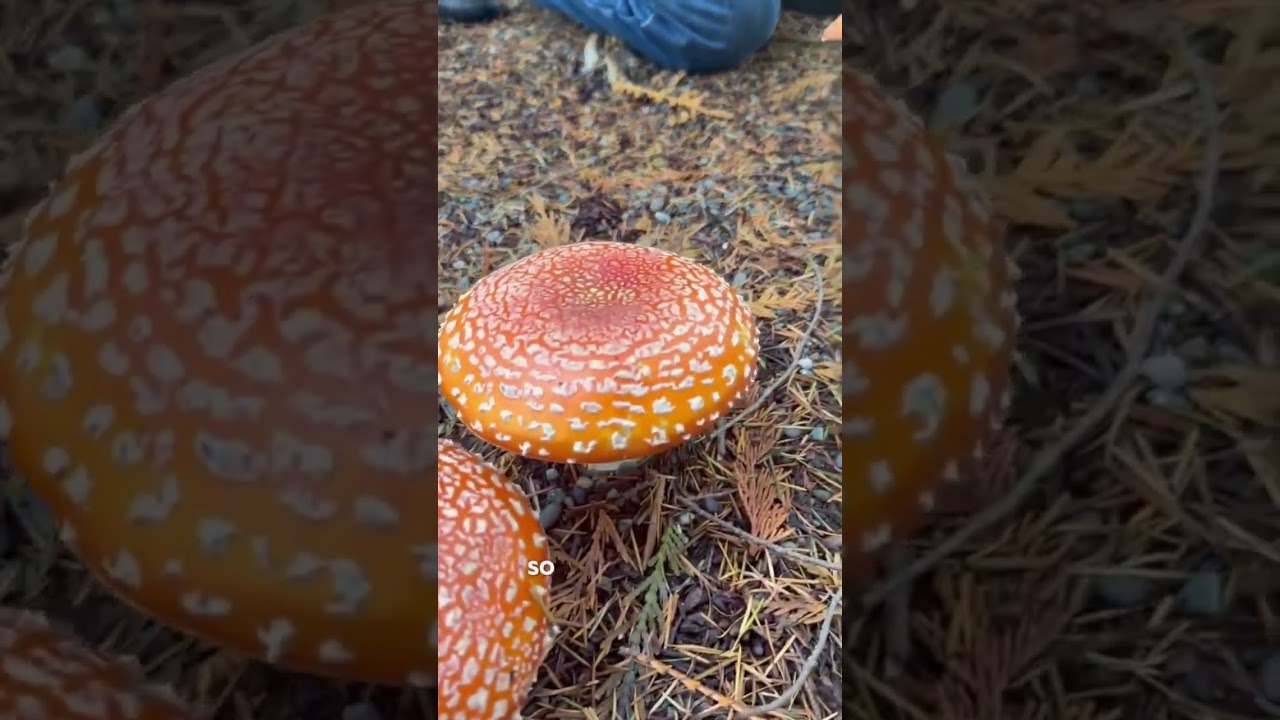
Paul Stamets documents the discovery of Panaeolus castaneifolius, a purple-brown to black-spored grassland mushroom found near Machu Picchu, Peru. Though not psychoactive itself, this species belongs to the genus Panaeolus, which contains many psilocybin-active relatives. Stamets explains the microscopic and macroscopic characteristics that distinguish this species from closely allied Panaeoli, emphasizing the difficulty of accurate identification within this group without spore examination and DNA sequencing.
What is Panaeolus castaneifolius?
Panaeolus castaneifolius (also known as Panaeolina castaneifolia and Panaeolus olivaceus) is a grassland mushroom belonging to the genus Panaeolus, a group well-known in mycology for containing multiple psilocybin-active species. Stamets identifies this particular specimen in the grasslands surrounding Machu Picchu, describing it as having distinctive purple-brown to black spores and extremely fragile stems. The species grows in open grassland areas rather than on dung, which is a key ecological distinction from many of its congeners.
What makes this species particularly notable is its position within a complex taxonomic group. Though Panaeolus castaneifolius itself is not known to be psychoactive, it is closely allied to species that are, making it a valuable reference point for understanding the broader Panaeolus genus and its biochemical diversity.
How do you distinguish Panaeolus castaneifolius from similar species?
Accurate identification within the Panaeolus genus requires careful observation of multiple characteristics, particularly spore morphology. Stamets emphasizes that this is "a difficult group to specify unless studying under a microscope and comparing DNA sequences." The primary distinguishing feature between Panaeolus castaneifolius and its closest look-alike, Panaeolus foenisecii, is spore color and texture: both species have roughened spores, but P. castaneifolius produces purple-brown to black spores, while P. foenisecii produces brown spores. Both are grassland species with similarly fragile stems.
When comparing Panaeolus castaneifolius to other smooth-spored Panaeoli, additional diagnostic features become critical:
- Panaeolus papillionaceus: Typically shows veil remnants along the cap margin, a feature absent in P. castaneifolius. This species grows on dung rather than grassland.
- Panaeolus acuminatus: Has a much longer and tougher stem compared to the extremely fragile stems of P. castaneifolius. Like P. papillionaceus, it is dung-associated.
- Panaeolus subbalteatus (also called Panaeolus cinctulus): Distinguished by its characteristic banding on the cap. This species is also dung-dwelling rather than grassland-associated.
The ecological context—whether the mushroom appears in grassland or on dung—serves as an initial filtering criterion, but definitive identification requires microscopic examination of spore morphology and increasingly, DNA sequencing to resolve ambiguous cases.
Why is the Panaeolus genus significant to mycology?
The Panaeolus genus holds considerable importance in mycological research and ethnobotany because it contains numerous psilocybin-active species alongside non-psychoactive members. This biochemical variation within a single genus raises questions about the evolutionary pressures and genetic factors underlying alkaloid production in fungi. By studying non-active species like Panaeolus castaneifolius and comparing them to their psychoactive relatives, researchers can better understand the molecular basis of psilocybin synthesis and the phylogenetic relationships within the group.
Stamets notes that all Panaeoli species are widely distributed throughout the world and are typically very fragile organisms. Their fragility makes field collection and preservation challenging, which partly explains why detailed taxonomic work on these species remains incomplete. The genus spans multiple ecological niches—grasslands, dung, and other habitats—suggesting adaptive radiation and niche specialization over evolutionary time.
What role does spore morphology play in identification?
Spore examination under a microscope is fundamental to accurate Panaeolus identification. Spores serve as stable morphological characters that do not change significantly with environmental conditions, unlike fruiting body features which can vary based on moisture, temperature, and substrate. Within Panaeolus, spore characteristics include both color (ranging from brown to purple-brown to black) and surface texture (smooth versus roughened). The roughened or reticulate spore surface of Panaeolus castaneifolius and P. foenisecii contrasts with the smooth spores of species like P. papillionaceus and P. acuminatus, providing a primary branching point in identification keys.
However, even spore morphology alone can be insufficient for certain species complexes. Modern mycology increasingly relies on DNA sequencing—particularly of the ITS (Internal Transcribed Spacer) region—to resolve taxonomic ambiguities and confirm species identities, especially when specimens show intermediate or overlapping morphological traits.
Where do these grassland Panaeoli grow and why?
Unlike many Panaeolus species that specialize in dung substrates, Panaeolus castaneifolius and P. foenisecii are grassland specialists. Stamets found P. castaneifolius in the grasslands surrounding Machu Picchu, suggesting the species thrives in open, grassy environments at high altitude. The ecological niche of grassland mycota differs fundamentally from dung-associated fungi: grassland species must decompose plant material directly and compete with dense microbial and fungal communities in soil.
The restriction of certain Panaeolus species to grassland versus dung likely reflects substrate-specific nutritional requirements and competitive abilities. Dung offers a nutrient-rich but transient resource, favoring rapid colonization and fruiting. Grassland substrates require different enzymatic capabilities and may select for species with particular strategies for cellulose and lignin degradation.
How does Panaeolus castaneifolius relate to psilocybin-active species?
Though Panaeolus castaneifolius is not known to produce psilocybin, its position as a close relative of psychoactive species makes it scientifically valuable. Stamets describes it as "closely allied to ones that are" psychoactive, meaning it shares recent common ancestry with psilocybin-producing taxa. By examining the genetic and biochemical differences between P. castaneifolius and its active relatives, researchers can identify the specific genes and enzymes responsible for psilocybin biosynthesis.
This comparative approach is increasingly powerful in the genomic era. Sequencing the full genomes of both active and inactive Panaeolus species could reveal whether psilocybin-synthesis genes were lost in P. castaneifolius, gained in active species, or represent alternative evolutionary outcomes from a common ancestor with latent potential. Such insights have implications beyond ethnobotany—they inform our understanding of how metabolic capabilities arise, persist, or disappear in fungal evolution.
Where to go from here
Stamets' discovery of Panaeolus castaneifolius in Peru serves as a reminder that grassland mycota remains incompletely documented, particularly outside of temperate regions. His stated intention to "explore more and look around the surrounding landscape" reflects the empirical foundation of modern mycology: field observation combined with laboratory verification. Readers interested in Panaeolus identification should consult Stamets' comprehensive references, particularly Psilocybin Mushrooms of the World and Psilocybin Mushrooms and Their Allies, which feature detailed descriptions and illustrations of the genus.
For those conducting field research or amateur mycology, the key lesson is that visual identification alone is insufficient for Panaeolus; microscopic spore examination and ideally DNA testing are necessary for confident species determination. The extreme fragility of these mushrooms also demands careful handling and preservation techniques to maintain specimens for laboratory analysis. Finally, the ongoing revision of Panaeolus taxonomy—evidenced by the multiple synonymous names for P. castaneifolius—underscores that species boundaries within this genus remain fluid and subject to refinement as molecular data accumulates.