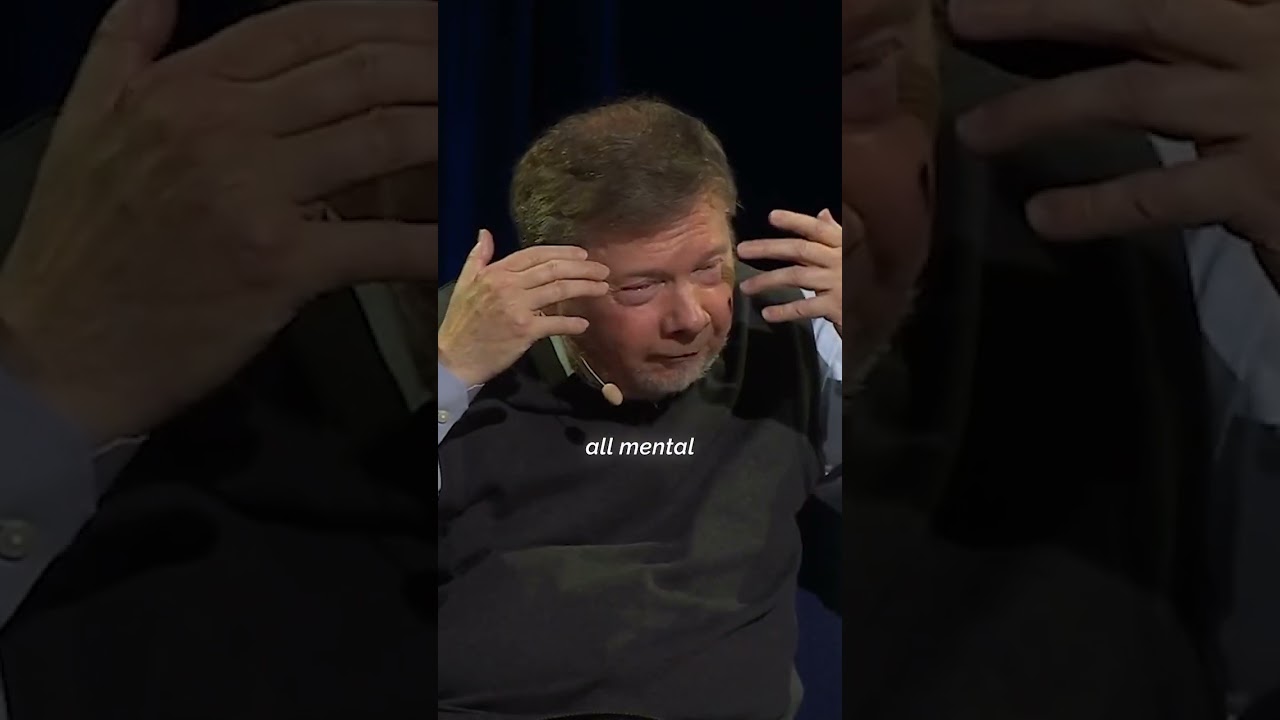
Eckhart Tolle explores how unconscious conditioning in chaotic childhoods perpetuates family dysfunction across generations. The core insight is that parents cannot act beyond their level of consciousness—they operate from the beliefs, wounds, and emotional patterns they inherited. Understanding this does not excuse harmful behavior but creates space for genuine compassion and forgiveness, which interrupts the cycle of inherited suffering and allows you to parent, relate, and live differently than the generation before you.
What Does It Mean That Parents Act Within Their Level of Awareness?
One of Tolle's central teachings is that human behavior flows from consciousness. Parents who perpetuate dysfunction—whether through neglect, anger, perfectionism, or control—are not doing so out of deliberate cruelty. Instead, they are operating from their own conditioned mind, shaped by their own childhood, their cultural environment, their beliefs about what love and discipline look like, and their capacity to regulate emotion. If a parent was never taught how to process grief, anger, or fear, they cannot teach their child these skills. If a parent learned that love means control, they will control. If they learned that self-worth comes from achievement, they will demand it from their children.
This does not absolve parents of responsibility. Rather, it clarifies the mechanism: a parent cannot give what they do not have. They cannot model presence if they themselves are caught in chronic reactivity. They cannot offer emotional attunement if they are disconnected from their own emotional life. Tolle's point is that recognizing this—that your parent's behavior reflected their own level of consciousness, not a verdict on your worth—is the foundation for genuine forgiveness and for breaking the pattern yourself.
How Does Childhood Chaos Become an Unconscious Conditioning?
Tolle teaches that conditioning is not simply learned behavior—it is internalized as identity. When you grow up in chaos, unpredictability becomes your baseline. You learn to scan for threat, to anticipate others' moods, to suppress your own needs to maintain safety. The chaotic environment becomes normal; your nervous system calibrates to constant vigilance. Over time, this vigilance is not something you do—it becomes something you are. You carry the pattern even when you are no longer in that environment.
This conditioning operates below consciousness. You do not wake up and decide to be anxious, controlling, or withdrawn. Instead, you find yourself in a relationship triggering the same dynamics you experienced as a child, or you find yourself parenting as your parent did despite swearing you never would. The pattern runs automatically, like an old recording. Becoming aware of the conditioning is the first step toward choosing differently.
Tolle often points out that many people who grew up in chaos develop remarkable sensitivity and intuition—gifts born from having to read subtle shifts in mood and energy for survival. These same skills can support mindfulness and presence if directed consciously. The challenge is to recognize the pattern without being defined by it.
Why Is Compassion Essential to Breaking Generational Cycles?
Compassion is not the same as agreement or acceptance of harmful behavior. Tolle distinguishes between compassion—a clear seeing of how suffering manifests and perpetuates itself—and condoning. You can hold compassion for your parent's own unhealed wounds while simultaneously establishing boundaries and choosing not to repeat the pattern.
When you approach your upbringing with judgment and blame, you remain psychologically bound to it. The energy of blame keeps you oriented toward the past, toward what was wrong, toward the person who wronged you. Compassion, by contrast, releases the charge. It allows you to see: my parent was doing the best they could from where they were. This is not naive or weak. It is accurate. And it frees your energy for the work of transformation—examining your own conditioning, noticing your own automatic reactions, and choosing presence instead.
This compassion extends to yourself as well. If you grew up in chaos and now recognize that you have repeated some of those patterns with your own children or in your own relationships, the capacity for self-compassion—to understand that you, too, were doing the best you could from where you were—allows you to change without shame spiraling into paralysis.
What Is the Relationship Between Awareness and Change?
Tolle's fundamental principle is that awareness itself is transformative. You do not change a pattern by forcing it or by willpower alone. You change it by seeing it clearly. When you observe, without judgment, how a particular stimulus triggers a particular reaction in you—how criticism makes you defensive, how uncertainty makes you controlling, how disappointment makes you withdraw—you create a gap. In that gap is choice.
A parent who grew up in chaos may have been operating entirely on autopilot, reactive to every challenge, unconscious of the impact of their words and actions. A child in that home learns the same reactivity. But if that child, as an adult, begins to notice the pattern—"I react to my child's mistake the way my parent reacted to mine"—the pattern loses its absolute power. You are no longer entirely identified with it. You can pause. You can choose a different response.
This is why Tolle emphasizes presence and mindfulness as revolutionary acts in families marked by unconscious transmission of suffering. When you are present—when you notice your breath, when you feel your body, when you observe your thoughts rather than being swept away by them—you interrupt the automatic loop. You create space for a different way of being.
How Can You Process Anger Toward a Parent Without Staying Stuck?
Tolle teaches that suppressing anger or spiritualizing it prematurely keeps it locked in the body. If you grew up in chaos, you may have learned to swallow your anger to stay safe. You may have made an internal decision: "I will not be like them, which means I will not be angry." But unexpressed anger does not disappear—it becomes resentment, fear, or chronic contraction.
The path forward involves first acknowledging the anger fully. What happened was not okay. You were harmed. Your needs were not met. Your anger is valid and makes sense. This is not blame or unforgiveness—it is clarity. Once you have truly felt and acknowledged the anger, without acting on it destructively, it begins to move. It is no longer trapped in self-judgment.
From that place of acknowledged anger and pain, compassion becomes possible—not as a denial of what happened, but as a completion. You see your parent clearly: they were suffering, limited by their own wounds, and you bore the cost. And you choose, from that understanding, to do differently. This is the breaking of the cycle.
What Is the Difference Between Healing and Fixing Your Family?
Tolle often notes that many people who grow up in chaos carry an unconscious mission to heal their parents, to prove to them that they are worthy of love, or to finally show them the "right way" to be. This is a dead-end path. Your parent's awakening or healing is their responsibility, not yours. You cannot think someone into consciousness.
Your work is to heal yourself. To become aware of your own conditioning. To interrupt the automatic reactions that were modeled for you. To offer your children, if you have them, or your partner and community a different quality of presence. When you do this—when you become conscious enough to parent, relate, or lead differently—the message is clear and does not require you to convince anyone. People feel the difference.
This distinction is crucial because many people exhaust themselves trying to change or heal a parent, which keeps them psychologically entangled with the past. Releasing this mission is itself a liberation.
Where to go from here
If you grew up in chaos, the invitation is to become conscious about your conditioning rather than remaining unconscious within it. This means noticing, without judgment, the patterns you inherited—the ways you react, the beliefs you hold about love and safety and your own worth. It means extending compassion to yourself and, when ready, to the parent who was doing the best they could from where they were. And it means recognizing that awareness is itself the beginning of change. Each moment you notice an automatic reaction and pause, you are breaking the cycle. You are offering your own nervous system, your relationships, and potentially your children, a different way. That is how generational suffering transforms.