EveryEvent ATX

Sfoglia tutti i Events

Live Music Capital of the World

events

Concerts & Live Music
Festivals
Sports & Recreation
Food & Drink
Arts & Culture
Community
Family & Kids
Nightlife
Comedy
Theater
Destinazioni popolari
BaliSedonaLos AngelesCosta RicaNew YorkSan FranciscoAustinMiamiJoshua TreeTulum
Vedi tutte le categorieVedi tutte le destinazioni

Esplora tutte le funzionalità

Strumenti potenti per far crescere i tuoi eventi

Funzionalità della piattaforma

Prezzi dinamici intelligenti
Categorie di biglietti
Posti assegnati
Recupero carrelli abbandonati
Recupero visitatori
Donazioni e prezzi variabili
Sistema affiliati
Scanner biglietti
Codici sconto
Domande personalizzate
Condivisione biglietti
Upsell e componenti aggiuntivi
Analisi e report
Sequenze email
Lista d'attesa / Notifica / Promemoria
Esplora
Discovery HubArtists & PerformersVenuesKnowledge Base
Vedi tutte le funzionalitàChi siamo
PrezziBlog
Sfoglia tutti gli eventi

events

Concerts & Live MusicFestivalsSports & RecreationFood & DrinkArts & CultureCommunityFamily & KidsNightlife

Destinazioni popolari

BaliSedonaLos AngelesCosta RicaNew YorkSan Francisco

Esplora

Discovery HubArtists & PerformersVenuesKnowledge Base

Funzionalità della piattaforma

Prezzi dinamici intelligentiCategorie di bigliettiPosti assegnatiRecupero carrelli abbandonatiRecupero visitatoriDonazioni e prezzi variabiliSistema affiliatiScanner bigliettiCodici scontoDomande personalizzateCondivisione bigliettiUpsell e componenti aggiuntiviAnalisi e reportSequenze emailLista d'attesa / Notifica / Promemoria
Vedi tutte le funzionalitàChi siamo
PrezziBlog
AccediRegistratiOrganizzatori di eventi
  • Browse All Events
  • Concerts & Live Music
  • Festivals
  • Sports & Recreation
  • Food & Drink
  • Arts & Culture
  • Community
  • Family & Kids
  • Nightlife
  • Tutte le categorie →
  • San Antonio
  • Hill Country
  • Fredericksburg
  • Houston
  • Dallas
  • All Destinations →
  • For Promoters
  • For Artists
  • For Venues
  • For Festivals
  • For Event Spaces
  • For Nonprofits
  • For Bloggers
  • For Speakers
  • Brand Ambassador
  • Case Studies
  • Rete di 350K+ acquirenti
  • Recupero carrelli abbandonati
  • Prezzi dinamici intelligenti
  • Categorie di biglietti
  • Eventi ricorrenti
  • Posti assegnati
  • Sistema affiliati
  • Lista d'attesa / Notifica
  • Scanner biglietti
  • Widget incorporabile
  • Event Syndication
  • Message Center
  • Integrations
  • Reports
  • Tutte le funzionalità →
  • Chi siamo
  • The Ecosystem
  • Blog
  • Glossario
  • Inspiration
  • Centro assistenza
  • Contatti
  • Documentazione API
  • Risorse del brand
  • Carriere
  • Stampa
  • Termini di servizio
  • Informativa sulla privacy

Events

  • Browse All Events
  • Concerts & Live Music
  • Festivals
  • Sports & Recreation
  • Food & Drink
  • Arts & Culture
  • Community
  • Family & Kids
  • Nightlife
  • Tutte le categorie →

Getaways

  • San Antonio
  • Hill Country
  • Fredericksburg
  • Houston
  • Dallas
  • All Destinations →

For Organizers

  • For Promoters
  • For Artists
  • For Venues
  • For Festivals
  • For Event Spaces
  • For Nonprofits
  • For Bloggers
  • For Speakers
  • Brand Ambassador
  • Case Studies

Funzionalità

  • Rete di 350K+ acquirenti
  • Recupero carrelli abbandonati
  • Prezzi dinamici intelligenti
  • Categorie di biglietti
  • Eventi ricorrenti
  • Posti assegnati
  • Sistema affiliati
  • Lista d'attesa / Notifica
  • Scanner biglietti
  • Widget incorporabile
  • Event Syndication
  • Message Center
  • Integrations
  • Reports
  • Tutte le funzionalità →

Azienda

  • Chi siamo
  • The Ecosystem
  • Blog
  • Glossario
  • Inspiration
  • Centro assistenza
  • Contatti
  • Documentazione API
  • Risorse del brand
  • Carriere
  • Stampa
  • Termini di servizio
  • Informativa sulla privacy
EveryEvent
© 2026 EveryEvent Austin. Tutti i diritti riservati.
Inspiration

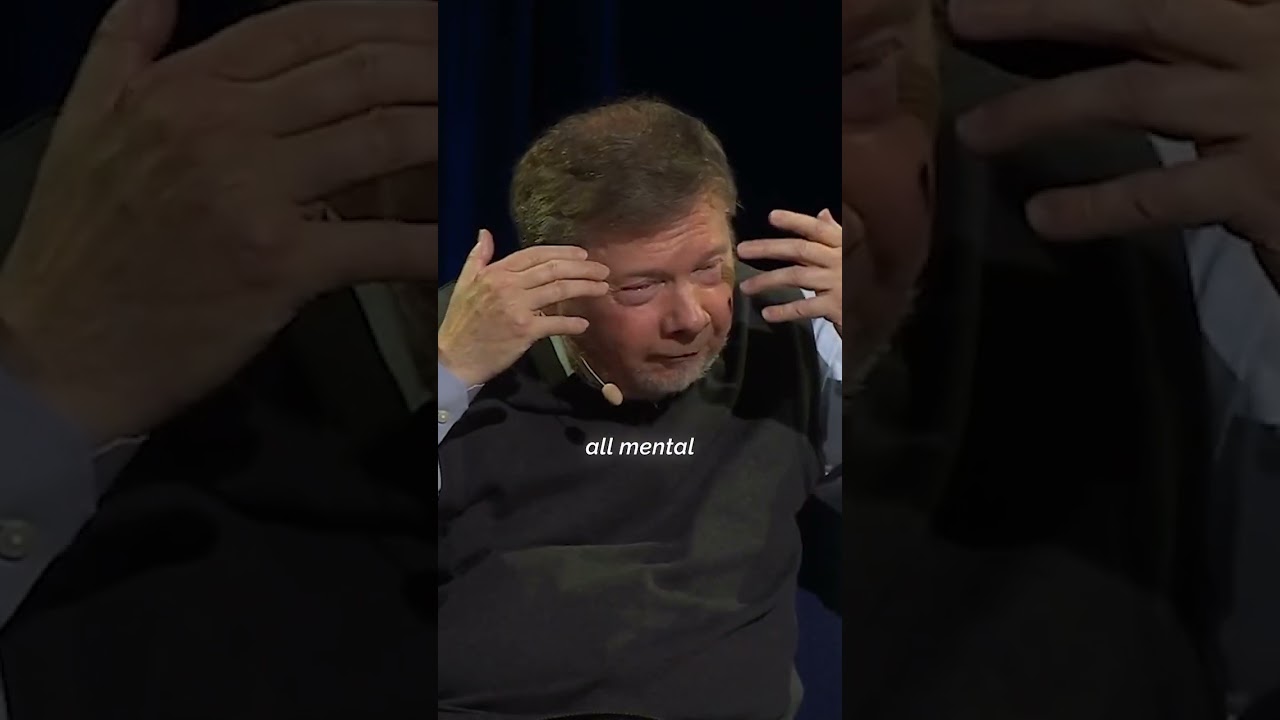
Why Comfort Makes YouWeaker: Consciousness & Challenge

Eckhart Tolle
Eckhart Tolle
Feb 23, 2026
6 min read

TLDR: Growth — whether physical or conscious — does not occur in states of comfort. The body strengthens through challenge and resistance, not through protection from effort. The same principle applies to consciousness itself: awareness expands when confronted with difficulty, friction, and demands that push beyond habitual patterns. Comfort creates stagnation; challenge creates development.

Read · 6 sections

Does Comfort Actually Weaken You?

The intuition that comfort weakens is counterintuitive in a culture that prizes ease and convenience. Yet the evidence is biological and observable. A muscle unused atrophies. A mind unstimulated dulls. A nervous system never stressed becomes fragile. The body does not strengthen through rest alone — it strengthens through stress applied and recovered from. A weightlifter must lift progressively heavier loads; a runner must increase distance or speed; a musician must practice difficult passages repeatedly. Without the challenge, without the resistance, there is no adaptation. There is only maintenance of baseline capacity, or gradual decline.

This principle extends beyond the merely physical. Consciousness itself — the capacity to be aware, to observe, to respond rather than react — develops through friction. When life is smooth, when circumstances align with preference, awareness can remain on autopilot. Habits suffice. Patterns persist unchallenged. But when comfort dissolves, when the familiar breaks down, consciousness is forced to engage. It must become more alert, more responsive, more present. Difficulty is a crucible for development.

Why Does the Body Strengthen Through Challenge?

The mechanism is well-understood in physiology. When muscles are worked beyond their current capacity, microtrauma occurs. The body responds to this stress by repairing the tissue and building it stronger. Rest and nutrition allow recovery, but without the initial stress signal, there is no stimulus for adaptation. The body adapts to demand. Remove demand, and adaptation ceases. Extend comfort indefinitely, and capacity gradually erodes.

This is not an argument for recklessness or injury. The challenge must be calibrated — difficult enough to stimulate growth, but not so severe as to cause harm. A weight that is too light produces no effect; a weight that causes torn ligaments produces damage instead of adaptation. The sweet spot is at the edge of current capacity, where effort is real but recovery is possible.

Yet this calibrated challenge is precisely what comfort avoids. Comfort seeks to eliminate friction. Modern convenience is engineered to reduce every form of physical demand. Labor-saving devices, transportation, food delivery, climate control — all reduce the body's need to exert itself. The result is a population that is, on average, weaker, less resilient, more prone to injury from ordinary activity. Comfort has not protected health; it has eroded it.

What Does Consciousness Development Require?

If the body strengthens through physical challenge, consciousness strengthens through existential challenge. Consciousness is the capacity to observe — to be aware of thought, emotion, sensation, and circumstance without being entirely identified with them. This capacity is rudimentary in most people. Most of the time, most people are lost in thought, in reaction, in automatic pattern. Consciousness operates at baseline.

But when comfort dissolves — when loss occurs, when plans fail, when uncertainty arises — consciousness is forced to wake. The automatic responses no longer suffice. The habitual thoughts no longer pacify. A person in difficulty cannot afford to sleepwalk through their life. They must become present. They must observe their thoughts and emotions rather than being wholly consumed by them. They must respond consciously rather than react mechanically.

This does not mean suffering is good or should be sought. Suffering is not intrinsically valuable. But the capacity that develops *through* difficulty — the heightened awareness, the reduced identification with thought, the ability to observe rather than be consumed — is valuable. And this capacity does not develop in comfort. It develops when comfort fails.

How Does Comfort Prevent Awareness?

Comfort is inherently numbing. When all is well, there is no urgency to be present. The mind can wander into fantasy, into planning, into the endless internal dialogue of ego. There is no external pressure demanding presence. The body can remain tense without the person noticing, because there is no crisis forcing attention. Sleep can be poor without consequence immediately felt. Diet can be poor without immediate feedback. Poor posture, shallow breathing, habitual contraction — all can persist unnoticed in comfort.

Discomfort interrupts this numbing. Pain demands attention. Uncertainty demands presence. Loss demands that old patterns be released because they no longer apply. In these moments, a person has an opportunity to become conscious — to observe what is actually happening rather than what they habitually assume is happening. The veil of unconscious pattern momentarily lifts.

This is why spiritual traditions have, across cultures and centuries, incorporated difficulty. Fasting, cold exposure, extended sitting, physical labor, pilgrimage — all introduce friction into the comfortable life. Not to glorify suffering, but to create conditions in which consciousness is forced to develop. Comfort undermines this work. It allows a person to remain asleep.

Is All Comfort Equally Problematic?

Comfort exists on a spectrum. Basic comfort — food, shelter, safety — is necessary and appropriate. The concern is not with meeting fundamental needs. The concern is with the excess of ease, with the removal of all friction, with the optimization of life toward the minimization of any discomfort whatsoever. This obsession with comfort is what erodes capacity, both physical and conscious.

Moreover, comfort can be a trap precisely because it feels good. The mind prefers comfort. The ego prefers comfort. So there is a natural tendency to seek comfort, to justify comfort, to defend the comfortable life as somehow superior or more evolved. "I deserve rest," one says. "I've earned ease," one thinks. And these statements may be true in a limited sense. But they can also mask a refusal to grow, a retreat into stagnation disguised as self-care.

The invitation is not to reject comfort altogether, but to understand its cost. Every hour of unearned ease is an hour in which consciousness does not develop, in which the body does not adapt, in which capacity does not expand. This is not a moral judgment. It is simply observation: growth and comfort are not compatible. One must choose which one matters more.

Where to Go From Here

The practical application is subtle. It is not an argument for asceticism or self-punishment. Rather, it is an invitation to notice where comfort has become unconsciousness. Where has convenience stopped you from being present? Where have you numbed yourself to avoid feeling? Where could you introduce calibrated challenge — physical practice, contemplative difficulty, or acceptance of unavoidable friction — that would awaken awareness and expand capacity?

Notice, too, the resistance that arises when comfort is questioned. The mind will produce many reasons why comfort is necessary, why difficulty is unnecessary, why growth is already complete. This resistance itself is data. It points to where identification with comfort is strong, where the ego has made ease its identity. Observing this resistance, without judgment, is itself a form of consciousness development. The invitation is simply to see clearly: comfort makes you weaker, not stronger. Challenge makes you stronger, not weaker. The choice, as always, is yours.

Eckhart Tolle
AuthorEckhart Tolle

German-born spiritual teacher whose 1997 book The Power of Now became one of the most widely read spiritual works of the 21st century. After a profound transformation at 29 — movin…

View profileWebsite
Explore Topics
Comfort-growthConsciousness-developmentPhysical-challengeEgo-patternsPresence-awareness

Got Questions?

Frequently Asked Questions

The body adapts to stress through a process called adaptation. When muscles are challenged beyond their current capacity, they experience microtrauma and respond by rebuilding stronger. Without this stress signal, the body has no reason to adapt; rest alone maintains baseline capacity but does not increase it. The challenge must be calibrated — difficult enough to stimulate growth but not so severe as to cause injury.
Consciousness is the capacity to observe thought and emotion without being entirely identified with them. In comfort, the mind can remain on autopilot and lost in habitual patterns. But when difficulty arises — loss, uncertainty, failed plans — consciousness is forced to wake and engage. The heightened awareness required to navigate difficulty is how conscious capacity actually expands.
Basic comfort — food, shelter, safety — is necessary and appropriate. The concern is with excessive ease and the removal of all friction from life. When comfort becomes an obsession with minimizing any discomfort whatsoever, it erodes both physical capacity and conscious development. The challenge is to recognize where comfort has become unconsciousness rather than authentic rest.
Needed rest supports recovery and allows adaptation to occur after challenge. Stagnant comfort is the ongoing elimination of all friction and demand, which prevents adaptation and growth. The distinction is whether you are resting in service of eventual challenge (recovery), or whether you are using comfort to avoid challenge altogether (stagnation).
These practices introduce deliberate difficulty into life to interrupt the numbing effects of comfort. They are not meant to glorify suffering but to create conditions where consciousness is forced to develop. When the body or mind is stressed in a controlled way, a person has an opportunity to observe their patterns and responses rather than remaining on autopilot.
Notice where you've become unconscious: activities done without presence, physical capacities that have declined, emotional reactivity that has increased, or an inability to sit with discomfort. The body and mind both show signs of weakening through disuse. The invitation is to observe clearly where comfort has stopped you from being present or capable, without judgment.
While growth does not require suffering, it does require challenge and effort. Physical growth requires progressive resistance; conscious growth requires engagement with difficulty, uncertainty, or friction. These challenges need not be severe or traumatic, but they must be present. Complete comfort prevents development of both physical and conscious capacity.

Continue Reading

More from Eckhart

View All
God Beyond the Sky: Rethinking Divine Nature
Featured

God Beyond the Sky: Rethinking Divine Nature

God is not an external judge deciding human suffering. Suffering itself becomes the mechanism through which consciousness awakens to itself.…

1 min read
God, Suffering, and the One Life Across Traditions
Featured

God, Suffering, and the One Life Across Traditions

Eckhart Tolle explores how Islam, Buddhism, and Greek philosophy all point to the same ultimate reality—and why the problem of suffering dis…

1 min read
Why Humanity Cannot Sit in Silence: Disconnection from Being
Featured

Why Humanity Cannot Sit in Silence: Disconnection from Being

The root of human conflict lies in disconnection from the being dimension—the inability to find peace when alone. When disconnected from bei…

1 min read
Who You Really Are Beyond Surface Identity
Featured

Who You Really Are Beyond Surface Identity

You are not your body, name, or conditioned mind. Eckhart Tolle reveals the distinction between surface identity and deeper being.…

1 min read

Keep exploring

Continue your journey

More wisdom and gatherings from across the BrightStar directory.

More Articles

Browse the full library of teachings, interviews, and guides.

Back to all articles →

Teachers & Artists

Explore the lineages, musicians, and guides of the conscious world.

Explore artists →

Find an Event

Kirtan, retreats, sound baths, breathwork, festivals — happening soon.

Browse events →
Read more from BrightStarCreate Free Account
Host your own gatherings?Try the Demo