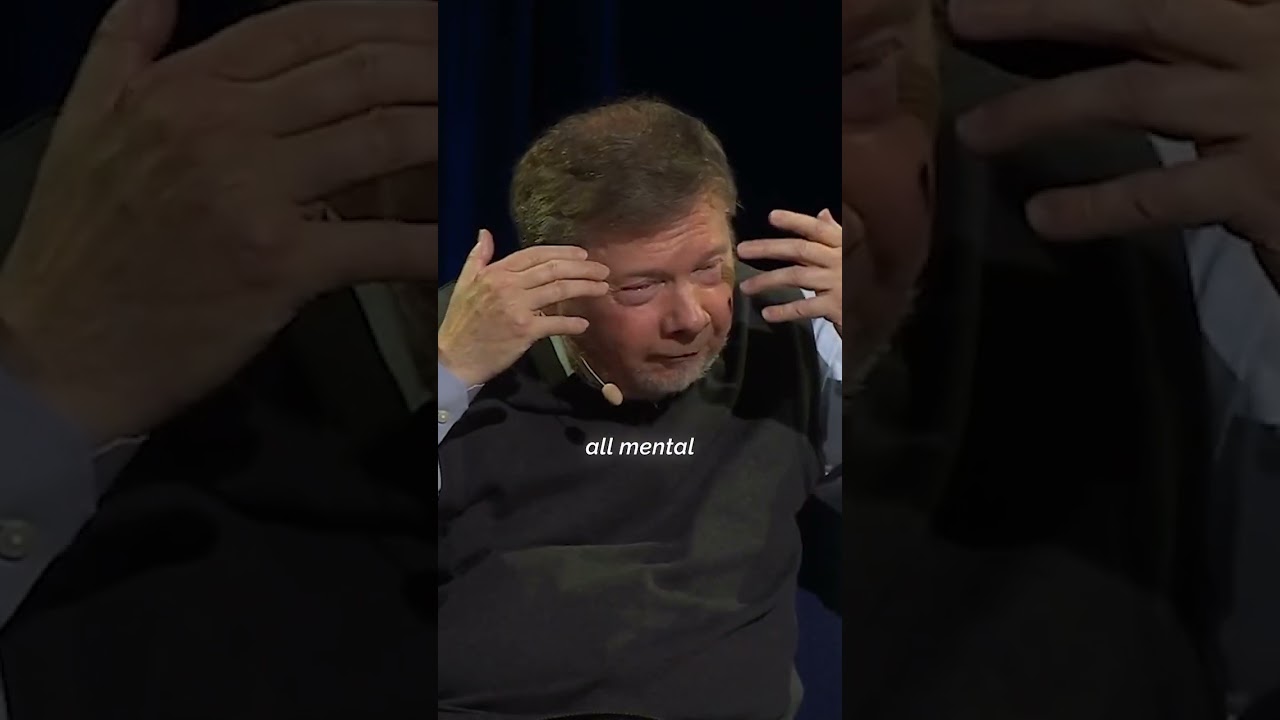
Eckhart Tolle teaches that the habitual search for peace, clarity, or relief paradoxically prevents us from experiencing them. By understanding how the mind perpetuates the seeking itself—a mechanism rooted in psychological resistance—we can recognize that peace is not something to achieve through additional effort, but rather something available when we stop reinforcing the very patterns that obscure it. The shift from doing to non-doing, from striving to presence, is the actual gateway to the ease most people spend their lives chasing.
Why Does the Search for Peace Keep Us Trapped?
Many people operate under a fundamental misunderstanding: that peace, clarity, or relief must be earned through more effort, more techniques, more self-improvement. This assumption runs so deep that it feels obvious. Tolle identifies a paradox at the heart of this approach. The very act of searching for peace often solidifies the mental state that prevents us from finding it. When we believe peace is something we lack and must obtain, we reinforce a psychological structure built on lack and dissatisfaction—the opposite of the peace we seek.
The mind that searches is the same mind that believes something is fundamentally wrong with the present moment. This is not a judgment or character flaw; it is a habitual pattern of consciousness that most humans inherit. The seeking itself becomes a self-perpetuating loop. Each search confirms the absence of what we seek. Each technique we try reinforces the identity of "someone who needs fixing." The irony is that the effort to change our condition becomes the very mechanism that keeps us locked in that condition.
What Is the Difference Between Striving and Presence?
Tolle distinguishes between two fundamentally different orientations to life: the striving, seeking orientation and the orientation of presence. Striving is future-oriented. It says, "I will be okay when I have accomplished X, achieved Y, or acquired Z." It is built on the assumption that the present moment is insufficient. Presence, by contrast, is an acceptance of what is actually here now—not as a resignation or defeat, but as a clear seeing of reality as it is.
This does not mean passivity or inaction. Rather, it means that when action comes from presence rather than from the compulsive need to fix something broken, that action is more aligned, more effective, and less exhausting. A person in presence can still take steps toward their wellbeing, but those steps arise from clarity rather than from desperation. The quality of the action is fundamentally different because it is not driven by the belief in a deficient self.
Presence is available right now. It does not require waiting, achieving, or self-improvement. In fact, the belief that presence must be earned is precisely what prevents access to it. Tolle points out that peace is not a destination at the end of a long road of spiritual practice or self-help. It is the natural state that emerges when we stop reinforcing the mental patterns of resistance, rejection, and seeking.
How Does the Ego Perpetuate the Search?
Tolle identifies the ego—not as a moral failing but as a pattern of identification with thought—as the mechanism that keeps seeking alive. The ego is always positioning itself as incomplete, as someone working toward a better future self. This structure is built into the psychological functioning of most humans. The ego cannot afford to find what it seeks, because finding peace would undermine its fundamental organization. If you were truly at peace now, the ego's reason for existing—to solve problems and improve the self—would disappear.
This is not a conscious conspiracy. Rather, it is a subtle and pervasive pattern. A thought arises: "I am not peaceful enough." Believing this thought, consciousness contracts into a seeking mode. More thoughts arise: "What technique should I use? What book should I read? What course should I take?" Each thought reinforces the initial belief that something is wrong. The mind has created a closed loop that feels like progress but actually deepens the sense of deficiency.
Recognizing this pattern is itself a shift in consciousness. To see how the mind perpetuates seeking is already to step partially outside that pattern. You are no longer completely identified with the belief that you must search. A space of observation opens up. In that space, the habitual impulse to seek can be seen, and its grip loosens.
What Happens When You Stop the Search?
When the constant striving pauses, even briefly, something becomes available that was always present but obscured by the noise of seeking. This is not a blissful state necessarily, though it can be. It is more fundamental: a sense of okayness that does not depend on external circumstances or internal achievements. Tolle calls this "ease"—a relaxation of the constant tension that comes with believing something is wrong that must be fixed.
This ease is not the absence of challenges or problems. Life continues to present circumstances that require response. But the person who is resting in presence rather than driven by seeking relates to those circumstances differently. There is less resistance, less complaint, less identification with a separate self that is separate from what is happening. The quality of life changes not because external circumstances change, but because consciousness has shifted.
Tolle emphasizes that stopping the search is not something the ego can easily do, because the ego experiences it as a threat. The mind may create anxiety: "If I stop seeking, won't I become complacent? Won't I stop growing?" These are legitimate-sounding questions, but they arise from the belief system that drove the seeking in the first place. In fact, when the compulsive seeking quiets, a more natural and aligned form of growth becomes possible—growth that arises from understanding rather than from desperation.
How Can You Recognize When You Are in Seeking Mode?
Tolle teaches that awareness itself is the key. Seeking has a recognizable quality. It feels like tension, like something is wrong, like you are not enough. There is an impatience with the present moment, a sense that real life is happening later, after you have fixed yourself or acquired something more. Notice the quality of thought when you are in seeking mode: there is a constant mental narrative about what needs to change.
Contrast this with presence. Presence has a different quality. There is a simplicity, a directness, a lack of complaint even when something difficult is happening. In presence, life is happening now. There is no split between the person and the moment; the sense of separation dissolves. When you notice the quality of seeking—the tightness, the narratives, the sense of lack—you have already begun to step out of it. The noticing itself is the beginning of freedom.
Where to Go From Here
The teaching here does not require you to add anything to your practice or your life. If anything, it invites a subtraction: a releasing of the grip of habitual seeking. Tolle suggests simply noticing, without judgment, the moments when you are caught in seeking mode. Notice the tension, the narratives, the resistance to what is. Do not try to stop seeking; that would just be another form of seeking. Instead, bring awareness to the pattern itself.
As awareness stabilizes in presence, the quality of your life will gradually shift. The same circumstances may continue, but your relationship to them changes. Ease, clarity, and peace reveal themselves not as distant achievements but as the natural ground of being when the mind stops reinforcing the belief in their absence. This is not theory; it is the direct teaching that Tolle offers: stop the search, and discover that what you were looking for was never actually lost.