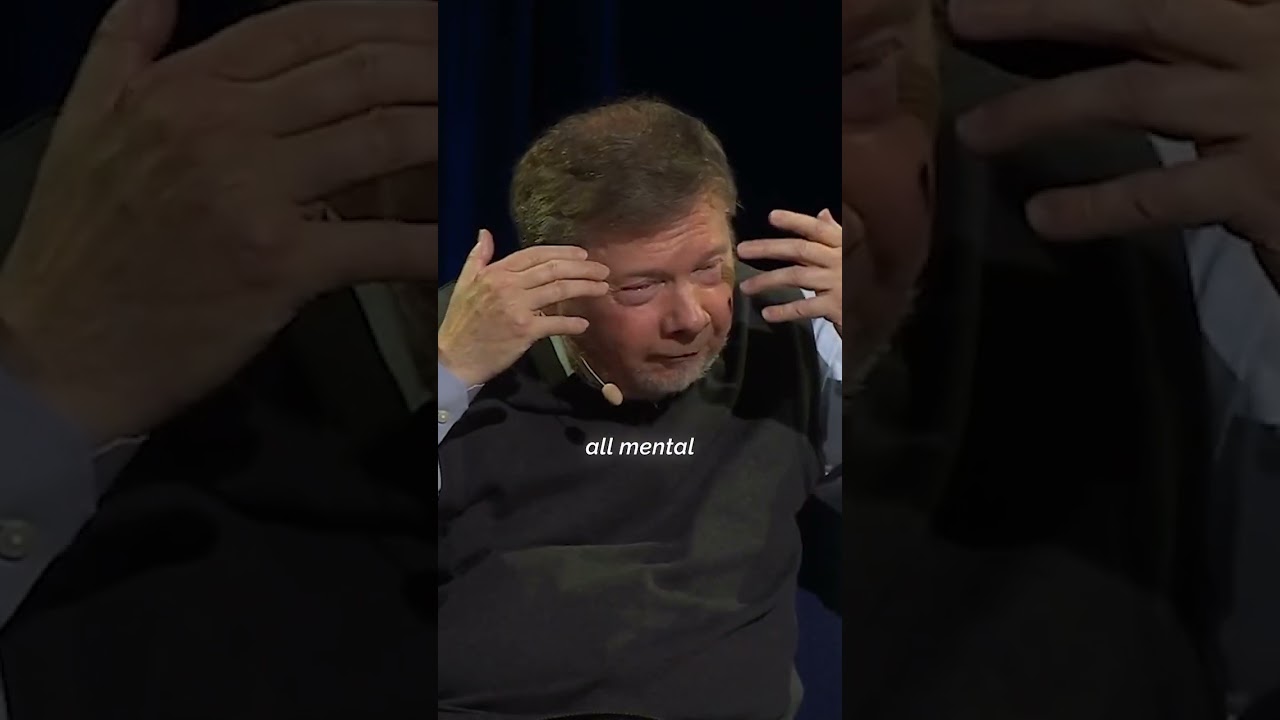
Eckhart Tolle addresses a common belief in spiritual circles that awakening requires many more lifetimes of practice and suffering. He argues that this fatalistic view misunderstands how consciousness actually works—that genuine presence and the shift from ego-based thinking to awareness can happen now, in this moment, regardless of your past or how many lifetimes you imagine you need. The teaching challenges both spiritual bypassing (premature claims of enlightenment) and spiritual procrastination (the idea that real change is always in the distant future), offering instead a direct pointer to the possibility of transformation that is already available.
Why the "23 More Lifetimes" Narrative Misleads You
Within spiritual and religious traditions, there exists a widespread belief that awakening is a project stretched across multiple lifetimes—that karmic debt must be paid down slowly, that suffering must continue until a distant future life, or that only the most advanced practitioners can hope for liberation in this incarnation. This narrative creates a peculiar psychological trap: it combines humility (acknowledging how far you have to go) with hopelessness (suggesting change cannot happen soon). Eckhart Tolle's teaching point—that you don't need 23 more lifetimes—directly challenges this framework not by claiming everyone is already enlightened, but by pointing out that the mechanism of spiritual awakening does not actually require time in the way the linear, karmic view assumes.
The belief system operates like a kind of spiritual procrastination. If awakening is something that happens in a future life, then there is no urgency now. The ego can continue its patterns, and the mind can rest in the comfortable idea that "someday" things will be different. Tolle's teaching disrupts this comfort by suggesting that the very thing you are waiting for—the shift in consciousness, the movement from identification with thought to presence—does not depend on accumulating hours, years, or lifetimes of practice. It depends on something that is available immediately: your capacity to become aware, to notice what is happening now, without the filter of judgment or the weight of past identity.
How Presence Works Outside of Linear Time
The core of Tolle's response rests on his fundamental teaching that consciousness is not bound by linear time. Most people live almost exclusively in time—rehearsing the past, planning for the future, rarely inhabiting the present moment. In that mode, the mind constructs narratives about how change must happen: slowly, gradually, over years and lives, through accumulated merit or suffering. But presence itself operates differently. When you become aware—truly aware, not just intellectually understanding the idea—something shifts immediately. You are no longer fully identified with the stream of thought. You are no longer running the old mental programs on autopilot.
This is not the same as overnight enlightenment or spiritual bypassing (the premature claim that ego has been transcended). Rather, Tolle points to the fact that the capacity for this shift is not dependent on time. The shift from ego-identification to awareness can happen in a single moment. What may take time is the integration of that awareness into daily life, the gradual quieting of habitual thoughts and emotional patterns, the deepening of the ability to remain present even when difficulty arises. But the fundamental awakening—the recognition that you are not your thoughts, that there is an aware presence here now that is not bound to your personal history—does not require 23 lifetimes. It requires a willingness to pay attention to what is already here.
The False Choice Between Instant Enlightenment and Endless Waiting
Tolle's teaching avoids two common traps. On one side is the trap of spiritual inflation: the idea that you have already arrived, that the ego has been completely dissolved, that suffering no longer touches you. This is what spiritual teachers often call spiritual bypassing, and it usually masks a deeper level of unconsciousness. On the other side is the trap of spiritual postponement: the belief that nothing real can change until some distant future, either in this life or the next. Both traps involve the same error—they accept the ego's timeline as real, as the framework within which spiritual change must occur.
What Tolle points to instead is neither of these. It is the recognition that while ego patterns may continue to arise, their grip on your sense of self can loosen now. While thoughts may continue to flow, your identity with them can change now. While emotions may still move through you, they need not define who you are now. This is not a claim that the work is finished in one moment of awakening. Rather, it is the insight that the work itself—the practice of returning to presence, of noticing thought without identification—is the awakening. It is not a means to some future state; it is the state itself.
What Happens When You Stop Waiting for Future Lifetimes
When you release the narrative that you need many more lifetimes, something shifts psychologically. The urgency returns. The present moment becomes important not as a distant goal but as the only place where life is actually happening. You notice that right now, in this moment, there is awareness. There is perception. There is the bare fact of consciousness before it gets elaborated into stories about who you are, what you need, or how much further you have to go. This recognition changes how you relate to your practice, your relationships, and your experience of suffering.
Instead of viewing difficulty as payment on a karmic debt that will take many lifetimes to settle, you can begin to see it as an invitation to presence. The difficult emotion, the challenging relationship, the moment of frustration—these become opportunities to notice: Am I here now, or am I lost in the story? Can I be aware of this without becoming it? This shift from waiting-mode to presence-mode is what Tolle points to when he says you don't need 23 more lifetimes. You need to show up now.
Integrating the Teaching Without Spiritual Inflation
The risk in hearing this teaching is to turn it into a premature claim: "I don't need 23 lifetimes because I've already awakened." This would be to miss the point entirely. The teaching is not flattery for the ego; it is an invitation to seriousness about what is possible now. You don't need 23 lifetimes does not mean your habitual patterns will dissolve overnight. It means the shift in consciousness that renders those patterns transparent, that breaks their spell, is not dependent on time. It is dependent on presence.
This has practical implications for daily life. When you catch yourself in an old pattern of reactivity, shame, or fear, you can notice: This is thought. This is ego. And I am aware of it. You don't have to wait until a future life to see that awareness is not the same as thought. You can notice it now. When you are with someone and the urge arises to defend yourself or to attack, you can pause and ask: What is aware of this urge? That awareness is not bound by your personal history. It is not waiting for the next life. It is here.
Where to Go From Here
If this teaching resonates, the natural next step is not to believe it but to test it. In moments when you remember, pause and notice: What is aware right now? Not what am I thinking, or what am I feeling, but what is aware of my thinking and feeling? That awareness is what Tolle points to. It is not something you have to develop over 23 lifetimes. It is something you can recognize now. The practice then becomes simple: return to that recognition again and again, in ordinary moments, until it becomes more natural. This is not a project for the future. This is how awakening actually works—not as a distant achievement, but as a present recognition that becomes clearer and steadier the more you turn your attention to it.