Embracing the Global Family: A Contemplation on Unity
The phrase "Vasudhaiva kutumbakam," which translates to "the world is one family," encapsulates a profound vision of interconnectedness and unity. In a world often marked by division and strife, this teaching invites us to transcend boundaries and recognize our shared humanity. The stakes are high; embracing this perspective can lead to greater compassion, understanding, and peace, both within ourselves and in our interactions with others. It challenges us to reconsider our roles in a global society, urging us to act with kindness and empathy.
Delving deeper, the essence of this quote resonates with the ancient wisdom of Sanskrit, where "Vasudhaiva" signifies the Earth and "kutumbakam" refers to family. This duality suggests a holistic view of existence, where every individual is a vital thread in the intricate tapestry of life. It calls upon us to foster relationships that extend beyond mere acquaintanceship, inviting us to cultivate a sense of belonging that encompasses all of humanity. In this light, the quote becomes not just a statement but a call to action, urging us to embody the principles of love and unity in our daily lives.
The image / the metaphor
At its core, "Vasudhaiva kutumbakam" paints a vivid image of a vast, interconnected family. The word "kutumbakam" evokes warmth and familiarity, suggesting a nurturing environment where each member supports the other. The choice of the word "world" in this context expands the notion of family to include every person, regardless of nationality, culture, or belief. This imagery invites us to envision a global community where love and understanding reign supreme, transcending the barriers that often divide us.
In the speaker's tradition
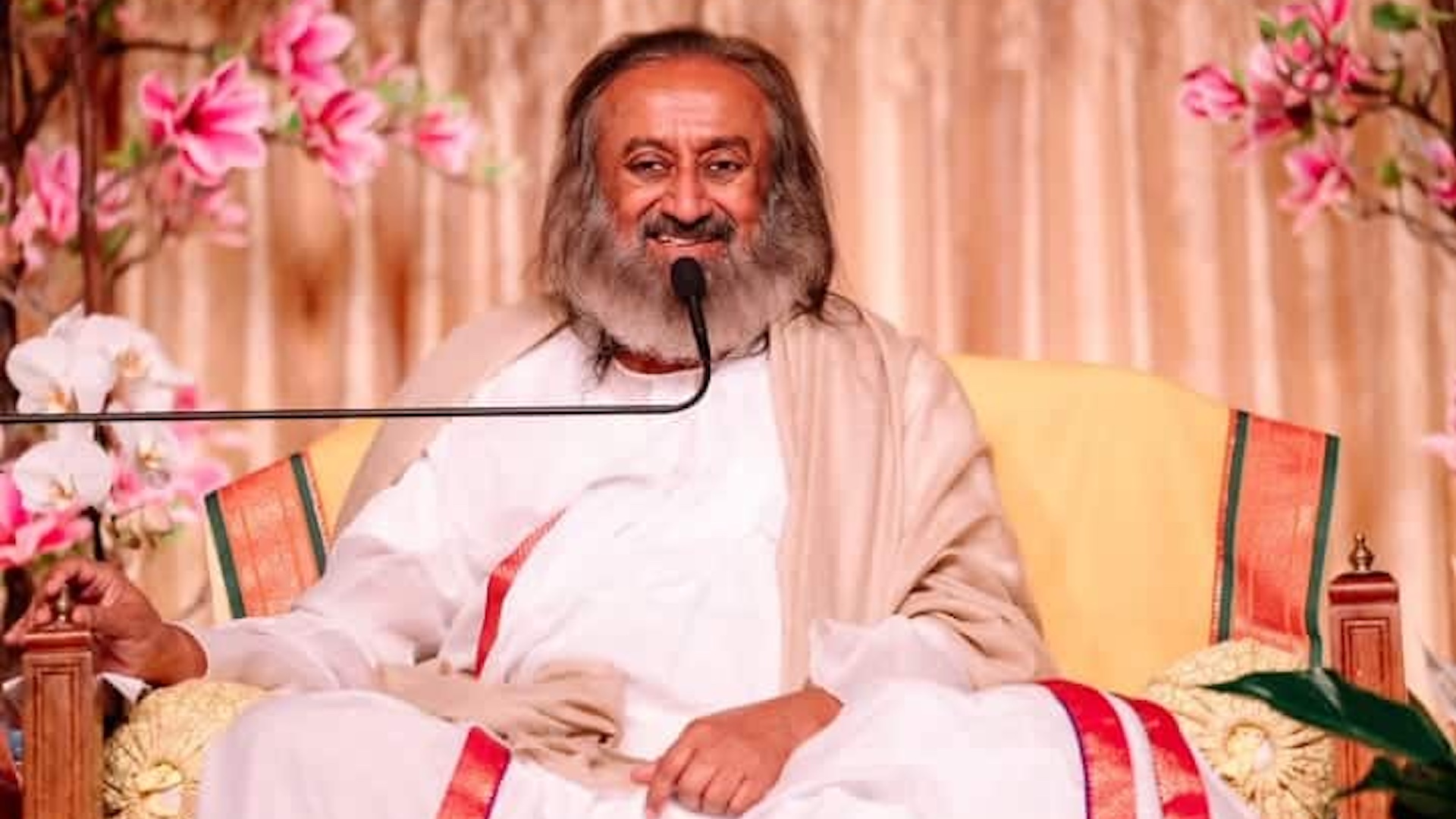
Sri Sri Ravi Shankar's teachings are deeply rooted in the Art of Living philosophy, which emphasizes the importance of inner peace and global harmony. Central to this tradition is the concept of dharma, or righteous living, which encourages individuals to act in ways that promote the greater good. The idea of "Vasudhaiva kutumbakam" aligns seamlessly with this principle, as it calls for a commitment to the well-being of all, transcending personal desires and ego-driven motivations. This interconnectedness is further echoed in concepts such as bhakti, or devotion, which fosters a sense of unity with the divine and with each other.
In the context of ancient texts, the Bhagavad Gita offers a relevant comparison. It teaches that all beings are manifestations of the same divine essence, urging us to see beyond superficial differences. This perspective aligns beautifully with the notion of "Vasudhaiva kutumbakam," as both emphasize the importance of recognizing our shared existence and acting with compassion towards one another. The Gita's teachings on selfless action resonate with the call to embrace our global family, reminding us that our actions have the power to uplift not just ourselves but all of humanity.
Living the teaching
In today's world, the teaching of "Vasudhaiva kutumbakam" can be vividly illustrated through the lens of social activism. Consider a community coming together to support refugees fleeing conflict. In this scenario, individuals from diverse backgrounds unite, driven by a shared sense of responsibility and compassion. They recognize that the plight of the refugees is not just a distant issue but a matter that affects the entire human family. This collective effort embodies the essence of the quote, as it transforms empathy into action, fostering a sense of belonging and support for those in need.
On a more personal level, this teaching can be applied in our relationships, especially during challenging moments. Imagine a disagreement with a loved one that escalates into conflict. By embracing the idea of "Vasudhaiva kutumbakam," one can approach the situation with a mindset of understanding and compassion, recognizing that both parties are part of the same family. This perspective encourages open dialogue and reconciliation, allowing for healing and growth. In daily practices, such as mindfulness or meditation, we can cultivate this sense of unity, reminding ourselves that our thoughts and actions ripple out into the world, impacting the collective family of humanity.
A reflection
As we contemplate the wisdom of "Vasudhaiva kutumbakam," we are invited to reflect on our own connections with others. How can we embody the spirit of unity in our daily lives? In what ways can we extend our sense of family beyond our immediate circles to include those who may seem different from us? This contemplation encourages us to explore the depths of our interconnectedness and to act with love and compassion, recognizing that we are all part of a larger, beautiful tapestry of life.