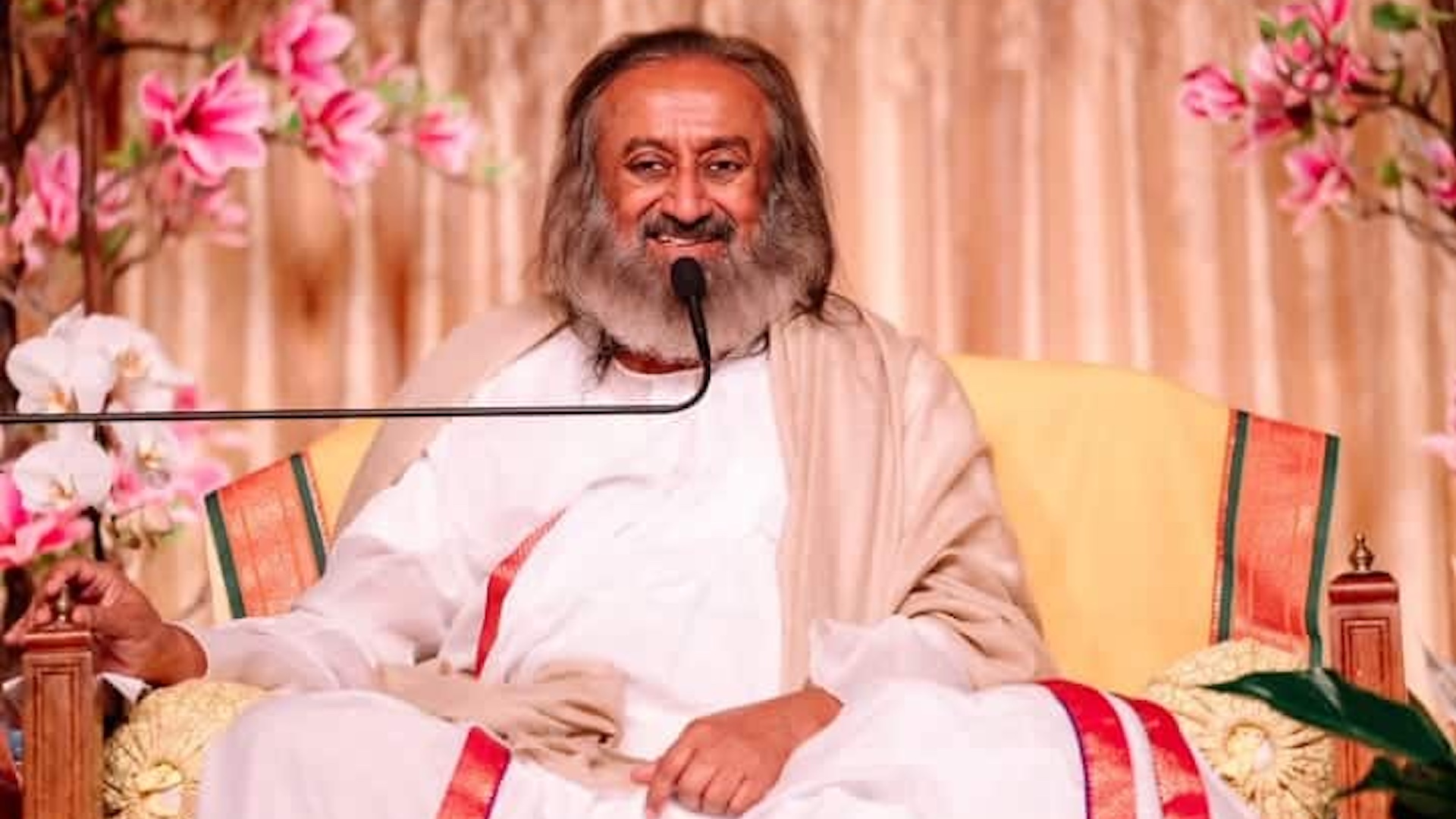
The Unity of Consciousness: A Journey into Being
When Sri Sri Ravi Shankar asserts that "All beings are made of the same consciousness," he invites us to explore the profound interconnectedness that binds all forms of life. This statement transcends mere philosophical speculation; it serves as a reminder of our shared essence, urging us to recognize the divine thread that weaves through every individual and creature. Understanding this unity is not just an intellectual exercise; it has the potential to transform our relationships, our communities, and ultimately, our world.
In a time marked by division and discord, this teaching resonates deeply, offering a pathway toward compassion and empathy. It challenges us to look beyond the superficial differences that often separate us—be they cultural, ideological, or personal—and to embrace the underlying consciousness that connects us all. This perspective invites us to cultivate a sense of belonging, not only to our immediate circles but to the vast tapestry of existence itself.
The image / the metaphor
At its core, the quote evokes a vivid image of a vast ocean, where each wave represents an individual being, yet all are composed of the same water. The verbs "made of" suggest a fundamental composition, indicating that our essence is not merely shared but is the very fabric of our existence. This imagery evokes a sense of fluidity and movement, reminding us that while we may appear distinct on the surface, we are all manifestations of a singular consciousness.
Diving deeper into this metaphor, we can see how it invites us to reconsider our perceptions of self and other. Just as waves rise and fall, each being experiences its own unique journey, yet they all arise from the same source. This understanding can foster a sense of humility and interconnectedness, encouraging us to act with kindness and awareness, knowing that every action reverberates through the collective consciousness.
In the speaker's tradition
Sri Sri Ravi Shankar's teachings are deeply rooted in the Art of Living philosophy, which emphasizes the importance of recognizing our shared consciousness as a pathway to inner peace and harmony. Concepts such as dharma, the moral order of the universe, and bhakti, the devotion to the divine, are integral to this understanding. By acknowledging that all beings are manifestations of the same consciousness, we align ourselves with the greater cosmic order, fostering a sense of responsibility toward one another.
This idea resonates with the ancient wisdom found in the Patanjali Yoga Sutras, where the notion of "samyama" (the integration of concentration, meditation, and absorption) leads to the realization of oneness. In this context, the Sutras guide practitioners toward a state of awareness that transcends the individual self, allowing for a deeper connection with the universal consciousness that permeates all existence.
Living the teaching
Consider a modern scenario where this teaching can be applied: a workplace filled with diverse personalities and perspectives. When conflicts arise, recognizing that each colleague is a manifestation of the same consciousness can shift our approach from confrontation to collaboration. This understanding encourages us to listen more deeply, to empathize with differing viewpoints, and to work toward solutions that honor the shared essence of our humanity.
In personal relationships, this teaching can be equally transformative. Imagine a moment of tension with a loved one, where misunderstandings seem insurmountable. By remembering that both individuals are expressions of the same consciousness, it becomes easier to approach the situation with compassion and patience. This perspective allows for healing and reconciliation, fostering a deeper bond that transcends the immediate conflict.
A reflection
As we contemplate the profound truth that "All beings are made of the same consciousness," we are invited to reflect on our own lives and interactions. How can we cultivate a deeper awareness of this interconnectedness in our daily experiences? In what ways can we practice empathy and compassion, recognizing the shared essence that binds us all together?