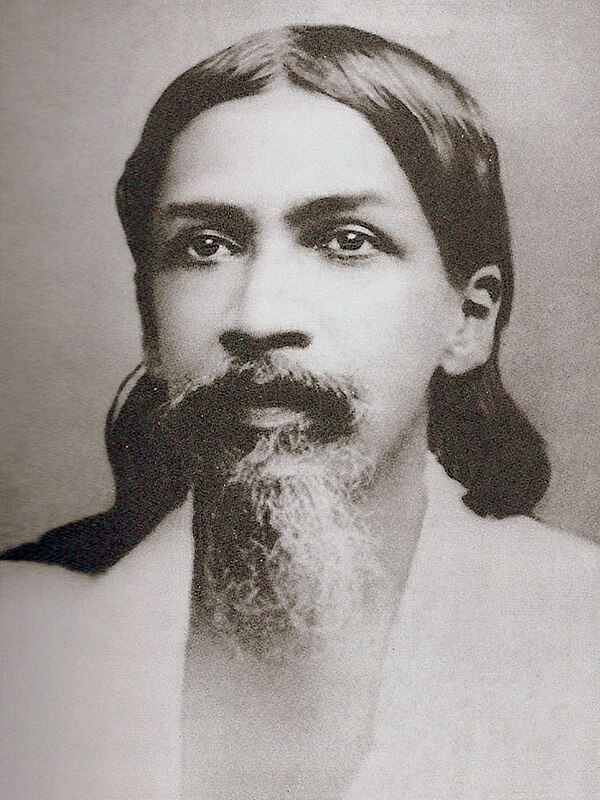
The Divine Paradox of Suffering and Love
Sri Aurobindo's profound assertion invites us to confront the intricate relationship between suffering and ultimate joy. He suggests that true understanding emerges when we recognize the essential role of hardship in cultivating profound love and spiritual fulfillment. This perspective challenges our instinctive aversion to pain, urging us to reconsider our experiences of hatred and persecution as integral to our journey toward divine love and enlightenment. In a world often preoccupied with the pursuit of happiness, this insight serves as a powerful reminder of the transformative potential inherent in our struggles.
At its core, Aurobindo's quote beckons us to embrace a more expansive view of existence, one that acknowledges the duality of life. Suffering, often perceived as a mere obstacle, is recontextualized as a necessary precursor to joy. This understanding not only deepens our compassion for ourselves and others but also aligns us with a greater cosmic order. By recognizing suffering as a vital component of our spiritual evolution, we begin to glimpse the divine plan that weaves through our lives, revealing a path toward greater wisdom and love.
The image / the metaphor
The imagery in Aurobindo's words evokes a landscape where suffering and joy coexist, each playing a pivotal role in the human experience. The verbs "see" and "know" imply an awakening, a moment of clarity where one transcends the superficial understanding of pain. This vision is not merely about enduring hardship; it is about perceiving the deeper significance behind it. The juxtaposition of "hatred and persecution" with "perfect love" creates a striking contrast, suggesting that the most profound forms of love often arise from the ashes of adversity.
Diving deeper into the metaphor, we can envision suffering as a crucible, a transformative space where the raw materials of our emotional and spiritual lives are refined. Just as gold is purified through fire, our souls are often shaped and strengthened through trials. This process of transformation is not linear; it is a dance of light and shadow, where moments of despair can illuminate the path to deeper understanding and connection. In this light, suffering becomes a teacher, guiding us toward the ultimate delight of love and unity.
In the speaker's tradition
Sri Aurobindo's insights are deeply rooted in the rich tapestry of Hindu philosophy, where concepts such as dharma and bhakti illuminate the path of spiritual growth. Dharma, or righteous duty, often entails facing challenges that test our resolve and compassion. In this context, suffering is not merely an unfortunate aspect of life but a necessary element of fulfilling one's dharma. The notion of kenosis, or self-emptying, resonates here, as it suggests that through the relinquishment of the ego and the acceptance of suffering, we can open ourselves to a greater love and understanding.
Furthermore, Aurobindo's perspective finds resonance in the teachings of the Bhagavad Gita, where Krishna imparts wisdom on the nature of duty and the importance of embracing life's challenges. The Gita teaches that true action arises from a place of detachment and love, suggesting that our struggles can lead us to a more profound connection with the divine. In this light, Aurobindo's assertion serves as a reminder that the path to enlightenment is often paved with the stones of adversity, each one contributing to our spiritual evolution.
Living the teaching
Consider a modern scenario where this teaching might resonate: a person grappling with the loss of a loved one. Initially, the experience is marked by profound grief and a sense of isolation. However, as time unfolds, the individual begins to recognize how this suffering has deepened their capacity for empathy and connection with others who are grieving. In this way, the pain transforms into a source of strength, allowing them to offer support and love to those in similar situations, thereby embodying Aurobindo's insight into the divine plan.
Another application of this teaching can be found in the realm of relationships. Imagine a couple facing significant challenges, perhaps stemming from misunderstandings or external pressures. Instead of succumbing to resentment, they choose to confront their difficulties with openness and vulnerability. Through this process, they discover that their struggles have not only strengthened their bond but have also fostered a deeper understanding of each other's needs and desires. Here, the persecution of misunderstanding becomes a catalyst for perfect love, illustrating the transformative power of embracing suffering as part of the divine journey.
A reflection
As we contemplate Aurobindo's profound words, we are invited to reflect on our own experiences of suffering and love. How have moments of hardship shaped our understanding of joy and connection? In what ways can we embrace the challenges we face as integral to our spiritual growth? Allow these questions to guide your contemplation, opening your heart to the possibility that within every struggle lies the seed of divine love waiting to blossom.