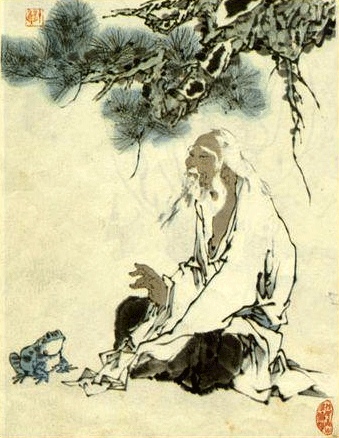
The Sage and the Embrace of Unity
In the words of Chuang Tzu, "Therefore the sage embraces the One, and is a model for the world." This profound statement invites us to consider the nature of unity and the role of the sage as a guiding light in a fragmented world. The sage, in this context, is not merely a wise individual but a person who embodies the essence of oneness, serving as a beacon for others to follow. Understanding this quote is essential, as it challenges us to reflect on our own lives and the ways we can cultivate unity within ourselves and our communities.
Chuang Tzu's assertion speaks to a deep yearning for connection and harmony in a world often marked by division and strife. The sage's embrace of the One suggests a profound acceptance of the interconnectedness of all things, a theme that resonates throughout Taoist philosophy. This notion of unity is not simply an abstract idea but a lived experience that can transform our interactions and relationships. By exploring the implications of this quote, we can begin to grasp the significance of embodying the principles of the sage in our everyday lives.
The image / the metaphor
The imagery in Chuang Tzu's quote evokes a sense of wholeness and integration. The phrase "embraces the One" suggests an active, loving acceptance of unity, where the sage does not merely acknowledge the interconnectedness of existence but fully embodies it. The use of the word "model" implies that the sage's life serves as a template for others, illustrating how one can live in alignment with this principle of oneness. This metaphor invites us to envision the sage as a nurturing figure, guiding others toward a deeper understanding of their own place within the larger tapestry of life.
In the speaker's tradition
Chuang Tzu's teachings are deeply rooted in the tradition of Taoism, which emphasizes the importance of living in harmony with the Tao, or the natural way of the universe. The concept of unity is central to Taoist thought, resonating with ideas such as dharma in Buddhism, which speaks to the inherent order of the cosmos. The sage's embrace of the One can be likened to the practice of kenosis, or self-emptying, found in various spiritual traditions, where one relinquishes the self to become a vessel for greater truths. This alignment with the Tao allows the sage to transcend personal limitations and embody a universal wisdom that serves as a guide for others.
In the text of the Zhuangzi, we find numerous anecdotes illustrating the sage's role as a model for living in accordance with the Tao. For instance, the story of the "Useless Tree" highlights the idea that true value lies not in societal measures of success but in the acceptance of one's natural state. This acceptance is a reflection of the sage's understanding of unity, as they recognize that every being has its place within the grand scheme of existence. By embodying this wisdom, the sage becomes a source of inspiration, encouraging others to embrace their own unique paths while remaining connected to the whole.
Living the teaching
Consider a modern scenario where the teaching of embracing the One can be applied: a workplace filled with diverse personalities and conflicting agendas. In such an environment, the sage's role becomes crucial. By embodying the principles of unity and acceptance, a leader can foster collaboration and understanding among team members, encouraging them to see beyond their individual interests. This approach not only enhances productivity but also cultivates a sense of belonging and shared purpose, demonstrating how the sage's model can transform a fragmented space into a harmonious community.
In personal relationships, the teaching of embracing the One can also have profound implications. Imagine a moment of conflict between friends, where misunderstandings and hurt feelings threaten to create a rift. By adopting the perspective of the sage, one can approach the situation with compassion and openness, seeking to understand the underlying emotions at play. This willingness to embrace unity, rather than division, can lead to healing and reconciliation, illustrating how the sage's model can guide us through the complexities of human connection.
A reflection
As we contemplate Chuang Tzu's words, we are invited to ask ourselves: In what ways can I embrace the One in my own life? This question encourages us to reflect on our relationships, our work, and our inner lives, prompting us to seek out the connections that bind us to others and to the world around us. By embodying the principles of the sage, we can cultivate a deeper sense of unity, not only within ourselves but also in our interactions with others, ultimately becoming models of harmony in a world that desperately needs it.



Join the BrightStar Community
Stay connected with daily inspiration, event announcements, and community wisdom