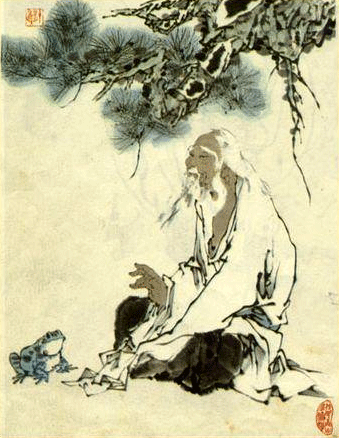
The Strength Within: Mastery of Self
Chuang Tzu's assertion, "He who conquers himself is strong," invites us to reflect on the profound strength that arises from self-mastery. This statement emphasizes that true power does not stem from external victories or dominance over others, but rather from the ability to understand and govern our own thoughts, emotions, and impulses. In a world often obsessed with outward displays of strength, this teaching serves as a reminder that the most significant battles we face are internal, and the greatest triumphs are those that lead to personal transformation.
As we delve deeper into this quote, we uncover layers of meaning that resonate with the essence of Taoist philosophy. The journey of self-conquest is not merely about overcoming weaknesses; it is about embracing our full humanity, recognizing our limitations, and cultivating a harmonious relationship with ourselves. This process of self-discovery and acceptance is what ultimately leads to genuine strength, allowing us to navigate life's challenges with grace and resilience.
The image / the metaphor
The imagery in Chuang Tzu's quote evokes a sense of struggle and triumph, where the act of conquering oneself suggests a dynamic interplay between the self and its myriad facets. The verb "conquers" implies a battle, a confrontation with the inner turmoil that often clouds our judgment and distorts our perceptions. This battle is not one of violence or aggression; rather, it is a gentle yet persistent effort to understand and integrate the various aspects of our being. The felt sense of this journey is akin to a warrior who, instead of wielding a sword against an enemy, learns to wield the sword of wisdom against the chaos within.
Diving deeper into the metaphor, we can see that self-conquest is a journey toward inner peace and clarity. It suggests that strength is not merely the absence of weakness but the presence of a profound understanding of oneself. This understanding allows us to respond to life's challenges with equanimity rather than reaction. In this light, conquering oneself becomes an act of love and compassion, both for ourselves and for those around us, as we learn to navigate our emotions and thoughts with mindfulness and intention.
In the speaker's tradition
Chuang Tzu's wisdom is deeply rooted in the tradition of Taoism, which emphasizes harmony with the Tao, or the natural order of the universe. Central to this philosophy is the concept of wu wei, or effortless action, which encourages individuals to align their actions with the flow of life rather than resist it. This alignment requires a deep understanding of oneself, as it is only through self-awareness that we can discern the natural rhythms of existence. In this context, conquering oneself becomes a vital step toward living in accordance with the Tao, fostering a sense of peace and balance.
Moreover, the idea of self-mastery resonates with the Taoist notion of simplicity and spontaneity. In the text of the Zhuangzi, we find numerous anecdotes illustrating the importance of letting go of rigid expectations and embracing the fluidity of life. For instance, the story of the "Useless Tree" teaches us that true strength lies in accepting our unique nature and allowing ourselves to flourish without the constraints of societal norms. This acceptance is a form of self-conquest, leading to a life that is both authentic and fulfilling.
Living the teaching
Consider a modern scenario where this teaching finds relevance: a professional facing intense pressure to succeed in a competitive work environment. The external demands may lead to stress, anxiety, and a sense of inadequacy. However, by turning inward and practicing self-reflection, the individual can begin to recognize the sources of their anxiety and the unrealistic expectations they impose on themselves. This journey of self-conquest allows them to redefine success on their own terms, fostering a sense of strength that is rooted in authenticity rather than comparison.
In a different context, imagine a relationship strained by misunderstandings and unexpressed emotions. Here, the teaching of self-mastery invites individuals to confront their own fears and insecurities before addressing the dynamics at play. By cultivating self-awareness and practicing open communication, they can transform their interactions, leading to deeper connections and mutual understanding. In both scenarios, the act of conquering oneself becomes a pathway to resilience and harmony, illustrating the profound impact of Chuang Tzu's wisdom in our daily lives.
A reflection
As we contemplate Chuang Tzu's assertion, we are invited to reflect on our own journeys of self-mastery. What aspects of ourselves remain unexamined or unacknowledged? In what ways can we cultivate a deeper understanding of our thoughts and emotions to foster a sense of strength that is both authentic and empowering? This contemplation encourages us to embrace the ongoing process of self-discovery, recognizing that the path to true strength lies within.



Join the BrightStar Community
Stay connected with daily inspiration, event announcements, and community wisdom