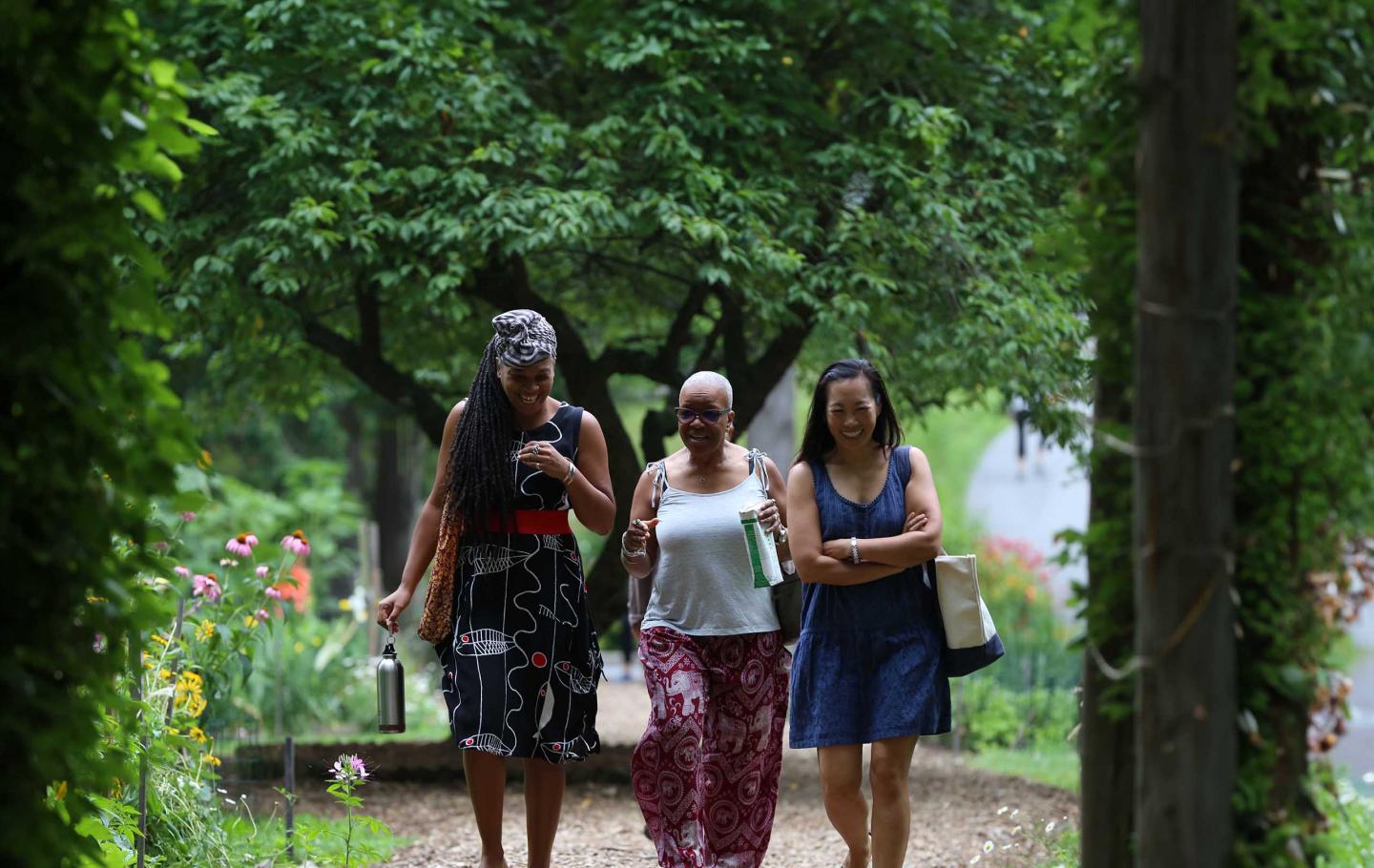
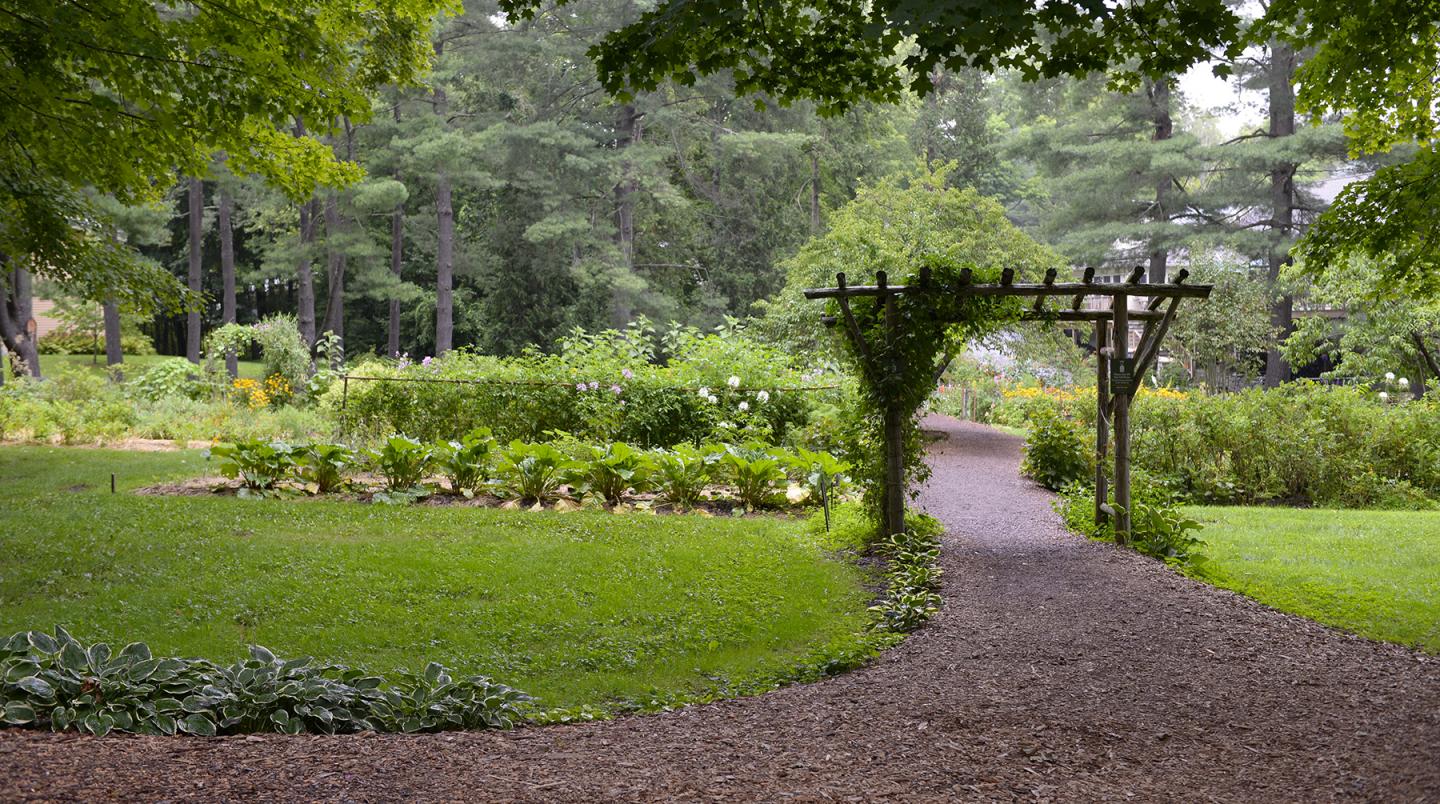
Before anyone rang a bell for meditation on this land, it belonged to an imaginary town. In 1923, a community of secular Yiddish idealists bought a stretch of woods above Rhinebeck, New York, and named their summer camp Boiberik — after the fictional resort town where Sholem Aleichem set his Tevye stories, the same world that became Fiddler on the Roof. For fifty-six summers, under the guiding hand of the pedagogue and philosopher Leibush Lehrer, Camp Boiberik was a paradise built on purpose: a place where a scattered people's language, songs, and ideals could live outdoors, together, for a few weeks a year.
Boiberik closed in 1979. Three years later, a young former midwife named Elizabeth Lesser and her co-founder Stephan Rechtschaffen bought the grounds — more than a hundred low wooden buildings and 250 acres — for a five-year-old experiment called Omega Institute. They inherited more than real estate. They inherited the premise: that this particular piece of the Hudson Valley is where you go to build heaven deliberately. A century on, the land has never once been used for anything else.
The Wager: No Guru
What Lesser and Rechtschaffen built on Boiberik's bones was, in its own way, just as radical as what came before. American spirituality in 1977 was an archipelago of single-teacher communities, each orbiting one charismatic center of gravity — and more than a few already curdling. Omega, inspired by the Sufi teacher Pir Vilayat Inayat Khan's ecumenical spirit, made the opposite bet: no resident guru, no single lineage. A campus organized around teachers, plural — where the Buddhist nun, the poet, and the neuroscientist teach in adjacent halls and the student assembles their own path.
Even the founders refused to become fixtures. "We really began to be tired of ourselves teaching this technology of inner awakening to the same people over and over," Lesser recalled on the Tim Ferriss Show in 2021. "It's like, how many times do you have to wake up in the morning? You're awake. Do something." The wager paid off in a faculty roll no single-lineage community could ever have assembled: Ram Dass, Pema Chödrön, Thich Nhat Hanh, Maya Angelou, Jane Goodall, Pete Seeger, Allen Ginsberg, Philip Glass. Today that means 300-plus workshops a season and more than 25,000 people a year making the drive up Lake Drive.
What the Container Does
The clearest picture of Omega isn't a celebrity teacher on a summer Saturday — it's the quieter programs the campus makes possible. For years running, Omega has hosted sponsored five-day meditation retreats for veterans living with post-traumatic stress, bringing groups of eighty at a time — veterans, their families, any tradition or none — onto the same lawns where Yiddish children once rehearsed their pageants, to learn tools for coming home from war. No one builds a program like that to sell tickets. You build it because the container exists and it would be a waste not to.
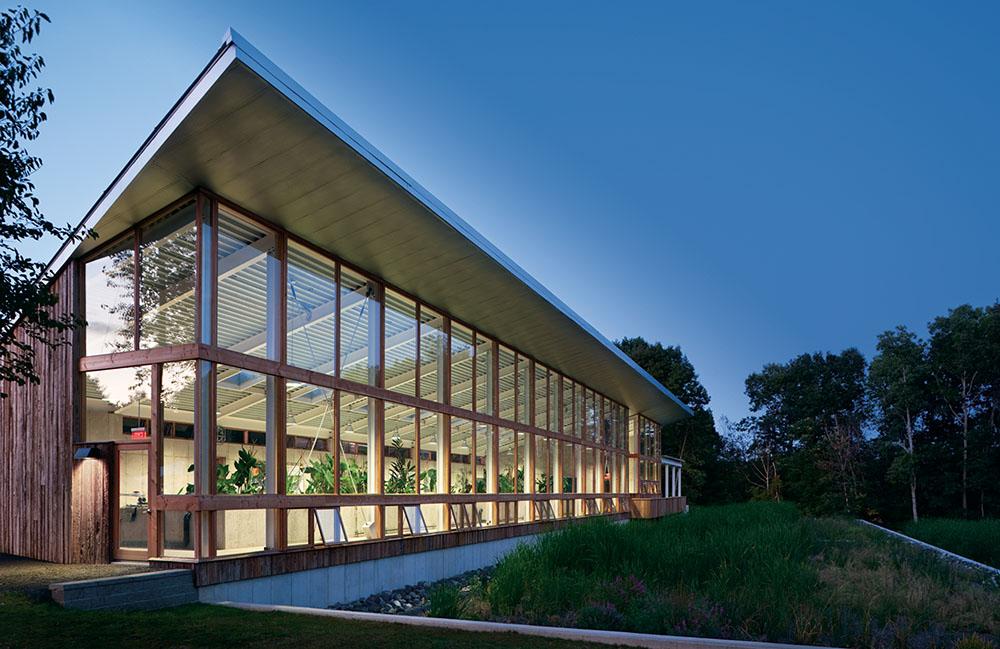
The campus itself is part of the teaching. The Omega Center for Sustainable Living — solar-powered, one of the first two buildings on Earth certified as "living" by the International Living Building Institute — treats the campus's own wastewater in a building that works like a wetland, in public, as a classroom. At the heart of the grounds, the Ram Dass Library's roof unfolds in the shape of an eight-petaled lotus. The values aren't posted on the walls; they're poured into them.
A Century of Deliberate Paradise
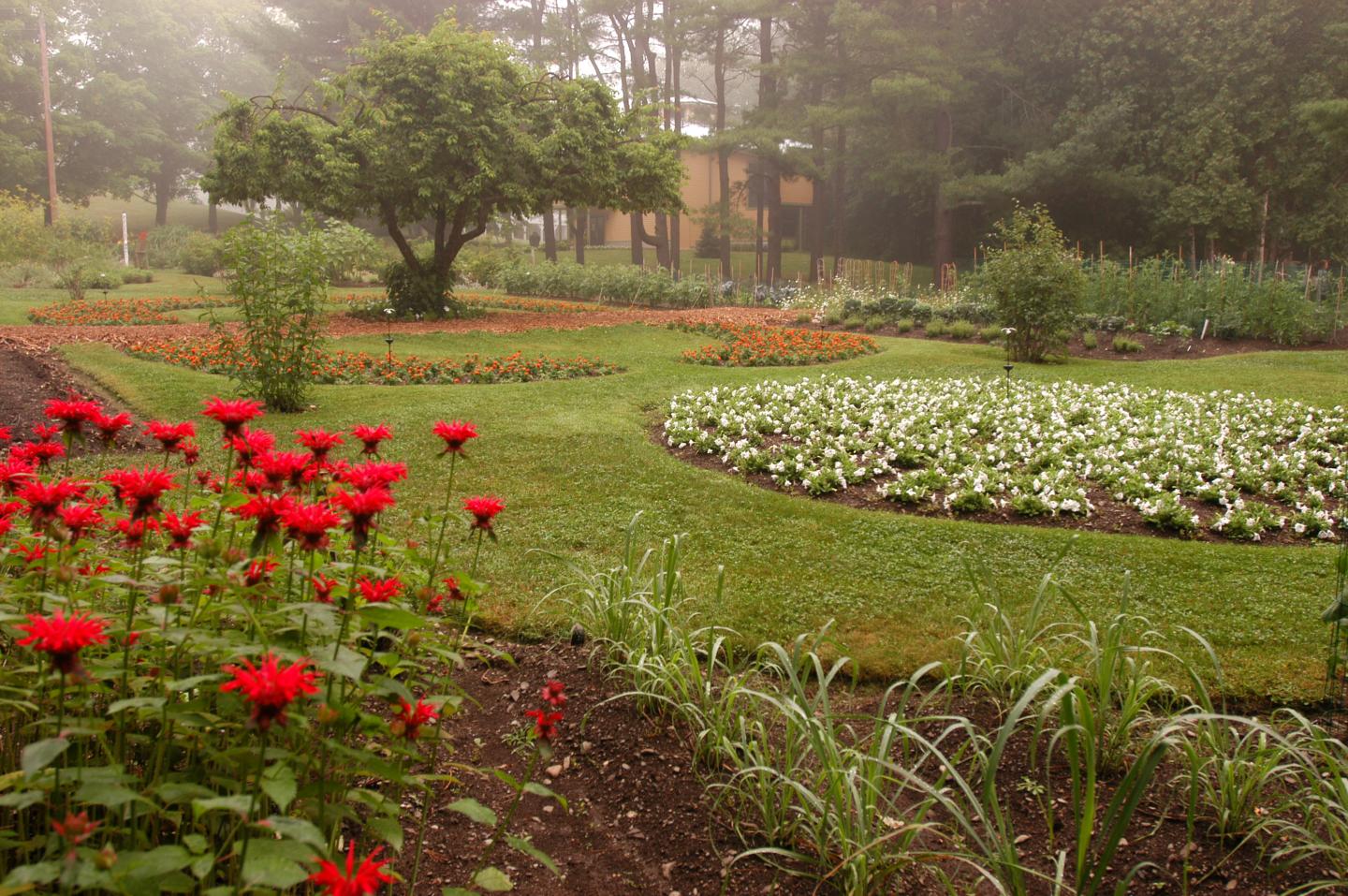
Retreat centers open and close every year in this movement; most are gone inside a decade. The land above Rhinebeck has now held a community of meaning for over a hundred years across two entirely different traditions — which suggests the secret was never the tradition. It's the choices both communities made: honor a lineage without enthroning it, put teachers at the center of gravity but never a single teacher, seat the newcomer and the forty-year practitioner at the same dining-hall tables, and build slowly, on land, in buildings that embody the work. Sholem Aleichem invented Boiberik as a place his characters could only dream of reaching. It turned out to be buildable. It's been operating above Rhinebeck since 1923.
Omega Institute is profiled in the venues directory; its teachers' work appears throughout the wisdom library.