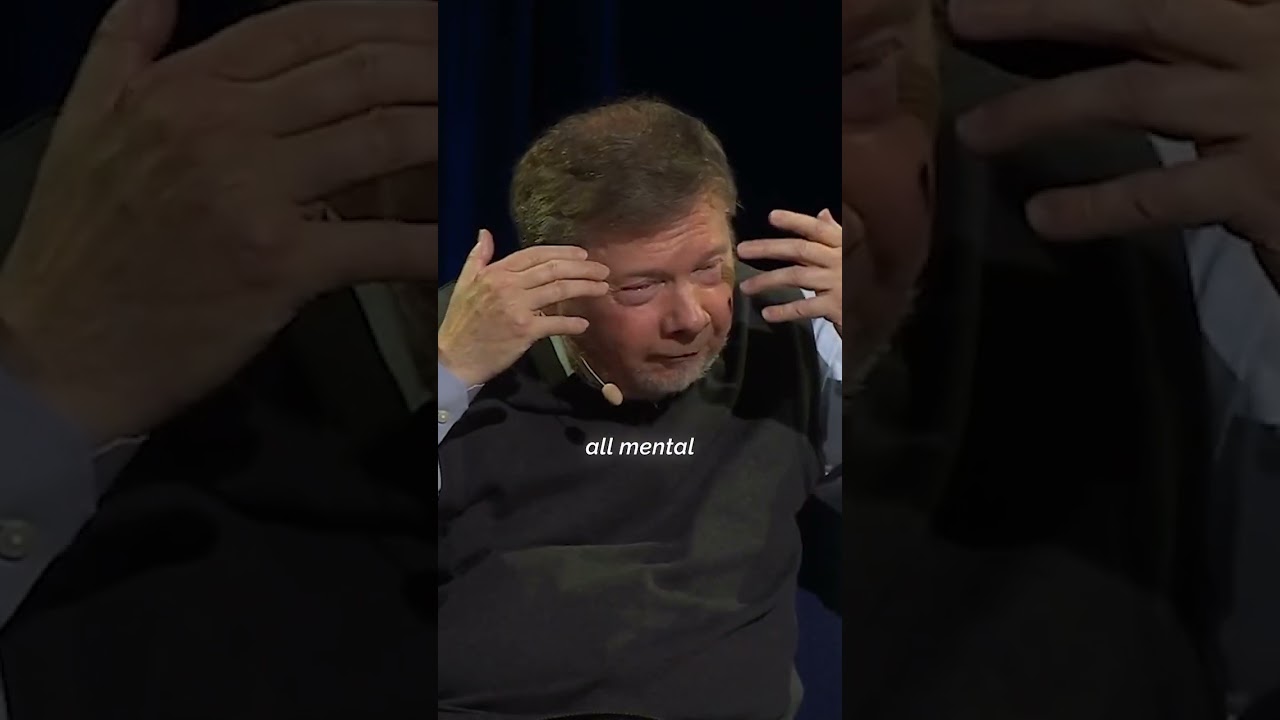
Most humans never discover that the present moment is the only place consciousness and authentic life actually exist. This core teaching suggests that unless we intentionally shift awareness away from identification with mind and thought, we remain trapped in psychological time and miss the fundamental dimension of being that is accessible right now. Eckhart Tolle frames this as one of the most consequential human oversights—spending a lifetime lost in mental patterns and future/past narratives while the gateway to peace, clarity, and true presence remains unrecognized.
Why Does Most of Humanity Miss This Discovery?
According to Tolle's teaching, the vast majority of people go through life without recognizing the primacy of the present moment because they are hypnotized by the thinking mind. The mind operates primarily through conceptual knowledge—memory, projection, language, and narrative—which by nature always reference what has happened or what might happen. This continuous drift into psychological time creates an illusion that "life" is something that happens in the future or is preserved in the past, when in fact all direct experience, all aliveness, and all authentic consciousness occurs in the now.
The human conditioning reinforces this pattern from childhood. Society teaches us to use the mind as a survival tool and to be constantly preoccupied with planning, analyzing, and protecting ourselves through thought. This is adaptive in certain practical contexts, but when the mind becomes the dominant or sole lens through which we experience reality, we become imprisoned by it. We mistake our thought patterns, our narratives about ourselves, and our conceptual understanding for reality itself. Life is then lived through a filter of mental abstraction rather than direct presence.
Most people are not taught that there is a dimension of consciousness that exists prior to thought—a being that is aware of thought but distinct from it. Without this knowledge, there is no framework for discovering it. The default assumption is that "I am my mind" or "I am my thoughts," and so the search for freedom, meaning, or peace remains confined to the realm of thinking itself, like trying to solve a problem with the very mechanism that created the problem.
What Is This Undiscovered Dimension?
The undiscovered dimension is what Tolle calls the "present moment" or simply "Now"—not as a concept, but as a direct gateway to consciousness itself. It is the only place where life actually happens. Every sensation, every authentic emotion, every genuine perception occurs in presence. Yet because the habitual mind is constantly narrating, judging, and projecting, most people pass through their entire lives without actually being fully present for their own experience.
This present-moment awareness is not something exotic or difficult to access in principle—it is available right now, to anyone, at any instant. It requires no special belief, no years of training, and no particular circumstances. It is simply the shift from identification with thought to awareness itself. When you pause the internal dialogue, when you feel the aliveness of your body or notice the sensation of breathing without narrating about it, when you listen without mentally categorizing what you hear—you are there. You have discovered it.
The tragedy, from Tolle's perspective, is that this dimension is so close, so constantly available, and yet so universally overlooked that most people die without genuinely knowing it. They experience moments of presence, perhaps, but do not recognize the significance of those moments or understand how to return to that state deliberately. Life remains a mental abstraction, a story told by the mind, rather than a lived reality.
How Does This Relate to Suffering and Psychological Time?
Tolle's teaching suggests that the root of human suffering lies not in life circumstances themselves but in the mind's relationship to those circumstances—specifically, in the creation of "psychological time." Psychological time is the sense that you are not okay in this moment because of something that happened (guilt, shame, regret) or because something needs to happen in the future (anxiety, ambition, seeking, fear). Suffering is generated when you fuse your sense of self with these mental narratives.
Because most people have never discovered the dimension of being that exists independent of psychological time, they have no stable ground to stand on. They are tossed about by their own thoughts and by the endless stream of worries, plans, and mental interpretations of life. They may achieve goals, accumulate possessions, or reach positions of status, but without the underlying realization of presence, these achievements do not deliver genuine peace or fulfillment. The mind simply shifts its focus to the next problem, the next goal, the next source of lack.
The key insight is that suffering is optional. It arises only when identification with thought is total. When you recognize your consciousness as distinct from the content of your thoughts, when you can observe your mind without being absorbed into it, the quality of your life fundamentally shifts. This is the discovery most humans never make.
Can This Discovery Be Taught or Must It Be Experienced?
Tolle's approach suggests that while the state cannot be downloaded as information, it can be pointed to. A teacher can direct your attention to what is already present, can suggest practices that create the conditions for recognition, and can validate the experience when you encounter it. The discovery itself, however, must be your own direct experience. Reading about presence is not presence; thinking about now is not being in the now.
This is why many people can understand Tolle's teachings intellectually—they can agree that the mind is often overactive, that presence is valuable, that psychological time generates suffering—without actually having discovered the freedom he speaks of. The knowledge remains conceptual, stored in memory. The transformation only occurs when there is a genuine shift in where consciousness is identified and from which place life is actually lived.
The beginning of this discovery typically happens when someone becomes consciously aware of the mind itself—when they notice they are thinking, when they observe a pattern of anxiety or rumination, when they suddenly remember to "be present" in the middle of everyday activity. That moment of noticing is itself the discovery beginning to dawn. It shows that consciousness can step back from thought. It is already happening, but most people remain asleep to it.
What Are the Practical Implications of This Discovery?
Once someone begins to genuinely discover the present moment as the foundation of consciousness, several practical shifts follow. First, reactivity decreases. Because psychological triggers are rooted in mental narratives rather than actual present danger, staying grounded in now naturally diffuses the charge of difficult emotions. Second, clarity increases. When the mind is not overlaid with past hurt or future anxiety, perception becomes sharper and more direct. Third, relationships improve, because presence allows genuine listening and connection rather than meeting someone through the filter of your own mental patterns about them.
In practical life, this discovery does not make you passive or ineffectual. Intelligent action flows more naturally when you are not caught in the mind's anxiety about outcomes. Decisions become clearer when made from presence rather than reactivity. Creativity, intuition, and alignment with what is actually needed emerge more readily when consciousness is not imprisoned in psychological time.
The irony is that by ceasing to fight life as it is in this moment, by stopping the obsessive planning and mental resistance, people often accomplish their genuine goals more effectively. But the primary gift of this discovery is not instrumental—it is the direct freedom and aliveness that presence itself offers, independent of what you achieve or acquire.
Where to Go from Here
If this teaching resonates, the first step is to become curious about your own experience of the present moment. Notice when you are lost in thought and when you are actually present. Observe how suffering changes when you shift from mental abstraction back to direct sensation—the feeling of your feet on the ground, the sound of the breath, the aliveness in your body. These are already channels to the discovery Tolle speaks of.
You might explore structured practices like conscious breathing, body awareness, or mindful observation of thoughts, all of which create gentle pathways back to presence. The key is consistency and genuine interest rather than forcing or spiritualizing the process. The discovery is available now, in this moment, and every return to presence is both the practice and the destination.