EveryEvent ATX

Parcourir tous les Events

Live Music Capital of the World

events

Concerts & Live Music
Festivals
Sports & Recreation
Food & Drink
Arts & Culture
Community
Family & Kids
Nightlife
Comedy
Theater
Destinations populaires
BaliSedonaLos AngelesCosta RicaNew YorkSan FranciscoAustinMiamiJoshua TreeTulum
Voir toutes les catégoriesVoir toutes les destinations

Explorer toutes les fonctionnalités

Des outils puissants pour développer tes événements

Fonctionnalités de la plateforme

Tarification dynamique intelligente
Catégories de billets
Places assignées
Récupération des paniers abandonnés
Récupération des visiteurs
Dons & Prix variables
Système d'affiliation
Scanner de billets
Codes promo
Questions personnalisées
Partage de billets
Ventes additionnelles & Options
Analyses & Rapports
Séquences d'emails
Liste d'attente / Notifier / Rappeler
Explorer
Discovery HubArtists & PerformersVenuesKnowledge Base
Voir toutes les fonctionnalitésÀ propos
TarifsBlog
Language
Saved events
Parcourir tous les événements

events

Concerts & Live MusicFestivalsSports & RecreationFood & DrinkArts & CultureCommunityFamily & KidsNightlife

Destinations populaires

BaliSedonaLos AngelesCosta RicaNew YorkSan Francisco

Explorer

Discovery HubArtists & PerformersVenuesKnowledge Base

Fonctionnalités de la plateforme

Tarification dynamique intelligenteCatégories de billetsPlaces assignéesRécupération des paniers abandonnésRécupération des visiteursDons & Prix variablesSystème d'affiliationScanner de billetsCodes promoQuestions personnaliséesPartage de billetsVentes additionnelles & OptionsAnalyses & RapportsSéquences d'emailsListe d'attente / Notifier / Rappeler
Voir toutes les fonctionnalitésÀ propos
TarifsBlog
ConnexionS'inscrireOrganisateurs d'événements
  • Browse All Events
  • Concerts & Live Music
  • Festivals
  • Sports & Recreation
  • Food & Drink
  • Arts & Culture
  • Community
  • Family & Kids
  • Nightlife
  • Toutes les catégories →
  • San Antonio
  • Hill Country
  • Fredericksburg
  • Houston
  • Dallas
  • All Destinations →
  • For Promoters
  • For Artists
  • For Venues
  • For Festivals
  • For Event Spaces
  • For Nonprofits
  • For Bloggers
  • For Speakers
  • Brand Ambassador
  • Case Studies
  • Réseau de 350K+ acheteurs
  • Récupération des paniers abandonnés
  • Tarification dynamique intelligente
  • Catégories de billets
  • Événements récurrents
  • Places assignées
  • Système d'affiliation
  • Liste d'attente / Notifier
  • Scanner de billets
  • Widget intégrable
  • Diffusion d'événements
  • Messagerie
  • Intégrations
  • Rapports
  • Toutes les fonctionnalités →
  • À propos
  • L'écosystème
  • Blog
  • Glossaire
  • Inspiration
  • Centre d'aide
  • Contact
  • Documentation API
  • Ressources de marque
  • Carrières
  • Presse
  • Conditions d'utilisation
  • Politique de confidentialité

Events

  • Browse All Events
  • Concerts & Live Music
  • Festivals
  • Sports & Recreation
  • Food & Drink
  • Arts & Culture
  • Community
  • Family & Kids
  • Nightlife
  • Toutes les catégories →

Getaways

  • San Antonio
  • Hill Country
  • Fredericksburg
  • Houston
  • Dallas
  • All Destinations →

For Organizers

  • For Promoters
  • For Artists
  • For Venues
  • For Festivals
  • For Event Spaces
  • For Nonprofits
  • For Bloggers
  • For Speakers
  • Brand Ambassador
  • Case Studies

Fonctionnalités

  • Réseau de 350K+ acheteurs
  • Récupération des paniers abandonnés
  • Tarification dynamique intelligente
  • Catégories de billets
  • Événements récurrents
  • Places assignées
  • Système d'affiliation
  • Liste d'attente / Notifier
  • Scanner de billets
  • Widget intégrable
  • Diffusion d'événements
  • Messagerie
  • Intégrations
  • Rapports
  • Toutes les fonctionnalités →

Entreprise

  • À propos
  • L'écosystème
  • Blog
  • Glossaire
  • Inspiration
  • Centre d'aide
  • Contact
  • Documentation API
  • Ressources de marque
  • Carrières
  • Presse
  • Conditions d'utilisation
  • Politique de confidentialité
EveryEvent
© 2026 EveryEvent Austin. Tous droits réservés.
Inspiration

Song Creation and RastafariUnity Consciousness in London

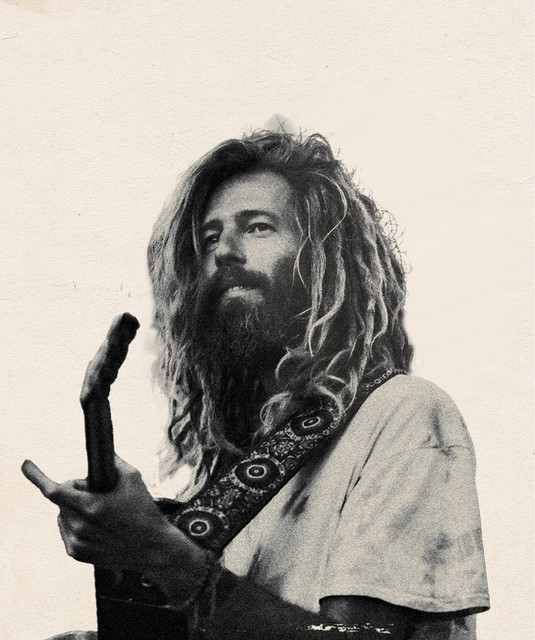
Sam Garrett
Sam Garrett
Jun 18, 2025
8 min de lecture
À regarder · 7

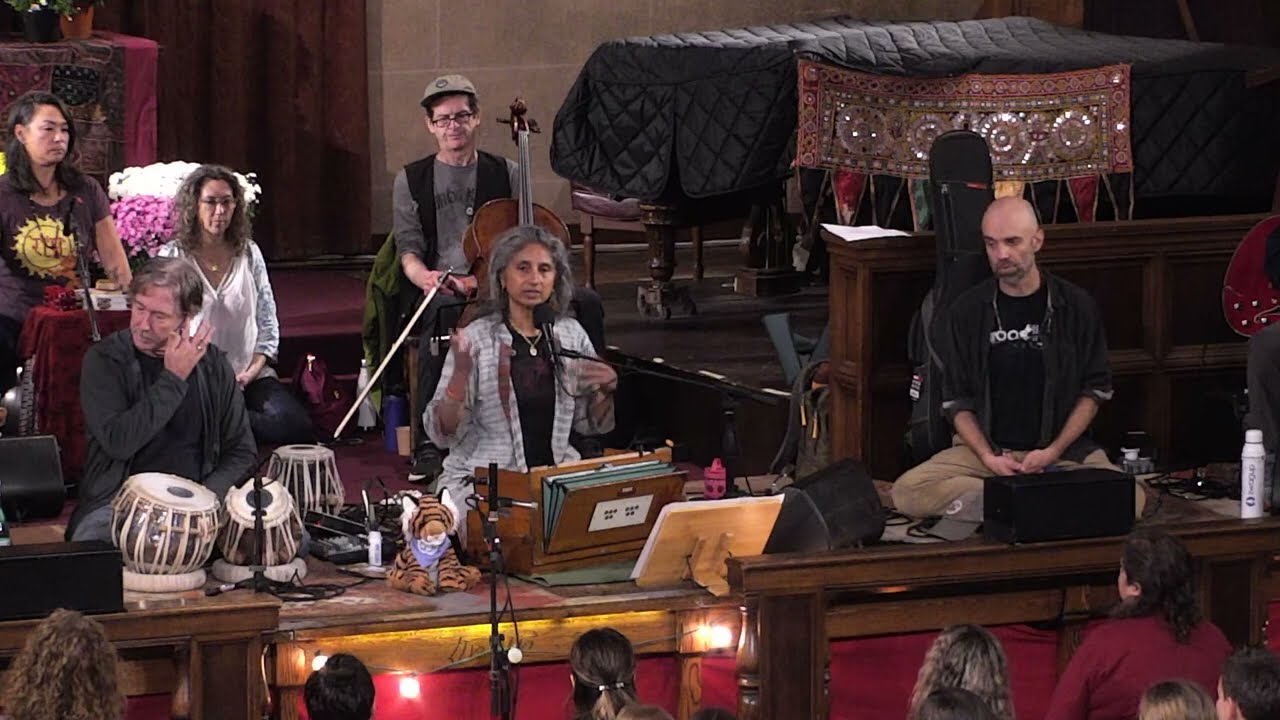
During a tour stop at Union Chapel in London on February 9, 2024, Sam Garrett shares the origin story of the song "I & I"—born from encountering Rastafari teachings on universal unity and the concept that all beings share the same divine consciousness. The video documents the creative process behind the track, explores the theology of "I and I" (the Rastafarian term for the unified self and other), and features live performances that embody these principles of love transcending skin color and religious boundaries.

Lecture · 8 sections

What Does "I and I" Mean in Rastafarian Thought?

The phrase "I and I" sits at the heart of Garrett's song and represents a profound spiritual principle within Rastafarianism. Rather than a grammatical error or poetic flourish, "I and I" expresses the belief that there is no separation between the self and the other—that the same divine consciousness, the same essential "I," flows through all beings regardless of exterior difference. As Garrett explains in the video, drawing from the teachings he encountered: "The same I am that I feel. The same sense of existence, the same sense of life that I feel, the same breath that I breathe is the same that you breathe."

This unified consciousness dissolves the illusion of fundamental separation. When applied to the tensions of race, religion, and identity, "I and I" becomes a tool for recognizing that righteousness, love, and truth carry no color and belong to no single faith. Garrett articulates this clearly in the song's lyrics: "What color is righteousness? Righteousness carry no color man. Black man righteous color and a white man righteous color. But how them teach us? Them teach us not to love one another."

How Did the Song "I & I" Come Into Being?

The genesis of "I & I" unfolded spontaneously and without deliberate intention. While staying in Portugal, Garrett found himself making coffee one morning and felt drawn to learn more about Rastafari philosophy. He typed "Rastafari wisdom" into YouTube and encountered a teacher—whom the video honors as Elder Ras Bongo Iron Teacher—whose face drew him in. He clicked on the video without expectation but soon heard a message that stopped him: "There is no me and you. There is only I and I."

The impact was immediate and visceral. Garrett recalls: "When I heard his words, I started to cry and I got goosebumps all over my body. And I went I grabbed my guitar." This was significant because he had not played his guitar for an extended period—he had been traveling extensively and, upon returning home, had chosen quiet over music. Yet the power of the teaching drew him to the instrument.

What happened next reveals the collaborative and spontaneous nature of the creative process. A friend visited while Garrett was sitting with the guitar, moved by the moment. Though this friend was not a musician and had never written a song, the spiritual power of the teaching moved him to sing lines spontaneously. They began exchanging phrases:

Garrett: "Praises to the most high."
Friend: "But don't waste your time imprisoned in the mind."
Garrett: "If you seek, you shall find."
Friend: "What you're looking for is right inside."

Garrett had his phone ready and hit record. The song was born in real time, emerging from the collective resonance of the moment rather than from a planned songwriting session. He emphasizes that he cannot claim authorship in the conventional sense: "I can't really claim any of these songs. I cannot say this is my song because I'm not sitting today. I'm going to write a song. It just comes naturally, spontaneously, just like everything else in life."

What Is the Spiritual Teaching Behind Self-Love and Universal Love?

The song opens with a principle that underpins all that follows: "If you don't love yourself, you have no love. You have to love yourself first before you can love I and I." This is not narcissism or self-centeredness but rather recognition that the love within oneself is the same love that animates all beings. Self-love, rightly understood, is the gateway to universal love because the self and the other are ultimately one.

Garrett's teaching challenges the narrative of division that he identifies as a historical tool of control: "Them teach us not to love one another, beat you and teach you what them want to teach you." The remedy is not reactive anger but the cultivation of a consciousness that sees through the illusion of separation. Love, in this framework, is not a sentiment or emotion to be generated but a recognition of an existing unity that can be obscured by conditioned thinking.

How Does Emptiness Relate to Divine Grace in This Teaching?

A key insight Garrett articulates is that spiritual receptivity increases as mental clutter decreases: "The more empty we become, the more full we become with God's grace, God's love." This paradox—emptiness leading to fullness—is central to contemplative traditions across cultures. Emptiness here does not mean nihilism or void but rather the clearing away of fixed ideas, prejudices, and imprisoned thinking that block the flow of grace.

This explains why the song could arrive spontaneously rather than through deliberate composition. When the mind is not attempting to control the creative process, when the ego is not asserting authorship, grace can flow through the vessel more freely. The songwriter becomes a channel rather than a constructor.

What Role Does the Concert Performance Play in the Broader Message?

The video captures the live performance at Union Chapel in London, showing how the teaching moves from individual insight into collective experience. The backing band—including vocalists, keys, drums, bass, and harmonium—creates a sonic container for the message. Before the performance, Garrett invites the audience to participate: "I would love you to sing with us. The chorus goes like this: I and I."

By inviting the audience to sing the chorus, Garrett embodies the principle itself—the distinction between performer and audience collapses. Everyone becomes a voice for the same unified consciousness. The concert becomes a ritual of recognition rather than mere entertainment.

The video also includes a cover of Paolo Nutini's "Candy" and a live performance of "Waves" by Gemiko, suggesting that Garrett's approach honors music and artists across traditions while maintaining focus on the deeper message of love and unity.

How Do Rastafari Teachings Address Religious and Racial Division?

A recurring theme throughout the teaching is the deconstruction of false divisions. The elder teacher's words are clear: "What color is love? No color. What religion is love? No religion, no ideas, just love." This is not a claim that color and religion do not exist at the material level but rather that they do not determine one's capacity for righteousness, love, or truth.

The teaching directly confronts the historical use of division as a tool of oppression: systems have taught people to see each other as fundamentally different, to fear and dominate across color lines. The antidote is not ideology but direct recognition: the same breath, the same consciousness, the same divine spark animates all beings. This recognition, if embodied, dissolves the psychological basis for discrimination.

What Is the Significance of the Spontaneous Songwriting Process?

Garrett's insistence that the song was not "written" in the conventional sense points to a view of creativity as channeling rather than originating. This aligns with many contemplative and spiritual traditions that understand the artist as a conduit for something larger than the individual ego. The song arrived in fragments through dialogue, recorded on impulse, shaped by the power of the moment rather than by revision and deliberate craft.

This does not diminish the artistry involved—the melody, harmony, and lyrical coherence are evident in the performance. Rather, it suggests that true artistry may involve a surrender of control, a receptivity that allows form to emerge from the formless. The presence of the friend who was not a musician yet contributed essential lyrics reinforces the idea that the teaching itself was the real creator, flowing through willing vessels.

Where to Go from Here

For those drawn to the themes in this video, several paths forward are worth considering. First, explore the actual teachings of Rastafari philosophy, particularly the concept of "I and I" and its implications for consciousness and social unity. Second, consider how the principle of emptiness and receptivity might apply to your own creative or spiritual practice—what happens when you stop trying to control the outcome and simply show up? Third, examine where you have internalized narratives of separation and division, and inquire whether direct experience might reveal a deeper unity beneath surface differences. Finally, if you resonate with Garrett's music, follow his journey through future episodes of the tour diaries and explore how these teachings continue to unfold in different cultural and geographical contexts.
Transcript

[0:00] If you don't love yourself, you have no

[0:02] love. You have to love yourself first

[0:04] before you can love I and I same man

[0:08] skin color look different. But look

[0:11] there no different between I and I. You

[0:14] say what color is righteousness?

[0:16] Righteousness carry no color man. You

[0:19] know you know black man righteous color

[0:22] and a white man righteous color. You

[0:24] know what I mean? But what how them

[0:26] teach us? You know them teach us not to

[0:29] love one

[0:30] another, beat you and teach you what

[0:34] them want to teach you.

[0:39] [Music]

[0:56] [Music]

[1:00] I got

[1:03] dreams. Dreams

[1:06] to

[1:09] remember together.

[1:13] I got dreams.

[1:25] While I was in Portugal, I was in the

[1:28] morning making coffee and I wanted to

[1:31] learn more about Rastafari. So I typed

[1:33] in something like Rastafari wisdom on

[1:36] YouTube and this scrolling through and I

[1:39] found this man's face big smile. I like

[1:42] his face. So I click on him and I didn't

[1:46] really think anything. I just put him

[1:48] down and I'm making my

[1:52] coffee and all I hear is there is no me

[1:57] and

[1:58] you. There is only I and I.

[2:04] [Music]

[2:09] I and I. The same I am that I feel. The

[2:14] same sense of existence, the same sense

[2:17] of life that I

[2:19] feel, the same breath that I breathe is

[2:22] the same that you breathe.

[2:24] [Music]

[2:31] Okay, girls. Light time.

[2:35] Oh, and I'll be there waiting for

[2:43] you. Know that

[2:45] I'll be

[2:47] there waiting for you.

[2:53] Oh,

[2:55] I'll be there waiting for

[3:01] you. Oh,

[3:04] I'll be there waiting for

[3:12] you. All the cuts and the jagged ends,

[3:17] all of them have got me waiting and

[3:20] waiting.

[3:22] All the cheese, the sugary

[3:25] philosophies just got me on the fence

[3:28] just waiting and waiting.

[3:31] All

[3:35] the way got me waiting and

[3:40] waiting. I'll be there.

[3:45] Would it keep me waiting, waiting?

[3:49] I'll be there waiting

[3:53] for

[3:57] you.

[3:58] I'll be

[4:00] there waiting for you.

[4:08] Oh, there I'll be there waiting for you.

[4:15] Oh,

[4:17] I be

[4:19] there waiting

[4:21] for

[4:24] you. So, good job.

[4:36] [Music]

[4:41] [Music]

[4:50] Everything ain't got.

[4:54] He said everyone's heart is upon the

[4:57] same

[4:58] side. He said, "What color is

[5:02] righteousness?" He said, "Righteousness

[5:04] doesn't carry no color." What color is

[5:07] love? No color. What religion is love?

[5:10] No

[5:11] religion, no ideas, just love.

[5:22] So before that I'll be like

[5:25] [Music]

[5:35] going I

[5:37] [Music]

[5:59] [Music]

[6:07] Love seek love.

[6:11] No,

[6:12] I know I never go

[6:16] astray. I'm already on the

[6:21] way. I'm already on the

[6:26] way. So come on,

[6:29] let your light

[6:34] unfold. Heat. Heat.

[6:38] [Music]

[6:44] Heat. Heat.

[6:54] Heat.

[7:04] Heat. Heat.

[7:12] [Music]

[7:23] away.

[7:26] So, I hadn't played my guitar for a long

[7:29] time cuz I'd been away and playing a lot

[7:32] and when I get home sometimes just want

[7:34] to be quiet and didn't play so much. But

[7:37] when I heard his words, I started to cry

[7:40] and I got goosebumps all over my body.

[7:45] And I went I grabbed my guitar and as I

[7:48] picked up the

[7:50] guitar, give thanks for

[7:53] life and praises to the most

[7:57] high. And a friend of mine, a good

[8:00] friend of mine, he came over to where I

[8:02] was sitting and he's not a musician. He

[8:05] doesn't write songs or anything like

[8:06] this. But because of the power of the

[8:09] spirit of this moment and of this great

[8:13] being, he started to sing lines to me

[8:17] and we started to sing back and forth.

[8:20] So I said, "Praises to the most high."

[8:24] And he said, "But don't waste your

[8:28] time imprisoned in the mind." And I

[8:32] said, "If you seek, you shall find." And

[8:36] he said, "What you're looking for is

[8:39] right

[8:41] inside and I had

[8:47] my I had my

[8:50] phone and I just hit record and the song

[8:53] was born." And I have to say that I

[8:56] can't really claim any of these songs. I

[8:59] cannot say this is my song

[9:02] because I'm not sitting today. I'm going

[9:04] to write a song. It just comes

[9:07] naturally, spontaneously, just like

[9:09] everything else in life. Everything is

[9:12] unfolding and flowing. The more empty we

[9:15] become, the more full we become with

[9:18] God's grace, God's

[9:20] love. Raafara

[9:23] [Applause]

[9:30] and I would love you to sing with us.

[9:31] The chorus goes like this.

[9:34] I and

[9:36] I

[9:39] I you

[9:41] say and

[9:44] [Music]

[9:50] [Music]

[9:51] I

[9:54] [Music]

[9:56] I

[9:59] am I am

[10:03] [Music]

[10:08] Yeah.

[10:12] Yeah.

[10:13] [Music]

[10:15] Oh,

[10:19] yes. Oh, give thanks for

[10:22] life and praises to the most

[10:26] high. Oh, don't waste your time.

[10:30] Oh, imprison in the

[10:33] mind. Oh, if you seek, you shall

[10:37] find. What we're looking for is right

[10:40] inside. Yeah. If you seek, you shall

[10:43] find. Yeah. What we're looking for is

[10:47] right inside. So don't bargain. Don't

[10:50] beg my children. We're bringing love to

[10:54] each and every nation. We're too good.

[10:57] know we are equal. We have to come

[11:01] together as one people rise up into

[11:07] [Music]

[11:20] [Music]

[11:27] Heat. Heat.

[11:35] [Music]

[11:38] Oh, from the same source we come and we

[11:41] all must return. Step into the fire, but

[11:45] you won't get burned. Listen to the

[11:48] wisdom of the ancient sage. Peace, love,

[11:51] and truth. It is the righteous way. So

[11:54] come one and now it's time to be free. A

[11:58] simple message in our me. So come one

[12:02] and now it's time to be free. a simple

[12:06] message in our me. So rise up into

Sam Garrett
AuteurSam Garrett

Brighton-born folk-soul musician who weaves spiritual themes, mantra, and world music influences into transformative performances that inspire self-discovery and healing.

Voir le profilSite web
Explorer les thèmes
Rastafari-teachingsUnity-consciousnessDivine-loveSong-creationI-and-i

Des questions ?

Questions fréquemment posées

I and I refers to the unified divine consciousness that connects all beings. Rather than seeing a separation between self and other, I and I expresses the belief that the same essence, breath, and consciousness flows through all people regardless of race, color, or religion. It is a tool for recognizing fundamental unity beneath apparent difference.
Garrett did not intentionally write the song in a traditional sense. After encountering Rastafari teachings on YouTube about I and I consciousness, he was moved to pick up his guitar. A visiting friend spontaneously contributed lyrics by singing lines back and forth with Garrett, and he recorded the moment on his phone. The song emerged through spontaneous dialogue and spiritual resonance rather than deliberate composition.
According to Garrett's teaching, the more we clear away fixed ideas, prejudices, and mental clutter, the more we become vessels for divine grace and love. Emptiness means surrendering the ego's need to control and originate, creating space for something larger to flow through us. This paradox appears across contemplative traditions.
Rastafari teachings presented in the video emphasize that love and righteousness carry no color and belong to no single religion. Love is a direct recognition of shared essence, not an ideology or belief system. The teaching confronts historical narratives of division used to justify oppression by revealing the fundamental unity beneath all surface differences.
By recognizing that all beings share the same divine consciousness—the same breath, sense of existence, and essence—the I and I teaching dissolves the psychological and spiritual basis for discrimination. It reveals that race and color do not determine worth, righteousness, or capacity for love, addressing the false divisions that systems have historically used to create separation and domination.
Garrett's approach suggests that true artistry may involve releasing the ego's need to claim and control the creative process. When the artist becomes a channel rather than an originator, work can emerge more spontaneously and directly from the spiritual or intuitive realm. This does not eliminate craft but rather aligns intention with receptivity.

Continuer la lecture

More from Sam

Voir tout
Nostalgia, Memory & Trust in Life's Cycles
Featured

Nostalgia, Memory & Trust in Life's Cycles

Sam Garrett explores how nostalgia connects us to past moments, while examining trust, memory, and the cyclical nature of life itself.…

1 min read
Paris Jam Session: Live Moments From Sam Garrett's European Tour
Featured

Paris Jam Session: Live Moments From Sam Garrett's European Tour

Watch an impromptu live jam from Paris on the final night of Sam Garrett's European tour through the Netherlands, Brussels, England and beyo…

1 min read
Chanting Together: The Sacred Practice of Kirtan
Featured

Chanting Together: The Sacred Practice of Kirtan

A Thursday night satsang showcases the transformative power of collective chanting, weaving Sanskrit invocations with musical ensemble and d…

1 min read
How the Bauls of Bengal Broke My Sky: A Musician's Search
Featured

How the Bauls of Bengal Broke My Sky: A Musician's Search

A chance encounter on a dirt path in West Bengal led to a musical awakening. Jai Uttal traces how the outcasts of Bengali culture transforme…

1 min read

Continue d’explorer

Poursuis ton chemin

Plus de sagesse et de rassemblements dans tout l’annuaire BrightStar.

Plus d’articles

Parcours toute la bibliothèque d’enseignements, d’entretiens et de guides.

Retour à tous les articles →

Enseignants et artistes

Découvre les lignées, les musiciens et les guides du monde conscient.

Explorer les artistes →

Trouver un événement

Kirtan, retraites, bains sonores, breathwork, festivals — bientôt près de chez toi.

Parcourir les événements →