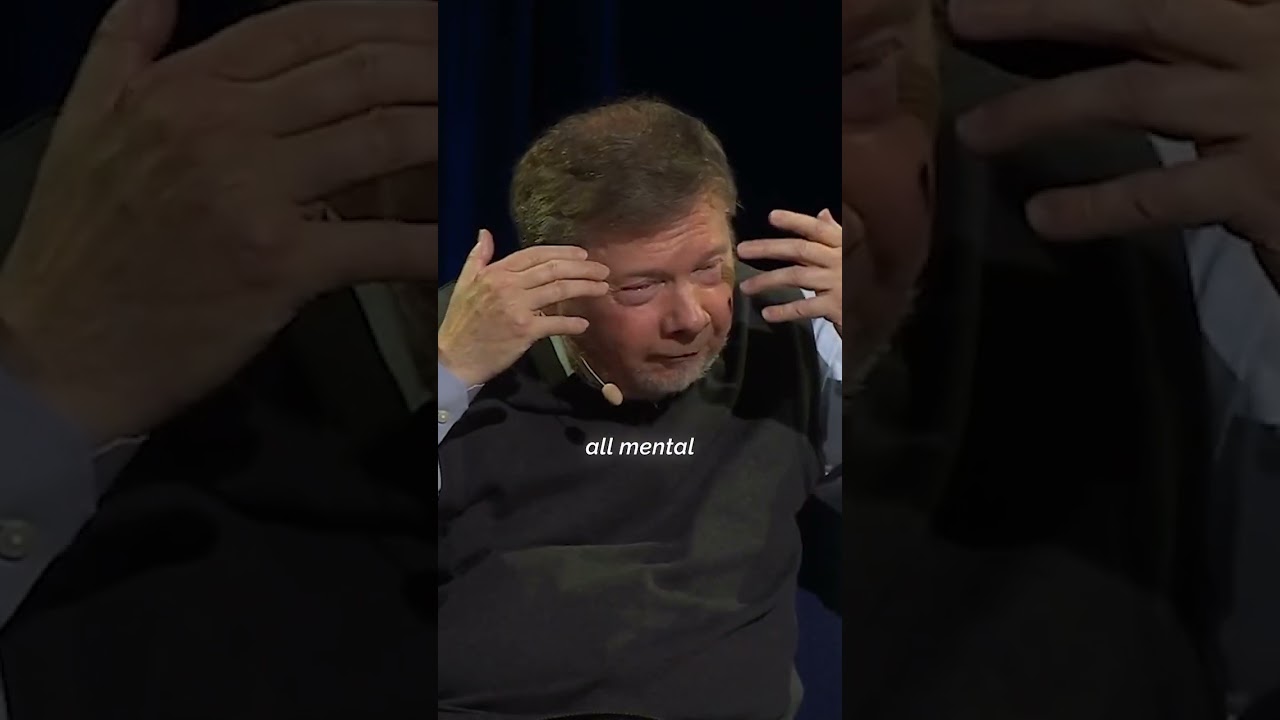
While animals like ducks can shake off distressing events in seconds, humans remain trapped in suffering through their capacity to think about and replay painful experiences. Eckhart Tolle explains how the human mind's compulsive thinking became our primary source of suffering, and reveals that stillness and freedom from this mental loop are already available within you—not as a distant goal requiring years of meditation, but as an accessible state you can contact immediately by learning to separate your awareness from thought itself.
Why Animals Don't Suffer the Way Humans Do
The opening image of ducks shaking off water after an interaction illustrates a fundamental difference between animal consciousness and human consciousness. When an animal experiences a threat or distressing event—a confrontation with another creature, a near-miss, a moment of fear—it responds physically and emotionally in the moment, then releases it. The nervous system discharges the accumulated energy, and the animal returns to its natural state of presence.
Humans, by contrast, have the capacity to hold onto pain indefinitely. We do not simply experience an event; we think about it, replay it, analyze it, imagine future variations of it, and construct narratives around it. This is the gift and curse of the human mind: the ability to transcend immediate experience through thought. But when that thought becomes compulsive and uncontrolled, it becomes the primary mechanism through which we extend and amplify suffering far beyond its original source.
An animal lives entirely in the present moment. A human can exist primarily in a mental construct of the past or future, visiting the present only briefly. This shift in how consciousness operates marks the point at which thinking transformed from a useful tool into a source of perpetual pain.
How the Thinking Mind Creates Suffering
The human mind's capacity to think about experience creates a doubling effect. First, there is the immediate pain or discomfort—what Tolle calls "primary pain." This may be physical, emotional, or circumstantial. But then, the mind begins its work: it tells stories about the pain, judges it, resists it, predicts more pain in the future, or dwells on how it could have been prevented. This secondary layer—the thinking about the pain—is what Tolle identifies as the real source of suffering.
A person experiences loss, rejection, or failure. The event itself causes pain. But then the mind takes over: "Why did this happen to me? What does this mean about me? Will I ever recover? It's unfair. I should have seen it coming." The original pain might have passed, but the mind keeps it alive through endless loops of thought. This is why humans can suffer for years, decades, or a lifetime over a single event, while a duck shakes off its feathers and moves on.
The thinking mind also creates suffering by pulling attention out of the present moment. When you are fully present—seeing, hearing, sensing what is actually here now—there is no suffering. Suffering lives in the mental narrative about what was or what might be. The mind creates a false sense of continuity by storing memories and projecting fears, and this creates the illusion that "I" am a continuous suffering entity with a problem-laden past and an uncertain future. In reality, that "I" is a thought-created fiction.
The Stillness That Is Already Present
One of Tolle's core teachings is that the freedom from this mental suffering is not something you have to create or develop over time. Stillness is not a state that arrives after years of meditation practice. Rather, it is the underlying reality of your being right now—beneath and behind all thought, all emotion, all mental activity.
The challenge is not to create stillness but to become aware of it. Most people are so identified with their thinking that they have never noticed the awareness itself—the "I am" that is aware of thoughts, emotions, and sensations. When you shift your attention from the content of thought to the awareness in which thought appears, you immediately touch this stillness. It is not somewhere else; it is not locked behind a wall that requires years to dissolve. It is here.
This is why Tolle emphasizes that you can access this state without the trappings of formal practice. You don't need to sit in a monastery, master complicated techniques, or wait for enlightenment to arrive after decades of discipline. The shift is available now, in this moment, through a simple redirection of attention.
How to Access Stillness Without Years of Practice
Tolle's teaching on accessing stillness immediately focuses on a shift in where you place your attention. Most humans are operating from what he calls the "thinking mind"—the voice that narrates experience, judges it, plans around it, and fears the future. This voice is so constant and familiar that people mistake it for consciousness itself.
The method is to become aware of the gap between thought and the awareness that observes thought. Notice that you are not your thoughts. You can observe a thought arising, existing, and passing away. The one who observes is not the thought. When you place your attention on this observing awareness—this silent, still presence—you are no longer controlled by the mind's narrative. You are no longer identified with the story.
This shift doesn't require belief or understanding. It is a direct experience. When you genuinely place your attention on present-moment sensation—the feeling of breath, the physical sensations of your body, the sounds around you—the thinking mind loses its grip. You are no longer feeding it with your attention. And in that gap, the natural stillness of being reveals itself.
Another practical door into this state is the body itself. The body is always in the present moment. It cannot exist in past or future. When you bring your attention into bodily sensation—feeling your feet on the ground, the temperature of your skin, the movement of breathing—you anchor yourself in the only moment that actually exists: now.
Why Humans Need to Understand This Difference
Understanding why animals don't suffer as humans do isn't merely an intellectual curiosity. It points to the root mechanism of human suffering and therefore to its resolution. If you believe suffering is caused by external circumstances, you will spend your life trying to fix the external world—an endless task. But if you recognize that suffering is created by the compulsive thinking mind's interpretation of events, then you can address the actual problem: your relationship to thought and your degree of identification with the thinking mind.
Most humans live as though they have no choice in this matter. They assume that once something painful happens, they must spend months or years processing and healing from it. They assume rumination is necessary, that reliving trauma is part of recovery, that "working through" pain requires an extended mental engagement with it. But this is the very mechanism that keeps pain alive.
The duck's wisdom—shake it off and return to presence—points to a different way. Not suppression or denial, but a genuine release. You can feel the initial pain, acknowledge the event, and then stop feeding it with your attention. The mental elaboration is optional. The story is optional. What is required is that you learn to notice when the mind has taken over and gently return your attention to the present.
The Practice of Returning to Now
Tolle doesn't offer this as philosophy but as practical instruction. When you find yourself caught in a loop of thinking about a painful event—rehearsing what was said, imagining what you should have done, projecting fear about the future—you can pause and ask: "What is actually happening right now?" Not in my thoughts, but right here, in this present moment? Usually, the answer is: nothing is wrong. Your body is safe. You are breathing. You are aware. The pain exists only in the thought-narrative about the past or future.
This is not escapism or minimization. Tolle is not suggesting you deny real pain or pretend difficult things didn't happen. Rather, he is pointing to where suffering actually lives—not in the event itself, but in the mind's continued engagement with it. The event has already passed. Its only continuing power is the power you give it through your thinking.
When you can separate the pure experience of an event from the story the mind creates about it, you are free. Free not from life's challenges, but from the additional layer of self-created suffering that most humans superimpose on top of them. This freedom is not theoretical. It is accessible right now, in this very moment, by shifting where your attention rests.
Where to Go From Here
Tolle's teaching invites you to conduct an experiment rather than adopt a belief system. The next time you find yourself suffering—stuck in a thought-loop, anxious about the future, or replaying the past—pause and notice: Is this actually happening right now? What would happen if I withdrew my attention from this thought and placed it on my breath, my body, my senses? What is available in the present moment that doesn't depend on thinking?
The answer you discover through direct experience will teach you more than any explanation. And you may find, as many have through Tolle's teachings, that the peace and freedom you've been seeking is not distant or difficult to access. It is closer than your next breath. The ducks knew this all along.