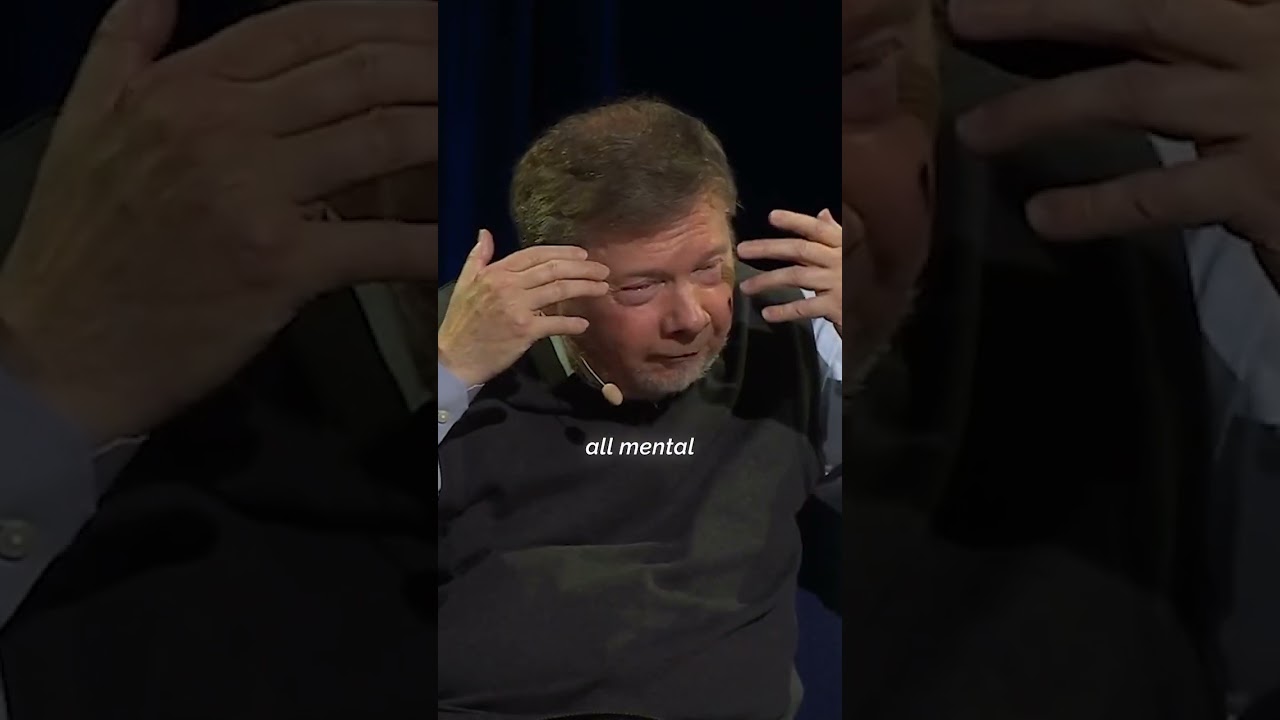
Rather than an exercise in morbidity, remembering death is a clarifying practice that reveals what matters most. When you acknowledge the temporary nature of life and your own mortality, you naturally begin to value each moment more deeply, shift your priorities away from trivial concerns, and develop a more authentic relationship with time itself. This is not pessimism but lucid realism that transforms how you live.
Why Contemplating Mortality Is Not Negative
A common misconception holds that thinking about death is morbid, depressing, or a sign of psychological distress. Eckhart Tolle reframes this entirely. Remembering death—genuinely sitting with the fact of your own mortality—is not negative; it is clarifying. The confusion arises because we live in a culture that largely avoids this topic, treating death as a failure rather than a natural part of existence.
When you allow yourself to truly see and accept that life is temporary—that you will die, and that everyone you know will die—something shifts. The mind stops clinging to endless future scenarios. Anxiety about trivial matters begins to dissolve. This is not depression; it is a clearer lens on what is actually happening right now.
How Temporary Life Deepens Moment-to-Moment Value
The recognition of life's temporary nature has a direct, practical consequence: you begin to value each moment more deeply. This is not philosophical abstraction. When you truly internalize that time is finite, the present moment stops being something to hurry through or discount. Instead, it becomes the only real thing.
Consider how people often live: postponing satisfaction, waiting for retirement, treating today as preparation for tomorrow. This structure makes sense only if you believe you have infinite time. But when you remember that your days are numbered—genuinely remember it, not just intellectually know it—the psychology shifts. The present moment is no longer a means to an end; it is the actual substance of your life.
This does not mean abandoning planning or responsibility. It means doing those things with a different quality of awareness. You still make plans, but you are not enslaved to them. You work toward goals, but you are present while doing so, rather than always being mentally ahead of yourself.
What Changes When You Truly Accept Mortality
Accepting that you will die reveals what actually matters. Most people spend enormous energy on things that lose their importance when viewed from the perspective of mortality. Status anxieties, petty grudges, obsession with accumulation—these deflate when you remember that none of it comes with you.
What tends to remain important when seen through the lens of mortality? Presence. Connection with people you love. The quality of your attention. Whether you lived authentically or spent your life performing a role. Whether you were fully here.
This clarity is not dark or nihilistic. It is liberating. You are freed from the constant pressure to acquire, achieve, and impress. You can let go of projects and opinions that do not actually matter to you. You can say no without guilt. You can be present with someone without checking your phone or planning what to say next.
The Paradox: Accepting Death Enhances Life
There is a paradox in this practice: the acceptance of death makes living richer and fuller. This happens because you stop wasting your limited time on things that do not align with what you actually value. You stop living for an imaginary future where everything will finally be good. You recognize that the only life you have is this one, right now.
Religions and wisdom traditions have long taught this. The medieval Christian practice of memento mori—remembering you will die—was not morbid reflection but a tool for spiritual clarity. Buddhist meditation on impermanence (anicca) serves the same function. Stoic philosophers regularly contemplated death to free themselves from fear and attachment.
In modern secular terms, this same practice appears when people have near-death experiences and report that afterward, their priorities shifted dramatically. They cared less about status, more about loved ones. They were less anxious about mistakes. They were more present. You do not need a near-death experience to access this clarity; you can remember death deliberately.
How to Begin the Practice
Remembering death does not require sitting in a dark room visualizing your funeral. It is simpler and more practical than that. It means occasionally pausing and acknowledging the basic fact: you are alive now, and one day you will not be. Everyone you know will die. This life has an endpoint.
This acknowledgment, held lightly without drama, begins to shift your relationship with time. Urgency falls away—not the urgency to accomplish nothing, but the frantic, anxiety-driven urgency that comes from never feeling you have enough time. A different kind of clarity emerges.
The practice can be as simple as noticing when you are caught in trivial concern—a conflict at work, an embarrassing moment from years ago, anxiety about an upcoming event—and then pausing. Remembering: I will die. This person I am in conflict with will die. In the context of a finite life, does this actually matter? Usually, this question restores perspective immediately.
The Quality of Presence This Brings
When you remember death regularly, your presence becomes qualitatively different. You are not present out of effort or spiritual technique; you are simply no longer mentally elsewhere. The mind's endless loop of worry, planning, and self-reference quiets because you are anchored in what is real and immediate.
This affects how you relate to others. When you are truly present with someone, they feel it. You are not distracted, not thinking about yourself, not performing. You are actually there. This quality of attention is one of the deepest gifts you can offer another person, and it naturally emerges when you have remembered death.
It also changes how you experience ordinary moments. A meal, a walk, a conversation—these are no longer background to your "real life" (which never quite arrives). They are your actual life, and they become vivid when attended to with the awareness that they will not last.
Clarity Without Morbidity
The key distinction Tolle makes is that this is clarifying, not depressing. The difference is subtle but important. Morbid reflection on death dwells in fear, regret, and the sense that life is pointless. Clarifying reflection on death acknowledges mortality as a fact and uses it as a lens to see what is real and valuable now.
One is contraction; the other is expansion. One paralyzes; the other frees. The same fact—you will die—can trigger either response depending on the quality of attention you bring to it. When held without panic or despair, when seen clearly as part of the nature of existence, it clarifies rather than darkens.
Where to Go from Here
If this resonates, the practice is accessible and can begin immediately. Notice moments when you are caught in trivial concern or anxiety about the future. Pause and remember: this is temporary. Your concern is temporary. Your life is temporary. Feel what shifts when you hold that awareness. You may notice that urgency drops, that presence strengthens, that what matters becomes obvious. This is the clarifying power of remembering death—not as an ending, but as a tool for actually living.