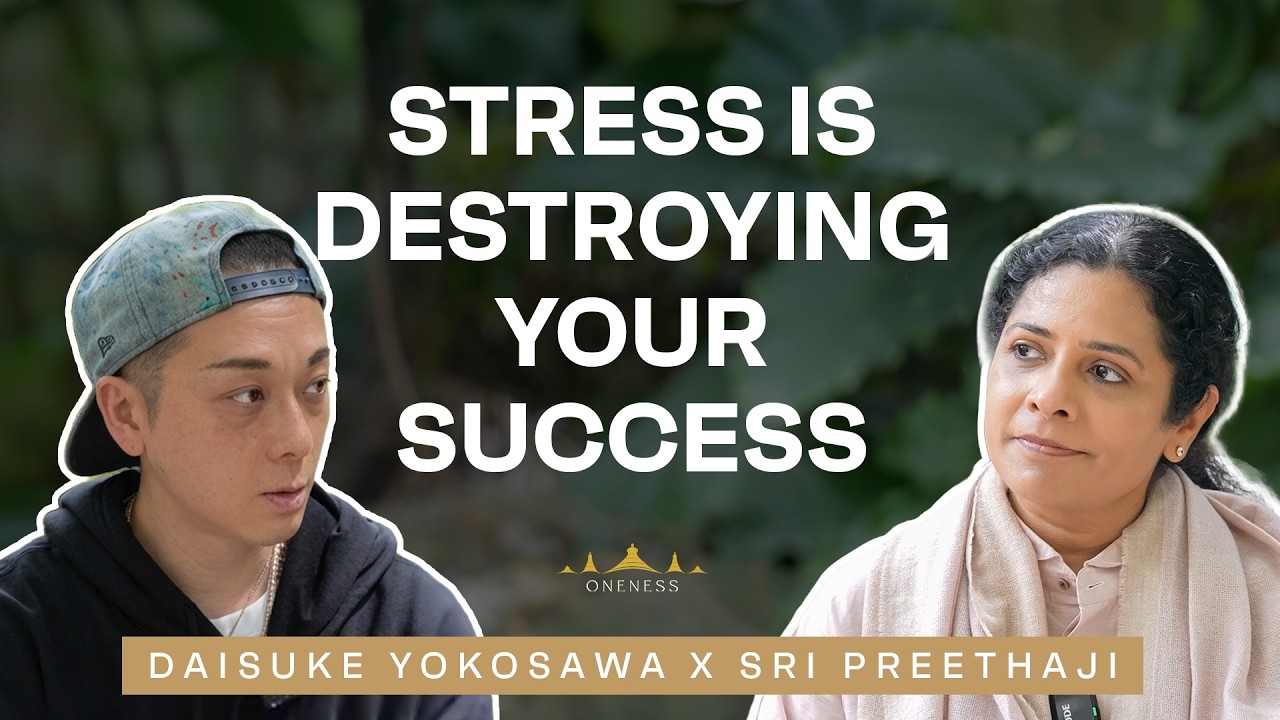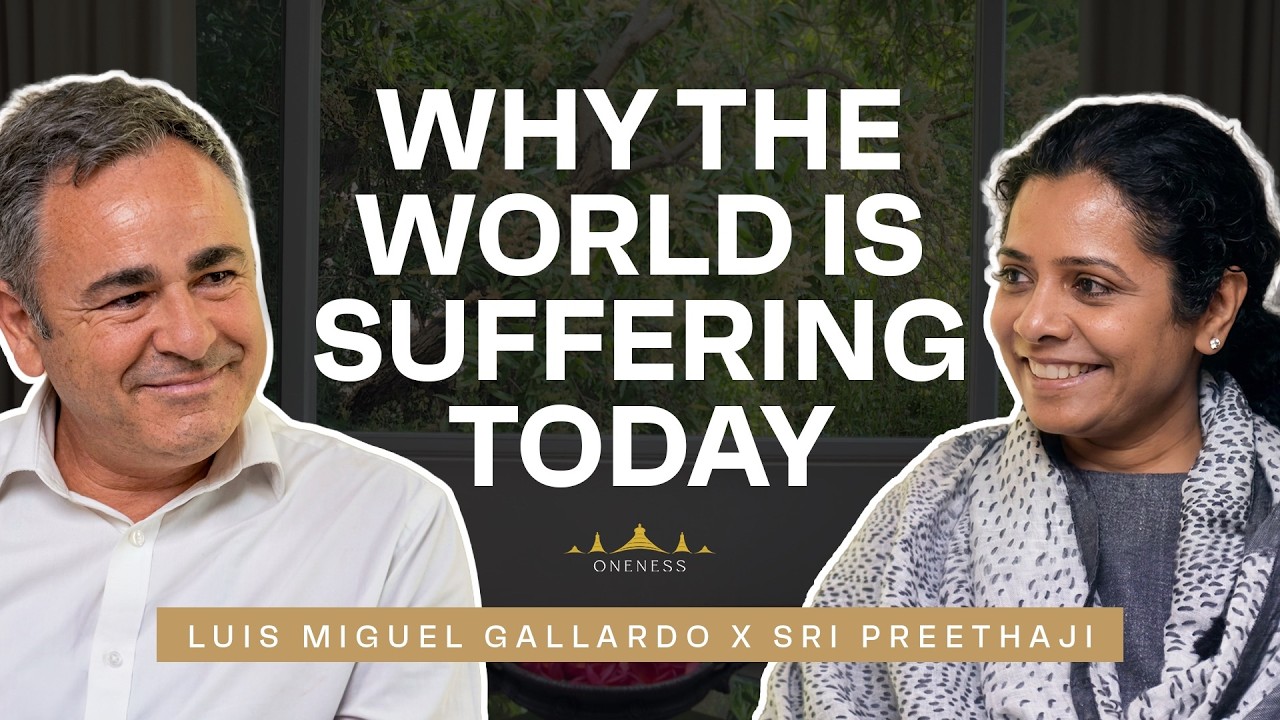
This collection documents four individuals who experienced genuine shifts in consciousness through the guidance of Sri Preethaji and Sri Krishnaji within the Oneness Movement. Rather than motivational narratives about external success, these are testimonies of internal transformation—moving from states dominated by stress, anxiety, fear, and limitation into states characterized by clarity, peace, and what the speakers call "freedom." Crucially, this freedom is defined not as outer achievement but as liberation from suffering itself.
What Does Freedom From Suffering Actually Mean?
The framework presented in these stories operates from a specific understanding of freedom. It is not freedom to achieve more, accumulate more, or gain status—the traditional markers of external success. Instead, it is freedom from the internal machinery of suffering. This distinction is essential. Most approaches to personal growth promise better circumstances or enhanced achievement. This teaching points elsewhere: toward a shift in the state of awareness itself, independent of external conditions.
When suffering dissolves, the same circumstances may persist, yet the relationship to them transforms. A person may still face challenges, responsibilities, or difficulties in the world, but the internal reactivity, the sense of being trapped, the weight of anxiety—these become fundamentally altered. The testimonies suggest that when consciousness shifts, the very texture of experience changes.
How Does Consciousness Shift According to These Stories?
The individuals in these accounts describe their transformation as a process guided by Sri Preethaji and Sri Krishnaji's teaching within the Oneness Movement. The specifics of that guidance are implied rather than detailed, but the pattern across the stories suggests several elements at work.
First, there is an acknowledgment of the current state—the stress, the anxiety, the sense of inner limitation. These are not denied or spiritually bypassed. Instead, they become the starting point for genuine inquiry. The stories honor where people actually are, not where they should be or claim to be.
Second, there appears to be a direct intervention or transmission of awareness. The Oneness Movement, particularly through the presence and work of these teachers, seems to facilitate a shift that is not merely intellectual or psychological but involves a genuine alteration of consciousness itself. This is not improvement of the mind; it is a shift in the state from which mind operates.
Third, the testimonies suggest that this shift is both immediate and unfolding. People describe moments of clarity or release that feel sudden, yet they also describe ongoing deepening and stabilization of that state over time.
What Happens When Anxiety and Fear Fall Away?
The central theme across these stories is what becomes available when the baseline condition of the consciousness shifts away from stress and limitation. When anxiety ceases to be the operative emotional ground, a kind of natural peace emerges—not as something manufactured or achieved, but as what remains when the resistance and contraction dissolve.
Clarity is another consistent outcome. Many people operate with their awareness filtered through anxiety, expectation, and self-protection. When that filter loosens or clears, perception itself becomes more direct. Things are seen as they are, not as threats or opportunities for the anxious mind to strategize around.
Perhaps most significantly, the stories point to a state of awareness that the descriptions call "beautiful"—a state in which simply being present is sufficient, in which existence itself carries a quality of okayness independent of circumstance.
Is This the Same as Spiritual Awakening?
The video description uses the term "awakening," and the title references "Oneness Stories," suggesting a framework rooted in non-dual or consciousness-based spirituality. In this context, awakening typically refers to a dissolution of the boundary between subject and object, self and world, or the recognition that consciousness itself is the fundamental nature of reality.
The freedom described in these testimonies appears to be intimately linked with that kind of shift. When the illusion of being a separate, fragmented self—constantly defending, acquiring, proving—dissolves, then suffering as typically understood also begins to dissolve. There is no one left to be threatened, no ego boundary to defend, no gap between self and world to create anxiety.
The specific use of "freedom from suffering" rather than "enlightenment" or "self-realization" suggests a pragmatic framing. The teaching is not being presented as metaphysical philosophy but as liberation from the lived experience of pain and contraction.
Why Aren't These Motivational Stories?
The description explicitly states these are "not motivational stories." This is a crucial clarification. Motivational narratives typically follow a formula: person faced obstacle, person applied strategy, person achieved desired outcome. The reader is implicitly invited to do the same.
These testimonies do not follow that arc. They are not about willpower or strategy applied to achieve a goal. Instead, they point to what happens when effort itself—the driven, goal-oriented striving of the mind—settles. What emerges is not earned through techniques but recognized as one's natural state when the overlay of contracted consciousness is released.
This distinction matters because it protects the teaching from becoming another self-improvement project, another thing the driven mind can grasp and pursue. That pursuit, in fact, is often what keeps people trapped in suffering. The stories suggest something more like surrender than achievement.
What Role Do the Teachers Play in This Shift?
The stories are explicitly framed as transformations that occurred "through the work and guidance of Sri Preethaji and Sri Krishnaji within the Oneness Movement." This suggests a non-traditional teaching relationship. In many consciousness-based traditions, the teacher is understood not merely as an information source but as a transmission point for a particular state of awareness.
The presence and consciousness of enlightened teachers, in such frameworks, can catalyze shifts in students that go beyond what words or techniques alone could produce. The teachings of Sri Preethaji and Sri Krishnaji appear to include both direct transmission and practical guidance, though the specific methods are not detailed in this video.
The fact that these people chose to share their stories suggests not only that their shifts were real and stable enough to commit to, but also that they felt moved to bear witness to the work of these teachers and to the possibility that such transformation is available to others.
How Does One Know If This Freedom Has Occurred?
The testimonies themselves function as indicators. When someone describes moving from states of chronic anxiety and limitation into states of peace and clarity that persist across circumstances, something has genuinely shifted. The changes these individuals report are not subtle improvement—they are qualitative transformations in the ground of experience.
Markers of such a shift, based on these accounts, would include: the persistent presence of peace even in challenging circumstances; clarity of perception not clouded by anxious interpretation; a sense of natural well-being independent of external validation; and a state of awareness that feels inherently free rather than constantly at war with itself.
Importantly, these are not permanent, unchangeable states—awakening is often understood as continuing to deepen. But the baseline shift toward freedom from suffering appears stable and self-sustaining.
Where to go from here
If this teaching resonates, the natural question is: how does one access this kind of shift? The video does not prescribe a technique or practice, which aligns with the teaching's emphasis on shift in consciousness rather than achievement through effort. Exploring the specific work of Sri Preethaji and Sri Krishnaji through the Oneness Movement—whether through teachings, gatherings, or direct guidance—would be a logical next step. The stories themselves serve as testimonies that such shifts are real and accessible. The invitation implicit in these accounts is not to believe them, but to inquire: is such freedom possible for me? And if so, what would it take for my consciousness to shift?