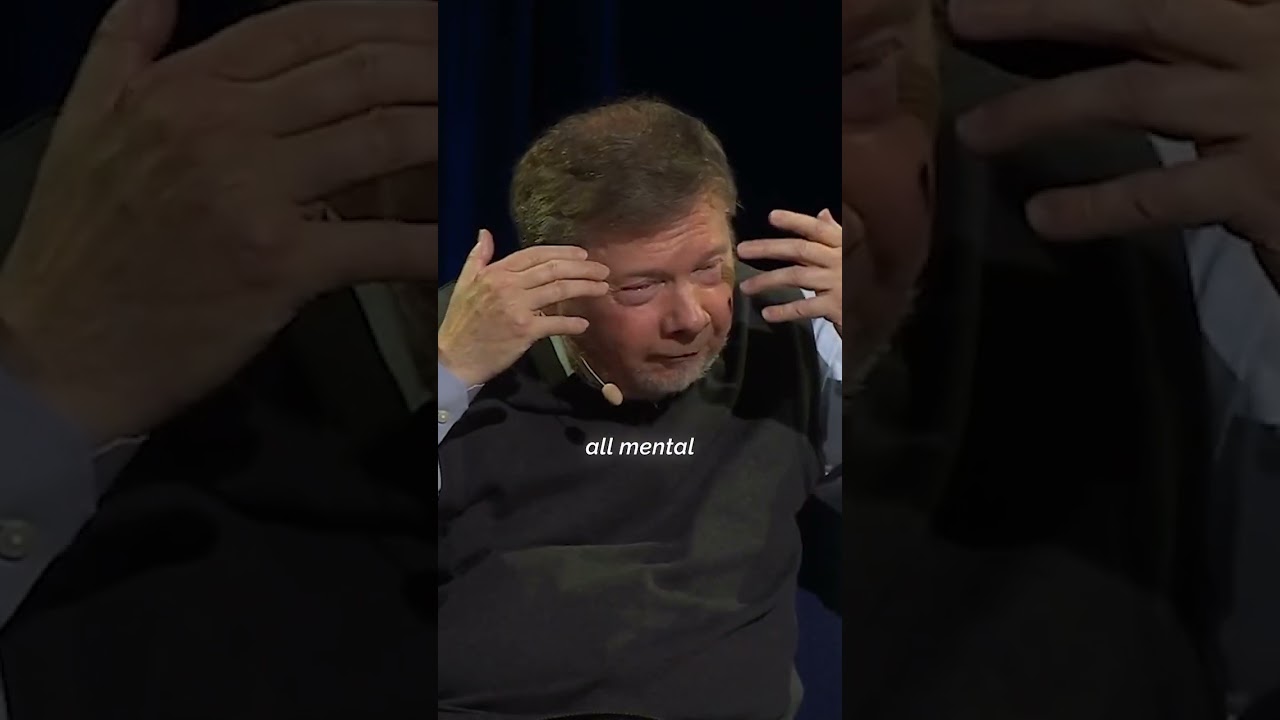
The dark night of the soul—whether triggered by loss of faith, career collapse, or bereavement—is almost always preceded by the shattering of a mental narrative that anchored identity and meaning. Far from being mere suffering, this state of deep despondency can function as a threshold where the story of who we thought we were crumbles away, creating possibility for something far deeper and more real to emerge. Eckhart Tolle draws on ancient wisdom traditions, including Ecclesiastes, to show how this experience, though agonizing, contains within it the seeds of genuine spiritual awakening and a shift from ego-driven identity to presence-based consciousness.
What Is the Dark Night of the Soul?
The dark night of the soul is not a poetic metaphor—it is a concrete psychological and spiritual crisis in which the framework of meaning that once held a person's sense of self suddenly collapses. This can manifest in many forms: the loss of religious faith that structured an entire worldview, the destruction of a career identity around which a person built their worth, the death of someone whose presence seemed to validate existence itself, or the slow erosion of beliefs about what life should be.
What distinguishes the dark night from ordinary depression or grief is its particular quality of meaninglessness. Ordinary sadness still operates within a narrative—"I am sad because this happened"—but the dark night strips away the narrative itself. The person finds themselves in a void where the story that once explained who they were no longer holds. This is why it feels so disorienting: not only is something lost, but the very lens through which loss made sense is shattered.
Eckhart Tolle emphasizes that this experience is nearly universal at some point in human life, yet it remains deeply misunderstood. Most people interpret it purely as pathology—as depression to be medicated away, as weakness, or as punishment. Yet the tradition of spiritual wisdom, stretching back centuries, recognizes it differently: as a necessary dissolution before real awakening can occur.
Why Does the Mental Narrative Collapse?
A key insight Tolle offers is that the dark night of the soul is almost always preceded by the shattering of a mental narrative. The narrative is not incidental—it is the actual structure holding the ego-identity together. This narrative tells us who we are: "I am a successful lawyer," "I am a devoted believer," "I am someone who has it figured out." These stories feel real because they are reinforced continuously by habit, by social validation, and by the way we unconsciously filter experience to fit the story.
The collapse of the narrative is often triggered by an external event—loss, failure, betrayal, death. But the event itself is not the deep cause. Rather, the event exposes something that was already true: that the story was fragile, that it depended on conditions remaining stable, that it was never actually solid ground. The narrative breaks not because something went wrong but because it was always a construction, and constructions are inherently temporary.
Drawing on the wisdom of Ecclesiastes, Tolle points to the ancient Jewish text's recurring refrain: "all is vanity." Ecclesiastes is a profound meditation on the futility of all human achievement and accumulation when those pursuits are pursued for their own sake or for the sake of bolstering identity. The Teacher in Ecclesiastes has achieved everything by conventional measure—wisdom, wealth, pleasure, legacy—yet recognizes that all of it is ultimately "chasing wind," because none of it provides lasting meaning when the self is identified with the ego's projects.
This is not nihilism. Rather, it is clarity about the nature of ego-driven identity. When your identity is anchored in achievement, belief, relationship, status, or any other content that arises and passes away, you are building on sand. The dark night is when that recognition becomes unavoidable.
How Does Materialist Thinking Intensify the Dark Night?
Tolle also touches on the role of materialist thinking—the worldview that only matter, measurable things, and rational-empirical knowledge are real. In a purely materialist framework, when the narrative collapses, there is nothing beneath it. Meaning becomes arbitrary; consciousness is an accident; the universe is indifferent. This compounds the crisis. A person who believed in God and loses that belief experiences the dark night within a spiritual framework that can accommodate it. But someone whose entire identity and worldview rested on materialism—the belief that achievement, accumulation, and rational accomplishment constitute real success—may have no conceptual resources to understand what is happening when those props crumble.
This is why the long shadow of materialist thinking is particularly relevant. In a culture that has largely adopted materialism as its default metaphysics, the dark night of the soul becomes increasingly isolated and pathologized. People going through it have few mirrors, little language, and scarce cultural wisdom to help them recognize it as anything other than mental illness or personal failure.
The Dark Night as Threshold, Not Just Ending
The central realization Tolle points to is this: what feels like an ending may in fact be a threshold. The dark night is not merely destructive; it is the dissolution of a false structure that was preventing something deeper from being recognized and lived.
When the mental narrative that held the ego-identity in place begins to crumble, something becomes possible that was obscured before: the recognition of consciousness itself, independent of content. Before the dissolution, consciousness was identified with the character in the story—with thoughts, memories, achievements, beliefs, relationships. The person was their narrative. The dark night strips that away not as punishment but as grace, because it makes possible the recognition of what you actually are beneath and prior to the story.
This is why Tolle speaks of something "far deeper and more real" having the possibility of emerging. That something is not a new narrative, a new identity, a new achievement. It is consciousness itself, recognized directly, without the filter of a constructed self. It is being rather than becoming. It is presence rather than the ego's relentless project of self-improvement and self-validation.
The dark night, then, is a kind of initiation. It is severe precisely because the ego will not voluntarily relinquish its grip. The story of self seems so real, so necessary, that it takes a genuine crisis to reveal its illusory nature. When that revelation comes, when the person can no longer believe in the narrative because it has been shattered by reality, the possibility opens for a different way of being.
What Emerges After the Collapse?
After the dark night, what has the possibility of emerging is not a better story, a more successful version of the same narrative, or a compensatory meaning pasted over the void. Rather, it is a reorientation of consciousness itself. Instead of identifying as the character in a story seeking validation through external accomplishment and belief, consciousness begins to recognize itself as the awareness in which all stories, all thoughts, all identities arise and pass away.
This shift is what Tolle refers to as genuine spiritual awakening. It is not a belief system or a new religion; it is a direct recognition of what is already present—the conscious presence that was always here, even when it was obscured by identification with the ego-narrative. After the dark night, a person may still have goals, relationships, and a sense of identity in the conventional sense, but these are no longer felt as the ground of being. They are recognized as temporary forms arising in consciousness, valuable in their place, but not constitutive of who or what you essentially are.
This produces a paradoxical freedom: the person is no longer desperate for the story to validate them because they are no longer identified with the story. Yet this does not result in apathy or passivity. Rather, action flows from presence rather than from ego-driven compulsion. Life unfolds with less friction because less is being resisted; there is greater capacity for love and acceptance because others are no longer threatening to the self; there is deeper meaning because it arises naturally from presence rather than being constructed by the mind.
The Universal Pattern Across Traditions
Tolle emphasizes that this pattern—the dissolution of false identity as gateway to awakening—is not unique to any single spiritual tradition. It appears in Christian mysticism as the dark night of the soul (a term coined by Saint John of the Cross), in Buddhist philosophy as the cessation of self-view, in Advaita Vedanta as the dissolution of the separate-self illusion, and in the Jewish contemplative tradition through texts like Ecclesiastes that question the permanence of all constructed meanings.
This convergence across traditions is itself significant. It suggests that the dark night is not culturally relative or dependent on particular beliefs. It is a universal threshold that humans can encounter when they are ready—or when life forces them to become ready. The form it takes varies, but the underlying dynamic remains: the shattering of false identity creates space for true awakening.
Where to Go from Here
If you are experiencing a dark night of the soul—whether through loss, failure, disillusionment, or the gradual erosion of a belief system—the first step is to recognize it for what it is: not evidence of personal deficiency but a threshold with ancient precedent and profound possibility. This recognition alone can shift the experience from total despair to something more like clarity, however painful.
The second step is to stop trying to rebuild the narrative immediately. The natural impulse is to patch the hole, to find a new story that will feel solid, to escape the void through distraction or reinterpretation. But this short-circuits the transformation. The void is not a problem to solve; it is the opening itself.
Third, begin to notice the presence that persists even as the narrative crumbles. Even in deep darkness, there is awareness of the darkness. That awareness is not dependent on the story being intact. It is present whether you believe or don't, whether you achieve or fail, whether you have or lack. Turning attention to that awareness—to consciousness itself rather than its contents—is the seed of genuine awakening.
For deeper exploration of these themes and practical guidance through the dark night, Eckhart Tolle's course "From Suffering to Spiritual Awakening: Using the Dark Night of the Soul to Ignite the Light of Consciousness" offers expanded teachings and structured support for integrating this understanding.