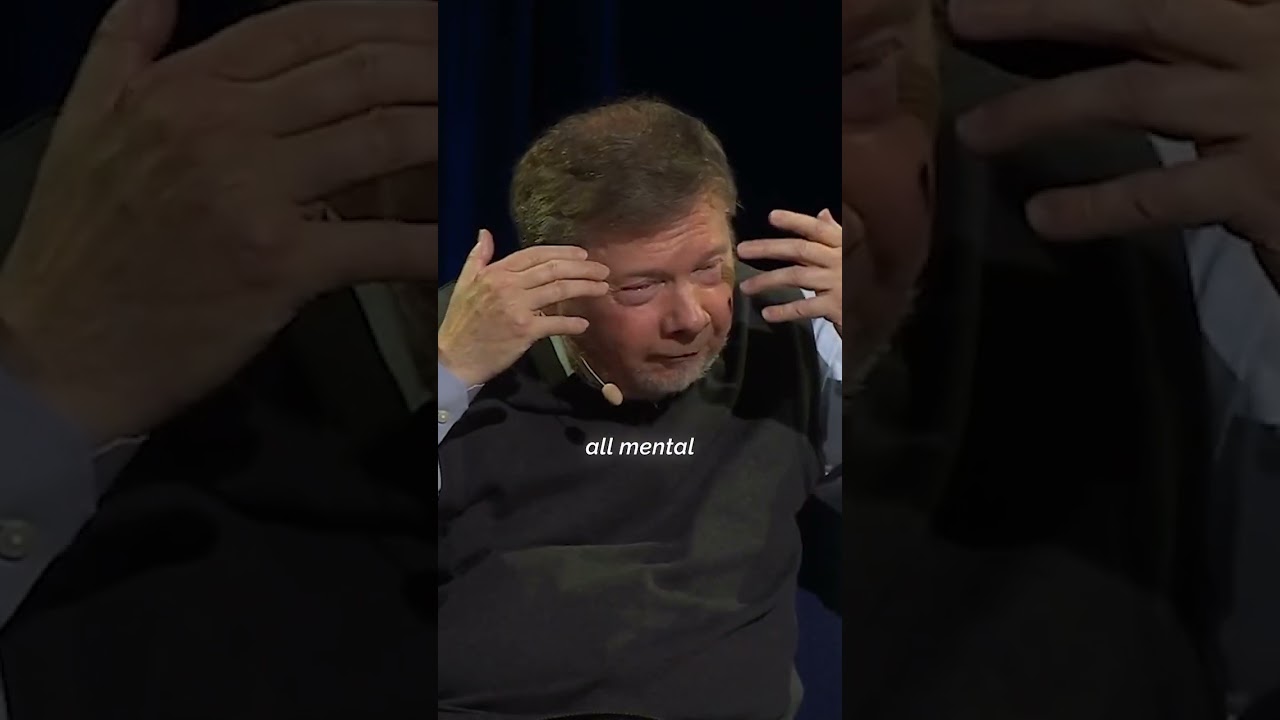
Eckhart Tolle argues that what you consume—films, music, and other media—directly affects your consciousness frequency. Just as you would reject food you knew was toxic, many people passively absorb deeply destructive content that lowers their vibrational state and creates vulnerability to harm. Being conscious of the frequency and intent embedded in what you watch and listen to is essential spiritual hygiene.
Why Consciousness Has a Frequency
Tolle operates from a model in which consciousness exists on a spectrum or frequency. This is not metaphorical in the way many New Age speakers use the term—rather, it reflects a direct relationship between the quality of your attention, the content of your mind, and your vulnerability to negative influence. When you expose yourself to certain stimuli, you are not simply entertained or informed; you are literally shifting your energetic or vibrational state.
This framework differs from purely psychological accounts of media effects. Tolle is suggesting that there is an ontological dimension to this: what you consume either elevates or depresses the frequency at which you operate, and this has real consequences for what can "enter" or affect you.
How Horror and Dread Lower Your Frequency
Tolle uses horror films as a primary example. When you watch films in which "the most dreadful things happen," you are bathing your consciousness in simulated terror, suffering, and malevolence. The nervous system responds to these images as if the threats were real. The ego—the false sense of separate self—becomes activated, contracted, and afraid.
Over time, sustained exposure to such content does not leave you unaffected. Instead, it trains your nervous system to remain in a state of vigilance and contraction. Your consciousness frequency drops. Tolle implies that once your frequency is lowered in this way, you become "open to invasion"—a term suggesting vulnerability to negative thought patterns, emotional parasitism, or worse.
The logic here mirrors a simple metabolic principle: if you would not knowingly eat a poison, why would you knowingly feed your consciousness poison? Yet people do this constantly, either because they are unaware of the consequences or because the addictive pull of stimulation overrides conscious choice.
Toxic Music and the Content of Lyrics
Beyond films, Tolle identifies music as a second major vector of toxicity. Certain genres and artists explicitly embed destructive frequencies and messages into their work. He asks listeners to examine: "What are they singing about?" The answer, in many cases, is despair, rage, nihilism, or the glorification of harm.
Tolle's skepticism extends to the quality of the "singing" itself—the tone, the intention, the energetic signature carried in the voice. Not all music that sounds technically proficient actually elevates consciousness. Some music, no matter its production value, is fundamentally destructive and carries a low frequency.
The prescription, then, is awareness. You must become conscious of the frequency of what you are consuming. Ask yourself: what is the dominant emotional and thematic content? What is the artist's or creator's relationship to presence, to truth, to the sacred? Does this content support my awakening or does it pull me into sleep?
What Does It Mean to Be Open to Invasion?
Tolle's language of "invasion" may sound dramatic, but it points to a real psychological and spiritual phenomenon. When your consciousness frequency is lowered by toxic inputs, your discernment weakens. You become more susceptible to negative thoughts that feel like they come from outside. You are more vulnerable to compulsion, to automaticity, to being run by patterns that are not authentically yours.
In psychological terms, lowered consciousness correlates with a diminished capacity to observe your own mind. You become identified with its contents rather than the awareness that witnesses them. In spiritual terms, you lose access to what Tolle calls presence—the power to choose rather than react.
The Media Diet as Spiritual Practice
Treating what you consume as seriously as what you eat is not asceticism or prudishness. It is pragmatism rooted in self-knowledge. If you want to maintain a high frequency of consciousness, you cannot be careless about what enters your mind. This requires ongoing discernment, not rule-following.
Some guidelines:
- Audit your media: Notice what you watch and listen to. Without judgment, simply observe the frequency it produces in your body and mind.
- Ask about intention: Who made this? What were they amplifying? What world are they inviting me into?
- Feel the effect: After consuming something, do you feel more present, more contracted? More awake or more asleep?
- Redirect, don't suppress: Rather than white-knuckling your way away from "bad" content, actively seek content that raises your frequency and feeds genuine curiosity or beauty.
Where to Go From Here
The implicit practice Tolle is suggesting is one of mindful media consumption. This does not mean never watching difficult content—sometimes understanding suffering or witnessing art that wrestles with darkness is part of awakening. It means doing so consciously, with awareness of the cost, rather than as unconscious habit or addiction.
Start by paying attention. Notice your media diet. Notice the state of your consciousness before and after. Trust your own direct experience more than any rule. Over time, your taste will naturally shift toward content that genuinely nourishes rather than depletes you.