EveryEvent ATX

Parcourir tous les Events

Live Music Capital of the World

events

Concerts & Live Music
Festivals
Sports & Recreation
Food & Drink
Arts & Culture
Community
Family & Kids
Nightlife
Comedy
Theater
Destinations populaires
BaliSedonaLos AngelesCosta RicaNew YorkSan FranciscoAustinMiamiJoshua TreeTulum
Voir toutes les catégoriesVoir toutes les destinations

Explorer toutes les fonctionnalités

Des outils puissants pour développer tes événements

Fonctionnalités de la plateforme

Tarification dynamique intelligente
Catégories de billets
Places assignées
Récupération des paniers abandonnés
Récupération des visiteurs
Dons & Prix variables
Système d'affiliation
Scanner de billets
Codes promo
Questions personnalisées
Partage de billets
Ventes additionnelles & Options
Analyses & Rapports
Séquences d'emails
Liste d'attente / Notifier / Rappeler
Explorer
Discovery HubArtists & PerformersVenuesKnowledge Base
Voir toutes les fonctionnalitésÀ propos
TarifsBlog
Language
Saved events
Parcourir tous les événements

events

Concerts & Live MusicFestivalsSports & RecreationFood & DrinkArts & CultureCommunityFamily & KidsNightlife

Destinations populaires

BaliSedonaLos AngelesCosta RicaNew YorkSan Francisco

Explorer

Discovery HubArtists & PerformersVenuesKnowledge Base

Fonctionnalités de la plateforme

Tarification dynamique intelligenteCatégories de billetsPlaces assignéesRécupération des paniers abandonnésRécupération des visiteursDons & Prix variablesSystème d'affiliationScanner de billetsCodes promoQuestions personnaliséesPartage de billetsVentes additionnelles & OptionsAnalyses & RapportsSéquences d'emailsListe d'attente / Notifier / Rappeler
Voir toutes les fonctionnalitésÀ propos
TarifsBlog
ConnexionS'inscrireOrganisateurs d'événements
  • Browse All Events
  • Concerts & Live Music
  • Festivals
  • Sports & Recreation
  • Food & Drink
  • Arts & Culture
  • Community
  • Family & Kids
  • Nightlife
  • Toutes les catégories →
  • San Antonio
  • Hill Country
  • Fredericksburg
  • Houston
  • Dallas
  • All Destinations →
  • For Promoters
  • For Artists
  • For Venues
  • For Festivals
  • For Event Spaces
  • For Nonprofits
  • For Bloggers
  • For Speakers
  • Brand Ambassador
  • Case Studies
  • Réseau de 350K+ acheteurs
  • Récupération des paniers abandonnés
  • Tarification dynamique intelligente
  • Catégories de billets
  • Événements récurrents
  • Places assignées
  • Système d'affiliation
  • Liste d'attente / Notifier
  • Scanner de billets
  • Widget intégrable
  • Diffusion d'événements
  • Messagerie
  • Intégrations
  • Rapports
  • Toutes les fonctionnalités →
  • À propos
  • L'écosystème
  • Blog
  • Glossaire
  • Inspiration
  • Centre d'aide
  • Contact
  • Documentation API
  • Ressources de marque
  • Carrières
  • Presse
  • Conditions d'utilisation
  • Politique de confidentialité

Events

  • Browse All Events
  • Concerts & Live Music
  • Festivals
  • Sports & Recreation
  • Food & Drink
  • Arts & Culture
  • Community
  • Family & Kids
  • Nightlife
  • Toutes les catégories →

Getaways

  • San Antonio
  • Hill Country
  • Fredericksburg
  • Houston
  • Dallas
  • All Destinations →

For Organizers

  • For Promoters
  • For Artists
  • For Venues
  • For Festivals
  • For Event Spaces
  • For Nonprofits
  • For Bloggers
  • For Speakers
  • Brand Ambassador
  • Case Studies

Fonctionnalités

  • Réseau de 350K+ acheteurs
  • Récupération des paniers abandonnés
  • Tarification dynamique intelligente
  • Catégories de billets
  • Événements récurrents
  • Places assignées
  • Système d'affiliation
  • Liste d'attente / Notifier
  • Scanner de billets
  • Widget intégrable
  • Diffusion d'événements
  • Messagerie
  • Intégrations
  • Rapports
  • Toutes les fonctionnalités →

Entreprise

  • À propos
  • L'écosystème
  • Blog
  • Glossaire
  • Inspiration
  • Centre d'aide
  • Contact
  • Documentation API
  • Ressources de marque
  • Carrières
  • Presse
  • Conditions d'utilisation
  • Politique de confidentialité
EveryEvent
© 2026 EveryEvent Austin. Tous droits réservés.
Inspiration

5 Pre-Sleep Practices toPrevent Health Problems

Sadhguru
Sadhguru
Dec 15, 2020
6 min de lecture

The quality of your sleep depends less on duration than on how you prepare mentally and physically before bed. Sadhguru outlines five specific practices—rooted in yogic science—that eliminate sleep-related psychological and physiological problems. These are not meditation techniques requiring years of training, but simple behavioral adjustments anyone can implement tonight to reset the nervous system and transition cleanly into sleep.

Lecture · 9 sections

Why Sleep Quality Matters More Than You Think

Most discussions about sleep focus on duration: eight hours, seven hours, nine hours. But Sadhguru points to a deeper problem. The *way* we sleep—the state of mind and body we bring to bed—determines whether sleep actually restores us or compounds stress over time. When we sleep in a state of worry, agitation, or physical tension, we spend the night cycling through incomplete recovery cycles. Over months and years, this creates both immediate fatigue and long-term physiological wear.

The five practices Sadhguru recommends are not about sleeping longer. They are about sleeping *correctly*—creating the internal conditions where sleep can do its actual work of cellular regeneration, nervous system reset, and psychological consolidation.

What Are the Five Pre-Sleep Practices?

While Sadhguru does not enumerate these as numbered points in the traditional sense, the core pre-sleep protocol involves:

  • Physical preparation: Settling the body through specific movements or gentle practices that signal to the nervous system that wakefulness is ending.
  • Mental release: Letting go of the day's concerns and decisions rather than bringing them into bed as mental cargo.
  • Breath regulation: Using pranayama (breath work) to move from sympathetic (alert) to parasympathetic (rest) activation.
  • Postural awareness: Understanding how you position yourself affects both comfort and the depth of sleep.
  • Intention setting: Consciously transitioning from the doing mode to the being mode before sleep.

The underlying principle is that sleep is not an absence of wakefulness—it is an active state requiring conscious preparation. Just as an athlete warms up before competition, you prepare your system before sleep.

How Does Sleep Debt Accumulate Psychological Problems?

When we sleep poorly—either poorly prepared or under chronic stress—the mind does not fully process and consolidate the day's experiences. Emotional events remain undigested. Decisions hang unresolved. The nervous system does not complete its reset cycle. Over time, this creates what Sadhguru describes as psychological accumulation: unprocessed mental content that clouds clarity and triggers reactivity during the day.

This is why someone might sleep "eight hours" but still feel foggy, emotionally reactive, or mentally sluggish. The body was horizontal, but the mind was not at rest. The practice of preparing for sleep intentionally allows the mind to actually *stop* rather than simply dim.

Physiological Benefits of Proper Sleep Preparation

From a physiological standpoint, the practices Sadhguru recommends activate the parasympathetic nervous system—the body's "rest and digest" mode. When you enter sleep already in this state, several things happen:

  • Cortisol (stress hormone) drops more rapidly and completely.
  • Heart rate variability improves, allowing for deeper sleep stages.
  • Inflammation markers decrease (inflammation accumulates during poor sleep).
  • Growth hormone and melatonin are released more naturally, without pharmaceutical support.
  • The glymphatic system—the brain's waste-clearance mechanism—functions more efficiently.

In other words, a five-minute bedtime preparation can be worth two hours of tossing and turning in bed.

Why Intention Matters at the Threshold of Sleep

Sadhguru emphasizes that sleep is a threshold—a transition between waking and deeper states of consciousness. How you cross that threshold shapes the quality of what follows. Many people collapse into sleep exhausted or distracted by phones. Others lie awake cataloging worries. Neither state allows for conscious transition.

By setting a simple intention—"I am now letting go of the day," or "I am preparing my body and mind to rest"—you signal to your nervous system that a shift is underway. This is not visualization or complex meditation; it is clear, simple recognition of what is happening. The mind, guided by clear intention, tends to cooperate.

Can Pre-Sleep Practices Work Immediately?

Sadhguru's approach is pragmatic: yes, these practices produce results starting the first night. You may not sleep longer, but sleep quality improves noticeably—you wake less, feel more rested, and experience less mental fog. However, the full benefit—the resolution of deeper physiological and psychological problems—unfolds over weeks and months of consistent practice. The nervous system, like muscles, responds to regular conditioning.

The key is consistency. A single night of good sleep preparation does not undo months of poor sleep. But a consistent week of proper preparation typically shows measurable difference in mood, clarity, and daytime energy.

How Do These Practices Differ from Sleep Medications?

Sleep medications work by sedating the nervous system—they force sleep-like brain states without the actual restorative work happening. This is why people often wake from medicated sleep feeling unrested. They also carry dependency risk and side effects.

Sadhguru's approach is different: it works *with* the nervous system's natural physiology, not against it. By preparing the body and mind properly, sleep arrives naturally and is physiologically complete. There is no hangover, no dependency, and the long-term effect is improved sleep resilience—your ability to sleep well even under stress.

What Blocks Most People from Better Sleep?

The main obstacle is the assumption that sleep is passive—that we simply lie down and it happens. In reality, most people bring their entire day-state to bed: mental agitation, unresolved emotions, physical tension, and the dopamine stimulation from screens. They expect sleep to somehow erase all of this.

Sadhguru's five practices acknowledge that sleep requires *active preparation*. The shift is small—five to ten minutes—but the reframing is significant. You are not trying to force sleep; you are preparing the conditions where sleep arrives naturally.

Where to Go From Here

Start tonight with one simple practice: ten minutes before bed, stop all screen use and sit quietly. Focus on your breath. Notice any tension in your body and soften it. Set the intention to let the day go. This single shift, if maintained for a week, will show you the power of conscious sleep preparation. From there, you can explore the other practices—specific movements, breath work, or postural awareness—depending on what your body and mind respond to. Sleep is learnable. Like any skill, it improves with attention and practice.


Sadhguru
AuteurSadhguru

Indian yogi, mystic, and founder of the Isha Foundation. Through his programs (Inner Engineering, Bhava Spandana, Samyama) and books, he has introduced millions worldwide to a cont…

Voir le profilSite web
Explorer les thèmes
Sleep-qualityNervous-systemStress-reliefWellness-routineYoga-practice

Des questions ?

Questions fréquemment posées

Sadhguru recommends five core practices: physical preparation through gentle movement, mental release of the day's concerns, breath regulation to activate the parasympathetic nervous system, postural awareness, and intention-setting to transition consciously from wakefulness to rest. These practices work together to prepare the body and mind for deep, restorative sleep rather than forced or agitated sleep.
The key is conscious transition rather than collapse. Spend five to ten minutes before sleep acknowledging and releasing the day's concerns through breath work and gentle movement. This allows your nervous system to shift from alert mode to rest mode before you lie down, so stress does not carry into sleep.
Poor quality sleep preparation means your mind and nervous system remain partially active throughout the night, preventing complete rest. Even eight hours of fragmented or stress-filled sleep leaves you unrested. Proper pre-sleep practices ensure those eight hours are genuinely restorative.
Yes, many people notice improved sleep quality—less waking, deeper rest—within the first night of proper preparation. However, the full resolution of deeper physiological and psychological sleep problems develops over weeks and months of consistent practice.
Unlike medications that sedate the nervous system and often cause dependency, these practices work with the body's natural physiology to induce sleep naturally. The long-term benefit is improved sleep resilience and no side effects or hangover.
Five to ten minutes is typically sufficient. The practices are designed to be simple and efficient—just enough time to signal to your nervous system that the transition from wakefulness to rest is beginning.
No. Sadhguru's pre-sleep practices are simple behavioral adjustments, not advanced yoga techniques. They involve basic breath awareness, gentle movement, and intention-setting that anyone can implement regardless of prior experience.

Continuer la lecture

More from Sadhguru

Voir tout
When Grief Becomes a Mirror: What the Nepal Floods Teach
Inspire

When Grief Becomes a Mirror: What the Nepal Floods Teach

A flash flood on the Nepal-Tibet border devastated communities and claimed lives. This event became a moment to examine how we respond to tr…

1 min read
Mount Kailash's Hidden Dimensions: Mystical Phenomena Beyond Logic
Inspire

Mount Kailash's Hidden Dimensions: Mystical Phenomena Beyond Logic

A 21-year pilgrimage reveals Mount Kailash and Lake Manasarovar as repositories of consciousness and extraordinary life forms defying conven…

1 min read
Stop Self-Judgment: Building Inner Compassion
Inspire

Stop Self-Judgment: Building Inner Compassion

Discover why your inner critic feels relentless and learn grounded practices to replace self-judgment with genuine compassion and acceptance…

1 min read
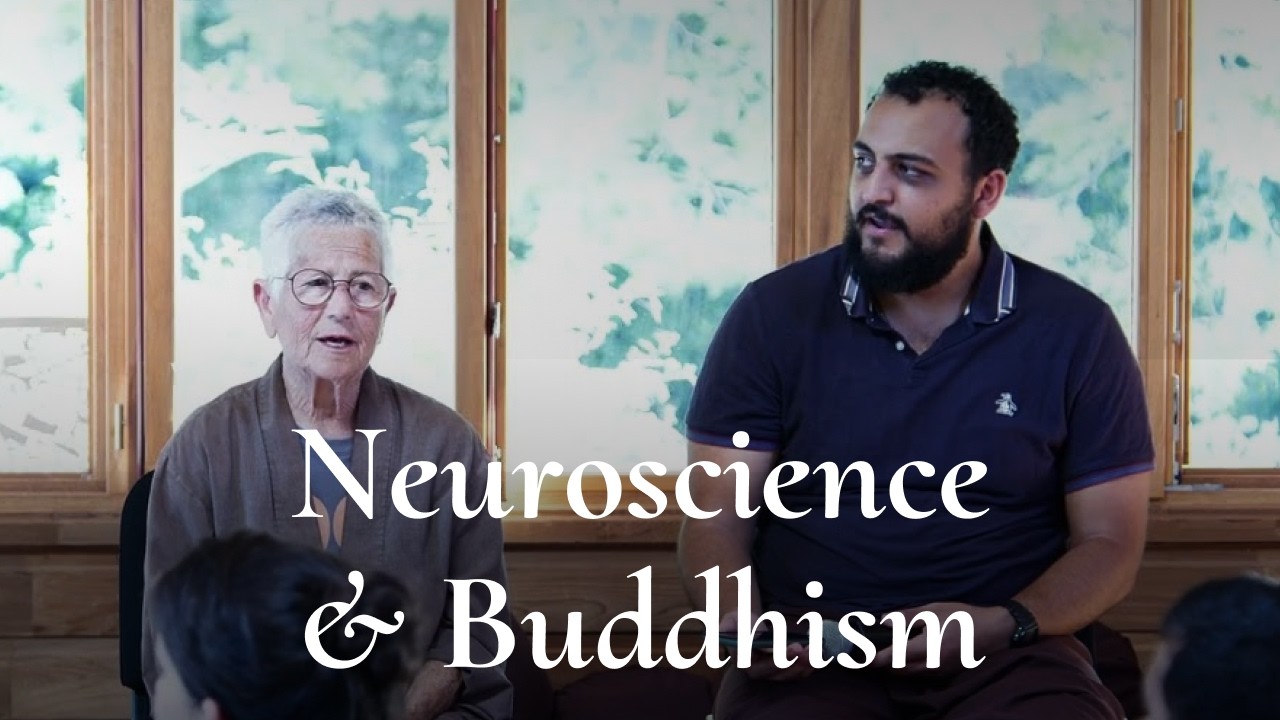
Neuroscience & Buddhist Psychology: Regulating Your Nervous System
Inspire

Neuroscience & Buddhist Psychology: Regulating Your Nervous System

Learn how Buddhist practice and neuroscience combine to help you read your nervous system signals and maintain emotional balance during unce…

1 min read

Continue d’explorer

Poursuis ton chemin

Plus de sagesse et de rassemblements dans tout l’annuaire BrightStar.

Plus d’articles

Parcours toute la bibliothèque d’enseignements, d’entretiens et de guides.

Retour à tous les articles →

Enseignants et artistes

Découvre les lignées, les musiciens et les guides du monde conscient.

Explorer les artistes →

Trouver un événement

Kirtan, retraites, bains sonores, breathwork, festivals — bientôt près de chez toi.

Parcourir les événements →