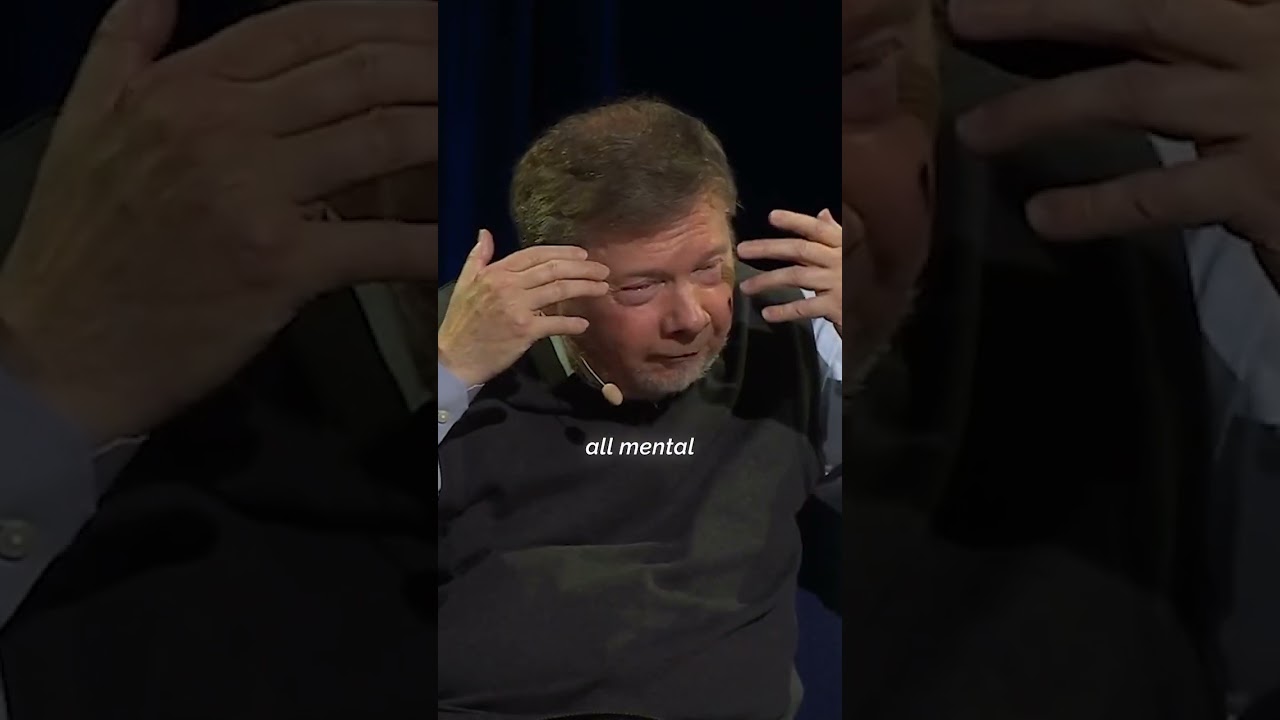
Eckhart Tolle examines the deepest mystery of human existence—consciousness itself—and draws a fundamental distinction between the narrative self (your life story, identity, and sense of being a separate "me") and the real you: the invisible, unchanging awareness that witnesses all experience without being touched or diminished by it. This awareness, which exists prior to thought and form, cannot be harmed by circumstances, loss, or suffering because it is not made of the same substance as the world of things. Understanding this difference is the foundation of spiritual awakening and unshakeable peace.
What Is the Real You?
At the heart of Tolle's teaching lies a radical reorientation of identity. Most people live their entire lives identified with their life story—the narrative of who they believe themselves to be. This narrative includes your personal history, your accomplishments and failures, your relationships, your physical body, your preferences, and your sense of being a separate, bounded self moving through time. It is the "me" that is born at a certain point and will die at another point. It is the self that has a name, an age, a social role, a past, and anticipated future.
But beneath this narrative self, Tolle points out, there exists something far more fundamental: consciousness itself. This consciousness is not a thing or an object you can observe. It is the awareness in which all observation happens. It is what you are before any story, any identity, any concept of "self" arises. This real you is invisible, formless, and unchanging. It has no history because it exists outside of time. It cannot be described because description requires language, and language is part of the world of form and thought.
The critical insight is that these are not two equally important aspects of your being. The narrative self—your personality, your story, your body—exists within consciousness. But consciousness does not exist within the narrative self. You are the space in which your life unfolds, not the content of that unfolding.
Why Nothing in This World Can Touch the Real You
Once this distinction is clear, a profound freedom becomes possible. The events of your life—victories and defeats, loss and gain, pleasure and pain, approval and rejection—all occur in the realm of form, time, and objects. They affect your body. They affect your psychological identity. They can wound the story you tell yourself about yourself. But they cannot touch the awareness that witnesses all of this.
This is not a metaphorical or poetic claim in Tolle's teaching. It is a direct description of reality that can be verified through direct experience. When you observe that you are aware of thoughts, emotions, and sensations arising and passing, you discover that you are not those contents. You are the aware space in which they appear. That aware space—that consciousness—remains untouched by what passes through it.
A thought may be painful. An emotion may be overwhelming. A loss may devastate your sense of identity and your plans for the future. But the consciousness in which that thought, emotion, or loss appears is not damaged by it. It is like the sky witnessing storm clouds. The storm is real; the turbulence is real. But the sky itself is unaffected. It does not become cloudy. It simply witnesses clouds.
This is why Tolle emphasizes that separation from the real you is impossible. You cannot lose it, harm it, or diminish it through any circumstance. The narrative self—your identity, your sense of being a separate "me"—can be threatened, challenged, and damaged. This is why the ego lives in a constant state of defense and seeks security through acquiring, achieving, and controlling. But the real you needs nothing. It cannot be improved, maintained, or protected because it cannot change.
The Mystery of Consciousness Itself
Tolle positions consciousness as the greatest mystery in existence. Science can explain the mechanics of the brain. It can map neural correlates of experience. But consciousness itself—the fact that there is awareness, that it is possible to know, that experience happens—remains unexplained and perhaps unexplainable through objective methods. The consciousness that observes cannot fully become an object of its own observation in the same way a finger cannot point at itself, or an eye cannot see itself directly.
This mystery is not a gap in knowledge that will eventually be filled with more data. It points to something fundamentally different from the physical universe of objects and mechanisms. Objects have histories, properties, and locations. Consciousness has none of these. It is the condition for all experience, not an experience itself.
Recognizing consciousness as the real you—rather than seeking yourself in the world of objects, achievements, relationships, and stories—is the beginning of what Tolle calls awakening. It is a shift from locating yourself in content to recognizing yourself as the space in which content appears.
The Difference Between the Story and the Witness
A helpful way to understand Tolle's distinction is to pay attention to the difference between the narrative and the narrator. Your life story is made up of events, characters, plot turns, themes, and lessons. It has continuity in time. It can be told and retold. Other people can know parts of it. It can be improved, reframed, or healed.
But the consciousness that witnesses this story has no story of its own. It is not waiting for the story to improve. It is not suffering because of how the plot has unfolded. It is not hoping the ending will be better. It is simply aware of the entire narrative—past, present, future possibilities—from a place of complete freedom from that narrative.
This consciousness is what you truly are. Not as a mystical or spiritual belief, but as a direct fact of your experience right now. You are aware. That awareness is real. That awareness is not made of thoughts or images or sensations. It is the ground in which those things appear. And that ground cannot be touched by the content that arises within it.
Implications for Spiritual Practice and Peace
If this insight is fully realized—not just believed but directly recognized—it transforms the entire spiritual journey. Many spiritual practices are aimed at improving the self, managing emotions, developing virtue, or achieving states of consciousness. These practices are not wrong; many are valuable. But they operate within the realm of the narrative self, seeking to refine and elevate that self.
What Tolle points to is more fundamental: the discovery that the peace, freedom, and wholeness you are seeking through practices and improvement already exists as your true nature. You don't become consciousness through effort. You awaken to what you already are. The practices that support this awakening are not about becoming something new but about removing the barriers—the identification with the story, the constant mental commentary, the sense of being a separate self—that obscure the recognition of what you already are.
This is why nothing in this world can touch the real you. Not because the world is unreal or because harm is impossible. Harm is very real for the body and the psyche. But the consciousness you are is not made of the same substance as the world. It is prior to the world. It is the space in which the world appears. And that space cannot be injured by what appears within it.
Where to go from here
To deepen this understanding, consider exploring practices of present-moment awareness that reveal the difference between the thinking mind (which generates the sense of self and story) and consciousness itself. Meditation, particularly practices that rest awareness on awareness rather than focusing on an object, can directly reveal this distinction. Notice moments when you are simply aware without thinking, without an agenda, without a sense of "I." Those are glimpses of the real you—not as an achievement but as a recognition of what is already here.
Additionally, observing the impermanence and unreliability of the narrative self—how the story changes, how circumstances shake it, how it is constantly seeking security—can create openness to the possibility of an identity that does not depend on circumstances. The more you understand that the story cannot provide lasting peace, the more you become available to the peace that comes from recognizing yourself as consciousness itself, untouched by the story, unaffected by the world.