EveryEvent ATX

Ver Todos los Events

Live Music Capital of the World

events

Concerts & Live Music
Festivals
Sports & Recreation
Food & Drink
Arts & Culture
Community
Family & Kids
Nightlife
Comedy
Theater
Destinos Populares
BaliSedonaLos AngelesCosta RicaNew YorkSan FranciscoAustinMiamiJoshua TreeTulum
Ver Todas las CategoríasVer Todos los Destinos

Explorar Todas las Características

Herramientas poderosas para hacer crecer tus eventos

Características de la Plataforma

Precios Dinámicos Inteligentes
Categorías de Entradas
Asientos Asignados
Recuperación de Carritos
Recuperación de Visitantes
Donaciones y Escala Móvil
Motor de Afiliados
Escáner de Entradas
Códigos de Cupón
Preguntas Personalizadas
Compartir Entradas
Ventas Adicionales
Análisis e Informes
Secuencias de Email
Lista de Espera / Notificar / Recordar
Explorar
Discovery HubArtists & PerformersVenuesKnowledge Base
Ver Todas las CaracterísticasSobre Nosotros
PreciosBlog
Language
Saved events
Ver Todos los Eventos

events

Concerts & Live MusicFestivalsSports & RecreationFood & DrinkArts & CultureCommunityFamily & KidsNightlife

Destinos Populares

BaliSedonaLos AngelesCosta RicaNew YorkSan Francisco

Explorar

Discovery HubArtists & PerformersVenuesKnowledge Base

Características de la Plataforma

Precios Dinámicos InteligentesCategorías de EntradasAsientos AsignadosRecuperación de CarritosRecuperación de VisitantesDonaciones y Escala MóvilMotor de AfiliadosEscáner de EntradasCódigos de CupónPreguntas PersonalizadasCompartir EntradasVentas AdicionalesAnálisis e InformesSecuencias de EmailLista de Espera / Notificar / Recordar
Ver Todas las CaracterísticasSobre Nosotros
PreciosBlog
Iniciar sesiónRegistrarseOrganizadores de Eventos
  • Browse All Events
  • Concerts & Live Music
  • Festivals
  • Sports & Recreation
  • Food & Drink
  • Arts & Culture
  • Community
  • Family & Kids
  • Nightlife
  • Todas las Categorías →
  • San Antonio
  • Hill Country
  • Fredericksburg
  • Houston
  • Dallas
  • All Destinations →
  • For Promoters
  • For Artists
  • For Venues
  • For Festivals
  • For Event Spaces
  • For Nonprofits
  • For Bloggers
  • For Speakers
  • Brand Ambassador
  • Case Studies
  • Red de +350K Compradores
  • Recuperación de Carritos
  • Precios Dinámicos Inteligentes
  • Categorías de Entradas
  • Eventos Recurrentes
  • Asientos Asignados
  • Motor de Afiliados
  • Lista de Espera / Notificar
  • Escáner de Entradas
  • Widget Embebido
  • Sindicación de eventos
  • Centro de mensajes
  • Integraciones
  • Reportes
  • Todas las Características →
  • Acerca de
  • El ecosistema
  • Blog
  • Glosario
  • Inspiración
  • Centro de Ayuda
  • Contacto
  • Documentación API
  • Recursos de Marca
  • Carreras
  • Prensa
  • Términos de Servicio
  • Política de Privacidad

Events

  • Browse All Events
  • Concerts & Live Music
  • Festivals
  • Sports & Recreation
  • Food & Drink
  • Arts & Culture
  • Community
  • Family & Kids
  • Nightlife
  • Todas las Categorías →

Getaways

  • San Antonio
  • Hill Country
  • Fredericksburg
  • Houston
  • Dallas
  • All Destinations →

For Organizers

  • For Promoters
  • For Artists
  • For Venues
  • For Festivals
  • For Event Spaces
  • For Nonprofits
  • For Bloggers
  • For Speakers
  • Brand Ambassador
  • Case Studies

Características

  • Red de +350K Compradores
  • Recuperación de Carritos
  • Precios Dinámicos Inteligentes
  • Categorías de Entradas
  • Eventos Recurrentes
  • Asientos Asignados
  • Motor de Afiliados
  • Lista de Espera / Notificar
  • Escáner de Entradas
  • Widget Embebido
  • Sindicación de eventos
  • Centro de mensajes
  • Integraciones
  • Reportes
  • Todas las Características →

Empresa

  • Acerca de
  • El ecosistema
  • Blog
  • Glosario
  • Inspiración
  • Centro de Ayuda
  • Contacto
  • Documentación API
  • Recursos de Marca
  • Carreras
  • Prensa
  • Términos de Servicio
  • Política de Privacidad
EveryEvent
© 2026 EveryEvent Austin. Todos los derechos reservados.
Inspiration

Managing Tension DuringHigh-Stakes Competition

Sadhguru
Sadhguru
Aug 24, 2023
7 min de lectura
When a chess grandmaster asked how to handle tension during a tight game, the response centers on understanding that tension is not the problem—it's a signal of how your nervous system relates to the stakes. Rather than trying to suppress or eliminate tension, the approach involves recognizing the distinction between optimal physiological arousal and self-created psychological pressure. True performance comes not from achieving a calm that denies intensity, but from a state where the body can be energized while the mind remains clear and uninvested in outcomes.

Leer · 7 secciones

What Is Tension Really?

Tension in performance contexts is not a malfunction—it's a manifestation of how the nervous system responds to perceived stakes. When a chess player sits across from an opponent in a World Cup match, the body naturally activates: heart rate increases, muscles tighten, hormonal shifts occur. This is physiological preparation, not pathology. The confusion arises because this natural activation gets labeled as "tension" or "pressure" and treated as something that needs to be eliminated rather than understood.

The problem is not the activation itself. An athlete or performer without any physiological response would likely perform poorly—there would be no alertness, no quick response time, no access to trained reflexes. The real issue emerges when the mind layers additional narrative onto this physical response. When you begin to worry about the tension, when you create a story about what it means ("I'm too nervous, I'm going to fail"), when you become invested in the outcome rather than focused on the task, that's when performance degrades.

How Does Self-Created Pressure Differ From Physiological Arousal?

There is a crucial distinction between the body's natural response to a challenging situation and the anxiety created by the mind's relationship to that situation. Physiological arousal—elevated heart rate, heightened sensory awareness, faster neural processing—is useful. It sharpens perception and accelerates decision-making. Many high performers actually perform better with moderate physiological activation than with a completely relaxed state.

Self-created pressure, by contrast, comes from mental constructs: fear of failure, attachment to winning, judgment of yourself based on outcomes, pressure to live up to expectations. This psychological layer is what most people actually mean when they say they're "tense." It's not the pounding heart; it's the voice in your head saying the pounding heart means something bad is about to happen.

In chess, for example, a player might experience elevated physical arousal (which could actually enhance calculation speed and focus) while simultaneously running a mental narrative of self-doubt. That narrative is the real interference. The body is ready; the mind has created a different agenda.

Can You Have Performance Without Attachment to Outcome?

The distinction between effort and attachment is central to approaching tension differently. Effort means you are fully engaged, fully present, using all your skills and training. But effort does not require that you be attached to whether you win or lose. This sounds paradoxical until you examine it carefully.

A chess player can be completely absorbed in the position, considering multiple lines, calculating deeply, making the best moves available—while simultaneously having no emotional investment in the outcome. The work is the same either way. The quality of thinking is actually often clearer when the mind is not hijacked by fear of loss or desperation to win.

This is not about indifference or not caring. It's about redirecting the energy of care toward the process—toward making the best move available right now—rather than toward an imagined future result. When your attention is on the board and your training, there is less space for the anxious narrative to occupy.

What Role Does the Nervous System Play in Managing Tension?

The nervous system has different modes of operation. The sympathetic nervous system activates the "fight or flight" response—useful for immediate action and high alertness. The parasympathetic nervous system supports rest and recovery. Most performance advice tries to shift you into parasympathetic dominance, counseling relaxation and calming breaths.

But this misses something important. You don't want to be parasympathetically dominated during a high-stakes chess match. You want the nervous system to be responsive and available. What you actually want is control—the ability to modulate your state based on what the situation calls for, rather than being hijacked by reactive patterns.

A person who has cultivated real stability and clarity can maintain what might be called "relaxed intensity"—the body can be energized and the nervous system can be activated, but the mind remains clear, the breathing remains steady, and there is no contraction or holding in the chest and face that comes from psychological resistance to the situation. This is different from either panic or forced calm.

How Do You Shift From Outcome Attachment to Process Presence?

The shift is not primarily intellectual. You cannot think your way out of tension created by the mind's attachment to outcomes. Instead, it requires training the attention itself.

In the moment of a game, tension management becomes a matter of repeatedly returning attention to what is in front of you: the position, the available options, the next move. Every time the mind drifts toward "What if I lose?" or "I need to win," you notice that and return attention to the present task. This is not suppression or distraction—it's genuine reorientation of where your intelligence is deployed.

Between games, this capacity can be strengthened through practices that train the mind to remain stable and clear regardless of conditions. Meditation, particularly forms that develop what might be called "witness consciousness," helps create a space between stimulus and response. You begin to notice that a thought about the future outcome is just a thought—not a command, not a prediction, not a reason to contract. Over time, you can experience physiological activation without the layers of psychological resistance that turn activation into damaging tension.

Why Do High-Level Performers Still Experience Tension?

Even world-class athletes and competitors experience nervous system activation before and during high-stakes events. This is not a failure of their training or psychology. It's simply what the body does when it senses genuine stakes. The difference between performers who can leverage that activation and those who are derailed by it comes down to mental training and relationship to what's happening.

A grandmaster in chess has encountered thousands of tight positions and high-stakes moments. Over time, the body learns that these situations, while intense, are survivable and often manageable. But more importantly, the trained mind does not create additional suffering through resistance, judgment, and fear-based storytelling. The tension is there—the body is alert—but it's not a problem to solve.

The goal is not to reach some state of permanent calm. The goal is to develop the flexibility and clarity to perform at your best regardless of what your nervous system is doing, and to distinguish between useful physiological activation and unnecessary psychological self-sabotage.

Where to go from here

If you compete in chess, sports, music, or any field where high-stakes performance is required, the next step is to directly investigate your own experience of tension. Notice: What is the actual physical sensation? What is the thought pattern that accompanies it? Are you attaching a story to the body's response that makes the situation worse? Can you remain focused on the task at hand even while the body is activated? Can you distinguish between useful energy and wasteful anxiety?

For deeper training, contemplate practices that develop mental stability and the ability to observe your own mental processes without being overtaken by them. The goal is not the absence of tension, but the absence of unnecessary suffering about tension, and the presence of a mind clear enough to do your best work regardless of the conditions.

]]>


Sadhguru
AutorSadhguru

Indian yogi, mystic, and founder of the Isha Foundation. Through his programs (Inner Engineering, Bhava Spandana, Samyama) and books, he has introduced millions worldwide to a cont…

Ver perfilSitio web
Explorar temas
Tension-performanceChess-psychologyNervous-systemMental-clarityCompetition

¿Tienes Preguntas?

Preguntas Frecuentes

Rather than trying to eliminate nervousness, distinguish between physiological activation (which actually helps performance) and psychological anxiety about the outcome. Redirect your focus entirely to the present task—the board, the moves, the immediate decision—rather than worrying about results. The nervous system will remain activated; what changes is your mental relationship to that activation.
Yes, but 'tension' usually refers to psychological pressure and self-doubt rather than physiological arousal. You can have an activated nervous system and clear thinking simultaneously—what matters is that your mind isn't layering fear narratives onto the body's natural response to high stakes.
True stability comes not from forced calmness but from training the mind to remain clear and focused on the task regardless of what the nervous system is doing. Practices that develop witness consciousness—the ability to observe your thoughts without being hijacked by them—help you maintain this clarity even during activation.
The nervous activation itself usually isn't the problem. Performance degrades when the mind becomes attached to outcomes and creates a narrative of self-doubt, which diverts attention from the actual game or task. Your training is intact; your mental focus has just been hijacked by worry.
Not at your best. Anxiety about outcomes diverts mental resources away from clear thinking and strategy. High performers develop the ability to care deeply about performing well while remaining emotionally unattached to whether they win or lose—the quality of effort is the same, but the mind stays clear.
Healthy pressure comes from genuine stakes and challenge, activating useful physiological responses. Damaging stress comes when the mind resists and fears this activation, creating a contraction and narrative of threat. The same external situation can be experienced either way depending on your mental relationship to it.

Seguir leyendo

More from Sadhguru

Ver Todo
When Grief Becomes a Mirror: What the Nepal Floods Teach
Featured

When Grief Becomes a Mirror: What the Nepal Floods Teach

A flash flood on the Nepal-Tibet border devastated communities and claimed lives. This event became a moment to examine how we respond to tr…

1 min read
Mount Kailash's Hidden Dimensions: Mystical Phenomena Beyond Logic
Featured

Mount Kailash's Hidden Dimensions: Mystical Phenomena Beyond Logic

A 21-year pilgrimage reveals Mount Kailash and Lake Manasarovar as repositories of consciousness and extraordinary life forms defying conven…

1 min read
Stop Self-Judgment: Building Inner Compassion
Featured

Stop Self-Judgment: Building Inner Compassion

Discover why your inner critic feels relentless and learn grounded practices to replace self-judgment with genuine compassion and acceptance…

1 min read
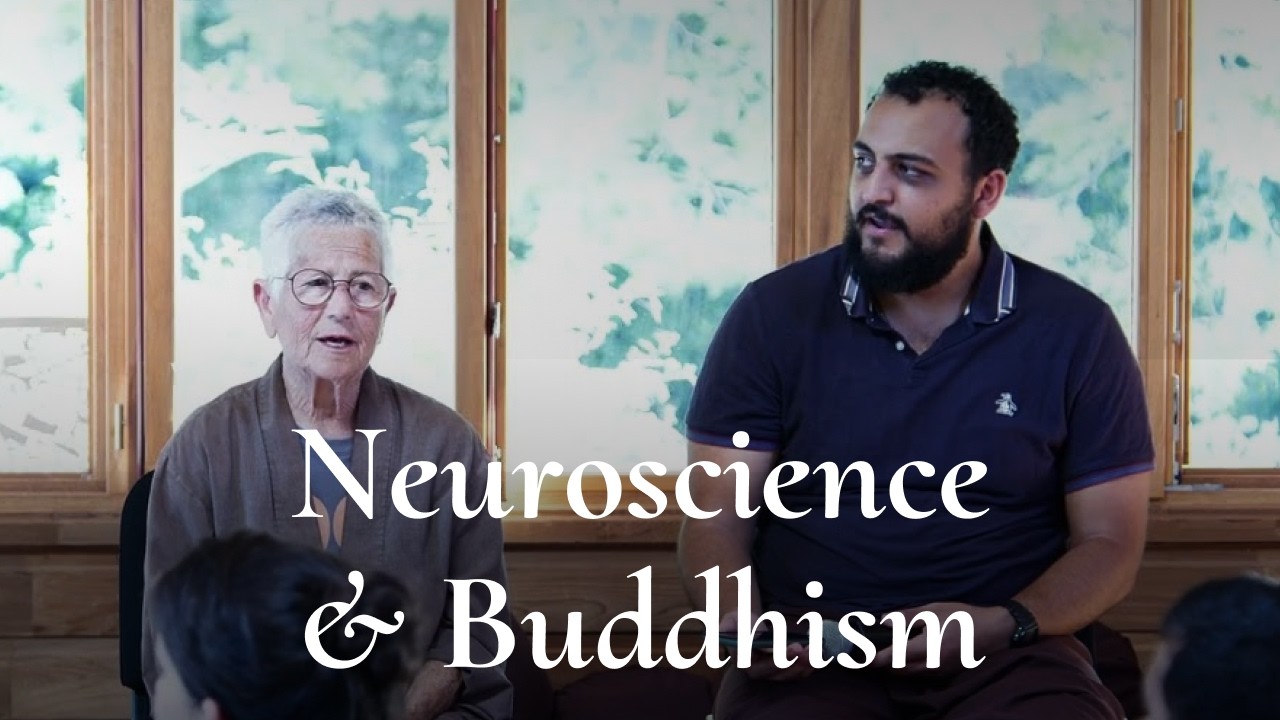
Neuroscience & Buddhist Psychology: Regulating Your Nervous System
Featured

Neuroscience & Buddhist Psychology: Regulating Your Nervous System

Learn how Buddhist practice and neuroscience combine to help you read your nervous system signals and maintain emotional balance during unce…

1 min read

Sigue explorando

Continúa tu camino

Más sabiduría y encuentros de todo el directorio de BrightStar.

Más artículos

Recorre la biblioteca completa de enseñanzas, entrevistas y guías.

Ver todos los artículos →

Maestros y artistas

Explora los linajes, músicos y guías del mundo consciente.

Explorar artistas →

Encuentra un evento

Kirtan, retiros, baños de sonido, breathwork, festivales — muy pronto.

Ver eventos →