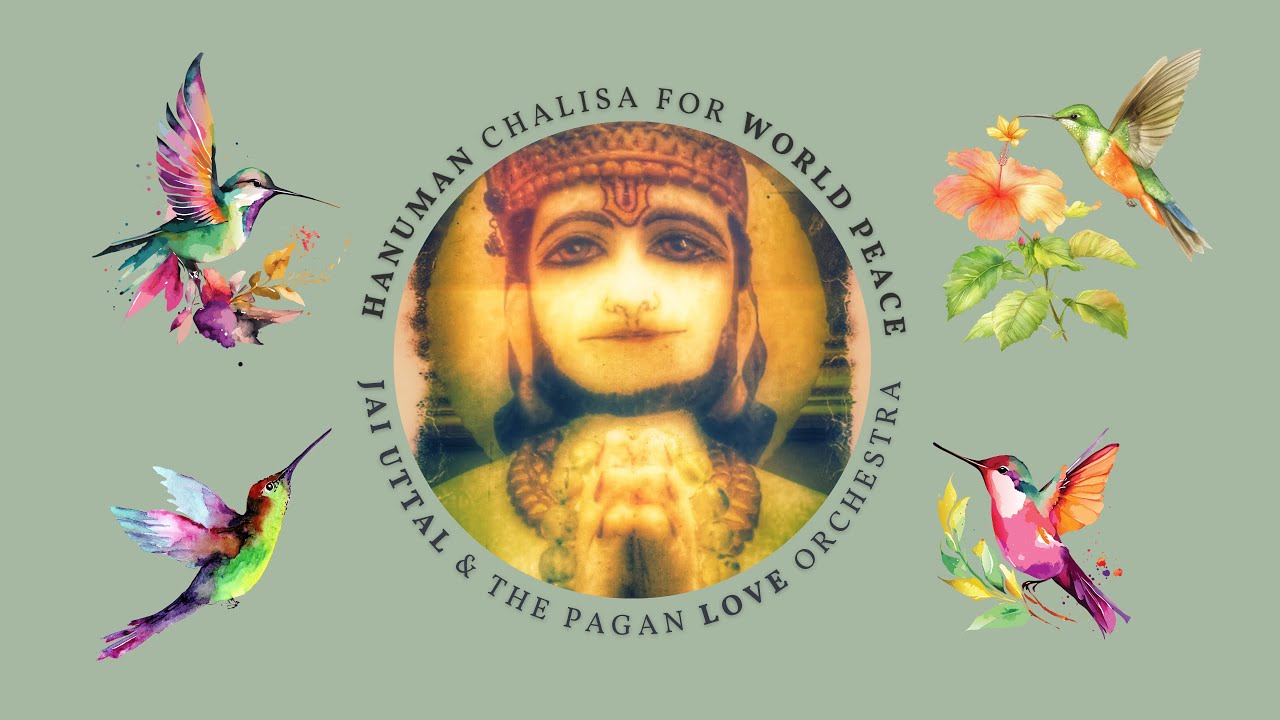
"Jay Jay Ma Jay Jay Jay Jagadambe" is a kirtan mantra—a devotional chant—that invokes the Divine Mother in preparation for Navratri, the Hindu nine-day festival honoring the Goddess in her many forms. The mantra uses repetitive phonetic syllables (urg, amb, ama, maha) woven together in call-and-response style, designed to anchor the singer and listener in devotional consciousness and create space for prayer during this sacred season.
What is a Navratri mantra and why is it used?
Navratri—literally "nine nights"—is a major Hindu festival celebrating the Divine Feminine in her multiplicity: Durga, Lakshmi, and Saraswati across three sets of three days each. Rather than intellectual study, Navratri invites devotion through song, ritual, and continuous prayer. Mantras like "Jay Jay Ma Jay Jay Jay Jagadambe" serve as sonic anchors; they quiet the thinking mind and attune the body and heart to the goddess energy being invoked.
Jai Uttal's approach here is distinctly participatory—the mantra is short enough to remember, repetitive enough to enter, and structured as a call-and-response so that singers and listeners naturally sync their breath and voice with the sacred words. This is not intellectual knowledge but embodied practice.
How do the mantra's syllables work together?
The chant moves through three primary phonetic elements: "urg," "amb," and "ama," plus "maha." These are not random sounds. In Sanskrit and yoga philosophy, different syllables activate different energy centers (chakras) and carry different qualities:
- Urg / Amb: These syllables have a grounding, base-chakra quality—earthy, rooted, connected to the body and the material ground of existence.
- Ama: A softer, heart-centered sound, invoking sweetness and devotion. The repetition of "ama ama ama ama ama" in the chant (appearing around 1:15–1:30 in the performance) opens the chest and creates emotional availability.
- Maha: Meaning "great" in Sanskrit, maha amplifies the invocation—"great mother," the full majesty of the Goddess.
What makes this mantra potent is the cycling: the grounding "urg" and "amb" anchor you in the body, while the sweeter "ama" opens the heart. This back-and-forth prevents spiritual bypassing—you're not floating away into transcendence, but rather invoking the Divine Mother while fully present and embodied.
Why repetition and call-and-response structure?
Repetition in mantra is not about hypnosis or mindless chanting. Neuroscientific research on chanting shows that sustained phonetic repetition synchronizes breath, heart rate, and brainwave patterns. The caller (in this case, Jai Uttal) and the respondent (the listener, ideally joining in) create a shared rhythm. This rhythm is antiviral to the fragmented, scattered state of ordinary consciousness.
The call-and-response also mirrors the relationship between devotee and Divine Mother: the call is the devotee reaching up, the response is the grace flowing down. Over nine days of Navratri, if you practice this mantra daily, you are literally training your nervous system and your heart to be open to receiving and reciprocating that divine relationship.
What does "Jay Jay Ma Jay Jay Jay Jagadambe" mean?
"Jay" means "victory" or "glory." "Ma" is mother. "Jagadambe" is a direct name for the Divine Mother—"jagat" means world or cosmos, "amba" or "ambe" means mother. So the translation is something like: "Glory, glory to the Mother, glory, glory, glory to the Mother of the World." This is not asking the Mother to do something; it is bearing witness to her reality and presence as the animating force of existence.
This invocation works on multiple registers: it honors the external feminine—the actual biological mothers in the listener's life, the earth as mother, the feminine principle in nature—while simultaneously invoking the transcendent Mother, the power that holds the cosmos together.
How does this mantra prepare you for Navratri?
Navratri is not a passive observation but a practice. Over nine days, you are asked to pray, fast (partially or fully), attend ritual, and open your heart to a power larger than your individual ego-self. Beginning with a mantra like "Jay Jay Ma Jay Jay Jay Jagadambe" in the days or weeks leading up to Navratri—or during it—is like tuning an instrument. You are tuning your consciousness to the frequency of devotion.
By singing or listening to this mantra repeatedly, you are:
- Softening your defenses and inviting vulnerability, which is the gateway to genuine devotion.
- Creating a container of sound and repetition within which psychological material can surface and be witnessed without judgment.
- Aligning your personal will (the "I" that wants something) with the larger will of the Divine Mother, which is the ultimate goal of Hindu tantra and bhakti (devotion-based) practice.
In short, the mantra is a practice, not a belief. You don't have to "believe in" the Divine Mother for the mantra to work; you simply practice it, and the effects—relaxation, heart-opening, attunement—follow naturally.
Where to go from here
If you are drawn to this mantra, consider practicing it daily, especially during Navratri (which falls in September–October each year). You can listen to Jai Uttal's version repeatedly, or learn it yourself and chant it aloud. The practice need not be long—even 5–10 minutes a day creates measurable shifts in nervous system tone and emotional openness.
For deeper study, explore the nine forms of the Goddess honored during Navratri: Shailaputri, Brahmacharini, Chandraghanta, Koosmanda, Skandamata, Katyayani, Kaalratri, Mahagauri, and Siddhidatri. Each day corresponds to one form, and each form represents a different aspect of the Divine Mother's power and wisdom. Chanting this mantra as an invocation to all nine—or to the one you feel most drawn to—deepens the practice.
Finally, consider how the Divine Mother appears in your own life: in the women who have nurtured you, in the earth that sustains you, in the creative power within yourself. A mantra is most alive when it connects the transcendent and the intimate.