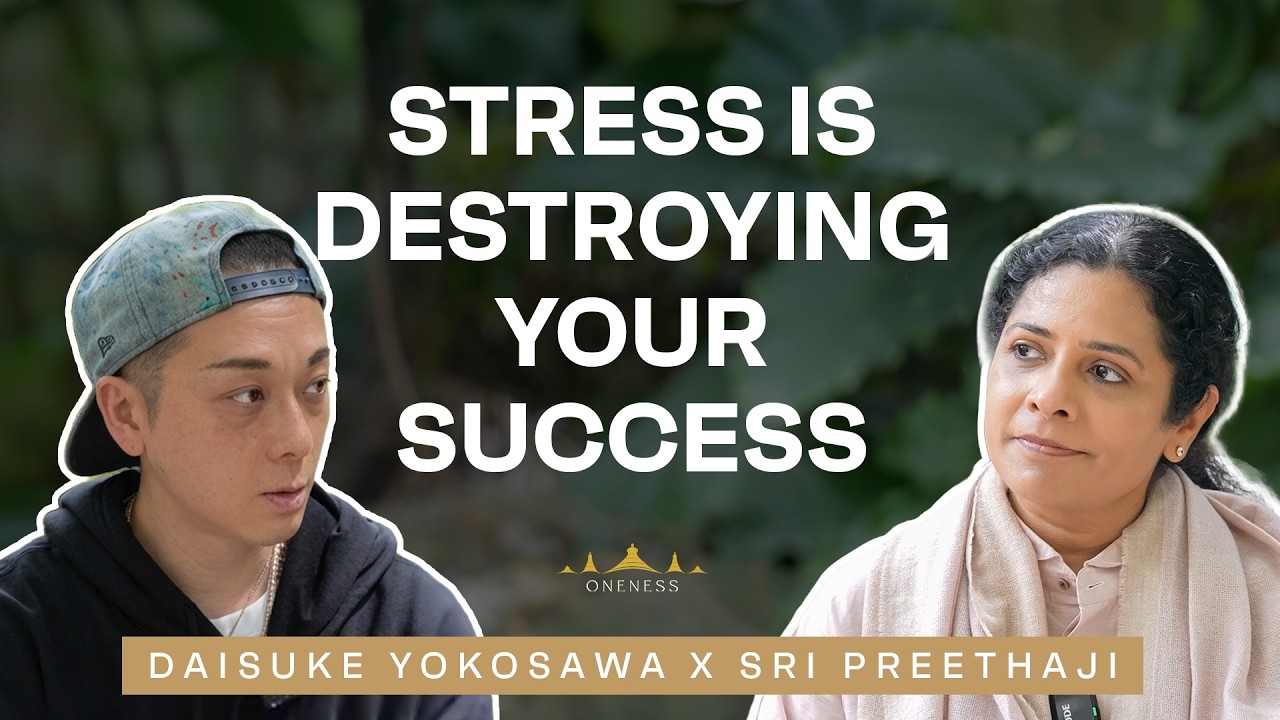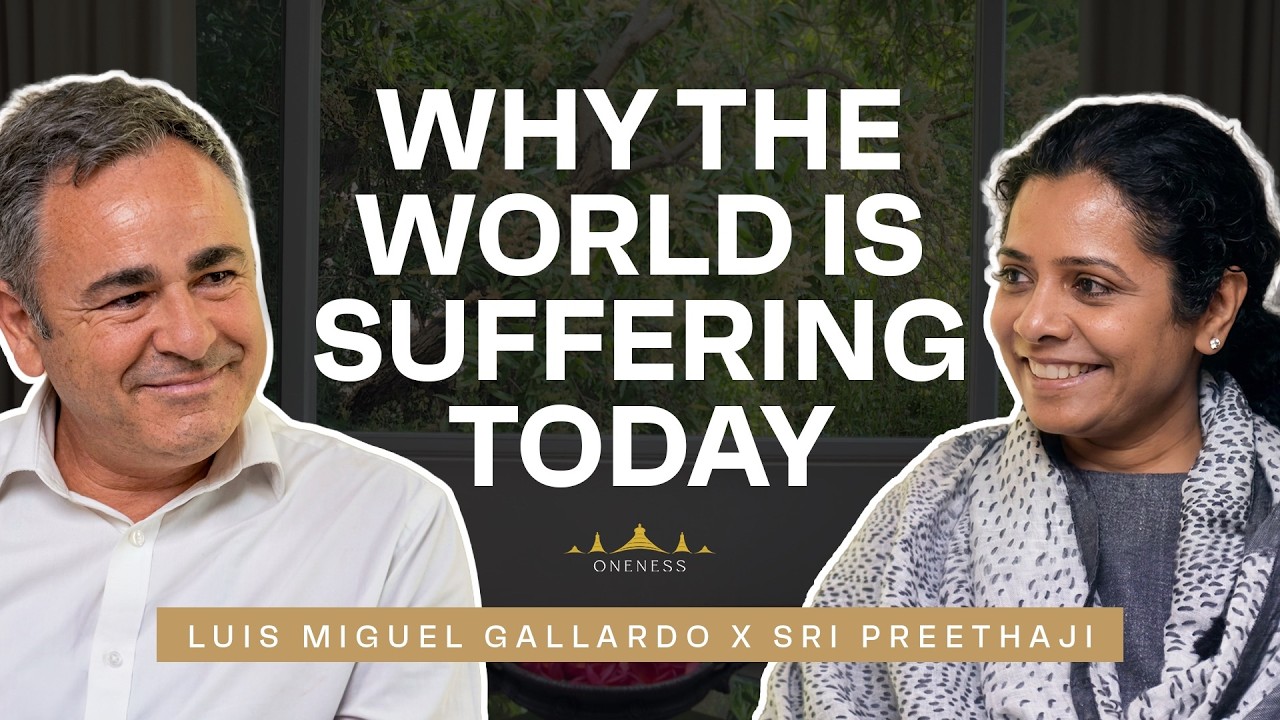
Inner peace is not a solitary achievement—it is a force that extends beyond the individual into relationships, environments, and collective consciousness. According to the Oneness Movement's Sri Preethaji, most people are trapped in conditioned stress and habitual suffering, but through awareness and deliberate practice, it becomes possible to shift into stable inner states. These transformed states then naturally influence everyone around you without requiring direct effort to change others. This is a teaching about transmission: that consciousness itself is contagious, and personal transformation is collective action.
Why Inner Peace Matters Beyond Personal Wellbeing
The dominant cultural narrative frames inner peace as a personal luxury—something you pursue in meditation retreats or therapy sessions for your own benefit. But the Oneness Movement teaches that this misunderstands the nature of consciousness itself. Inner peace is not private. When you stabilize in a peaceful, aware state, that state is perceptible to those around you. It affects the energy, mood, and possibilities in shared spaces.
Sri Preethaji's core insight is that most humans are conditioned to live in stress, anxiety, and what she calls "habitual suffering"—patterns of thought and emotion that repeat so frequently they feel like personality rather than conditioning. This collective state of suffering creates an environment that reinforces itself. When the people around you are stressed and reactive, their anxiety becomes the ambient atmosphere you inhabit. But the reverse is equally true: when you stabilize in calm awareness, that becomes part of the field others inhabit with you.
This is not metaphor. It is about the direct influence of one nervous system, one energy field, one consciousness on another. A room feels different when someone genuinely peaceful enters it. Relationships shift when one person stops being defensive. Families change when one member stops transmitting anxiety.
How Conditioning Creates Collective Suffering
To understand how your inner peace impacts others, you must first understand how collective conditioning creates suffering. The Oneness Movement teaches that humans are not born anxious or stressed—these are learned patterns, installed through family dynamics, cultural messaging, and repeated experiences of threat or inadequacy.
Over time, these patterns become so normalized that people mistake them for reality itself. Someone chronically stressed believes stress is what life is, not what their nervous system is doing. Someone habitually anxious in relationships thinks relationships are inherently destabilizing, not that their own unhealed wounds are creating the instability.
When large numbers of people are trapped in these conditioned states, they create what might be called a "suffering field"—a collective atmosphere where anxiety, defensiveness, and scarcity thinking are the default. In such an environment, anyone trying to find peace is swimming against the current. The stressed people around you pull you back into stress. The anxious patterns you encounter reinforce your own anxiety.
This is why transformation cannot be purely individual. You cannot meditate yourself into permanent peace if the environment you inhabit is full of collective anxiety and reactivity. And yet, you also cannot wait for everyone else to change before you begin. The breakthrough is to understand that as you shift internally, you begin to shift the field itself.
The Power of Personal Awareness Practice
Sri Preethaji emphasizes that transformation begins with awareness—not willpower, not discipline, but simple conscious observation of what is actually happening in your inner world. Most people live on autopilot, reacting to triggers without noticing they are reacting. A criticism comes, and the defensive response fires automatically. A moment of uncertainty arises, and the familiar anxiety floods in. The person experiences this as involuntary—as simply "how I am."
But awareness creates a gap. When you can observe a conditioned pattern arising—notice the contraction in your chest, see the defensive thought forming, feel the anxiety activate—you are no longer completely identified with that pattern. You have created space between your awareness and the automatic response. In that space, something new becomes possible.
Through deliberate awareness practice—whether that is meditation, conscious breathing, self-inquiry, or simply pausing to notice what is happening—you gradually weaken the automatic machinery of conditioning. The anxious response still arises, but it has less charge. The defensive reaction still activates, but you are not completely swept away by it. You can choose your response rather than being controlled by your patterns.
Over time, this practice does not just change individual moments. It begins to rewire your baseline state. You move from a nervous system that is chronically activated toward threat, to one that can rest in genuine calm. You move from a mind that is perpetually problem-solving your own inadequacy, to one that can think more clearly and respond more creatively. You move into what Sri Preethaji calls "beautiful inner states"—not fake positivity, but actual peace, clarity, and capacity.
How Your Inner State Naturally Extends Outward
This is where the teaching becomes radical: once you have moved into a more stable, peaceful inner state through awareness practice, that transformation does not stay contained within you. It radiates outward.
This happens in several ways. First, simply through presence. When you are genuinely calm and present, other people feel that. Your nervous system is coherent rather than scattered. Your attention is available rather than contracted around anxiety or defensiveness. Others unconsciously attune to this. In the presence of someone who is genuinely at peace, people's own nervous systems tend to settle. This is not conscious manipulation—it is direct nervous system-to-nervous system transmission.
Second, through changed behavior. When you are no longer driven by the reactive patterns that were previously running you, your behavior changes. You listen more carefully instead of planning your defense. You respond thoughtfully instead of snapping. You admit mistakes instead of deflecting. You are present with difficult emotions instead of numbing or distracting. These behavioral shifts create immediate changes in the people around you. They feel safer. They are more likely to relax their own defenses. Relationships begin to heal not because you forced change, but because you stopped being the wound-carrier for both of you.
Third, through what might be called "transmission"—the direct sharing of an inner state. In the Oneness Movement's understanding, consciousness can be transmitted from one person to another, especially from someone who is stabilized in a peaceful state to someone who is still caught in reactivity. This is not about words or advice. It is direct state-to-state communication. Someone in your presence who is genuinely at peace can help others relax into peace, not through doing anything special, but simply through being there.
Sri Preethaji's core teaching is that this is not about changing others or imposing your state on them. It is the opposite of that. It is about moving out of the reactive, defended state yourself. As you do, the space around you shifts. Others feel permission to relax. Families find themselves less volatile without anyone deciding to communicate differently. Workplaces feel less toxic when the people who used to carry and spread anxiety have stepped out of that role.
This Is Not About Forcing Change or Imposing Your Peace
An important clarification: the teaching is explicitly not about trying to make others peaceful or enlightened. It is not about becoming a guru figure who radiates wisdom and expects gratitude. It is not even about consciously choosing to influence others.
The ripple effect is organic. It happens as a natural consequence of your own transformation, not as a technique you apply. If you are practicing inner peace in order to change other people, you are still operating from ego—still trying to control your environment and those in it. That will limit your own peace and will feel inauthentic to others.
Rather, the invitation is to focus entirely on your own inner work. To practice awareness until you genuinely move into more peaceful, clear, stable states. To do this for yourself, because it matters, because your own life becomes more livable. And then to allow whatever influence that naturally has to occur without grasping for it or taking responsibility for others' choices.
Some people will resonate with your transformation and move toward their own. Others will feel threatened by it and push back. Some will not even consciously notice. That is not your problem to solve. Your job is to continue your own practice and allow the natural ripple to happen as it will.
Collective Practice as Amplification
Sri Preethaji also points to the power of collective practice—groups of people doing awareness work together, or even just being in intentional community with others who are committed to inner transformation. In such environments, the effect amplifies.
When multiple people are practicing awareness and stabilizing in peaceful states together, the field they create is much more powerful than the sum of individual practices. Each person's clarity helps hold space for the others. Each person's peace makes it easier for others to access their own. The collective consciousness shifts more rapidly than individual consciousness would in isolation.
This is why sacred communities, sanghas, and intentional gatherings have always been central to spiritual practice. Not because the teacher is special or because the location is magical, but because groups of conscious people create a field that supports consciousness. When you practice in such a field, you are not swimming against the current of collective suffering anymore. You are swimming with the current of collective awakening.
Where to Go From Here
If the teaching resonates, the next step is simple but not easy: begin to practice awareness in your own life. Notice when you are conditioned—when you are reacting automatically rather than responding consciously. Feel into your body. Where is the tension? Where are you contracted? What would it feel like to relax that just slightly?
Choose one area of your life—a relationship, a work situation, a time of day when you typically feel anxious—and bring deliberate attention to it. Sit in meditation if that calls to you. Practice conscious breathing. Ask yourself genuine questions about what is actually happening beneath your automatic reactions.
As you stabilize in your own inner peace, pay attention to what happens around you. Not in a self-congratulatory way, but with simple curiosity. Do people relax more easily in your presence? Do relationships shift when you stop defending? Do difficult situations resolve differently when you approach them from calm rather than reactivity?
And if you are drawn to deeper work, seek out community—whether that is a meditation group, a spiritual teacher, a conscious gathering, or a practice circle. The ripples move faster and go further when we are not trying to transform the world alone.