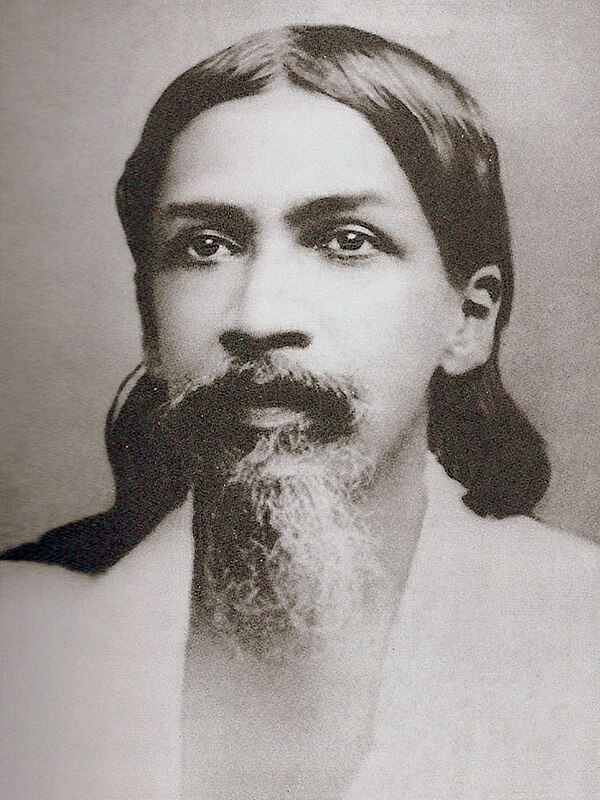
The Awakening of Matter: A Journey Beyond the Self
In the profound words of Sri Aurobindo, "Even the body's atoms can become awakened." This statement invites us to consider the transformative potential inherent not only in our consciousness but also in the very fabric of our physical existence. It suggests that awakening is not merely a lofty spiritual endeavor but a holistic process that encompasses every aspect of our being, including the most minute particles that compose our bodies. The implications of this idea are vast, as it challenges us to rethink our relationship with the material world and to recognize the sacredness that resides within it.
To deepen our understanding, we must reflect on the nature of awakening itself. It is often perceived as a spiritual experience, a moment of enlightenment that transcends the mundane. However, Aurobindo's assertion emphasizes that this awakening can permeate the physical realm, suggesting that our bodies, often seen as mere vessels, are also capable of profound transformation. This perspective invites us to explore how our physical existence can be a site of spiritual evolution, where even the smallest components of our being participate in the journey toward higher consciousness.
The image / the metaphor
At the heart of Aurobindo's quote lies a vivid imagery that evokes the interconnectedness of all existence. The term "atoms" conjures a sense of the fundamental building blocks of life, while "awakened" suggests a state of heightened awareness or consciousness. The juxtaposition of these concepts creates a powerful metaphor for the potential of transformation that exists within us. It implies that awakening is not limited to the mind or spirit but can extend to the very essence of our physical being, inviting us to consider the sacred nature of our material existence.
Diving deeper into this metaphor, we can see that Aurobindo is challenging the dualistic view that separates the spiritual from the physical. By suggesting that even atoms can awaken, he is proposing a vision of reality where the material and spiritual realms are intertwined. This perspective aligns with the ancient Hindu concept of "Advaita," or non-duality, which posits that all distinctions are ultimately illusory. In this light, the awakening of the body's atoms becomes a symbol of the potential for holistic transformation, where every aspect of our being can participate in the divine dance of existence.
In the speaker's tradition
To fully appreciate Aurobindo's insight, we must situate it within the broader context of Hindu philosophy. Concepts such as "dharma," the moral order of the universe, and "bhakti," the path of devotion, resonate deeply with his vision of transformation. Aurobindo's emphasis on the awakening of the body aligns with the idea of "kenosis," or self-emptying, which invites individuals to transcend their limited identities and embrace a more expansive sense of self. This journey toward awakening is not merely personal but is also a collective endeavor, as the transformation of the individual contributes to the evolution of consciousness as a whole.
In his epic poem "Savitri," Aurobindo explores these themes in depth, weaving a narrative that illustrates the struggle for spiritual awakening amidst the challenges of the material world. The character of Savitri embodies the transformative power of love and devotion, demonstrating that the path to awakening is often fraught with obstacles yet ultimately leads to the realization of a higher truth. This narrative serves as a reminder that the journey toward awakening is both personal and universal, inviting us to engage with the world around us in a more profound and meaningful way.
Living the teaching
In our modern lives, the teaching of awakening the body's atoms can manifest in various ways. Consider a scenario where an individual is grappling with stress and anxiety, feeling disconnected from their physical body. By engaging in practices such as yoga or mindful movement, they can cultivate a deeper awareness of their physical sensations and emotions. This process not only alleviates stress but also fosters a sense of connection to the body as a sacred vessel, allowing the individual to experience a form of awakening that resonates with Aurobindo's vision.
Another application of this teaching can be found in the realm of relationships. When we encounter conflict or misunderstanding with a loved one, it is easy to become entrenched in our perspectives, viewing the other as separate from ourselves. However, by embodying the principle of awakening, we can approach these moments with a sense of empathy and openness. This shift in perspective allows us to recognize the shared humanity in one another, fostering a deeper connection that transcends the surface-level disagreements. In this way, the awakening of our bodies and hearts can lead to a more profound understanding of love and compassion.
A reflection
As we contemplate Aurobindo's assertion that "even the body's atoms can become awakened," we are invited to explore the depths of our own existence. What does it mean for you to awaken not only your mind but also your body and spirit? In what ways can you honor the sacredness of your physical being as a vessel for transformation? This contemplation encourages us to embrace the wholeness of our experience and to recognize that every aspect of our being is a participant in the journey toward awakening.





Join the BrightStar Community
Stay connected with daily inspiration, event announcements, and community wisdom