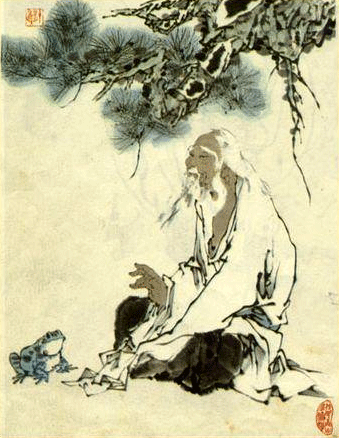
The Essence of Virtue: A Journey Through Perfection
Chuang Tzu's assertion that "There is a perfect virtue, of which the perfect man is the carrier" invites us to contemplate the nature of virtue and the ideal human being. This statement suggests that true virtue is not merely an abstract concept but is embodied by those who have attained a profound understanding of themselves and the world around them. In a society often obsessed with superficial achievements and external validation, this quote serves as a reminder of the deeper, intrinsic qualities that define a truly virtuous life.
To grasp the significance of this quote, we must delve into the relationship between virtue and the individual who embodies it. Chuang Tzu's perspective encourages us to consider how our actions and intentions align with a higher moral standard, one that transcends societal norms and expectations. The perfect man, as envisioned by Chuang Tzu, is not a flawless being but rather one who embodies the essence of virtue through authenticity, wisdom, and a harmonious connection with the Tao, or the natural order of the universe.
The image / the metaphor
The imagery in Chuang Tzu's quote evokes a sense of wholeness and completeness. The term "perfect virtue" suggests an ideal state of moral excellence that is not only aspirational but also attainable through the cultivation of one's character. The phrase "the perfect man is the carrier" implies that this virtue is not a static possession but a dynamic quality that flows through an individual, influencing their thoughts, actions, and interactions with others. This metaphor of carrying virtue emphasizes the responsibility that comes with embodying such ideals, as well as the transformative power of living in accordance with them.
Diving deeper into the metaphor, we can see that the "perfect man" represents an archetype of the sage, someone who has transcended the dualities of good and evil, right and wrong. This figure is not defined by rigid moral codes but rather by an innate understanding of the interconnectedness of all things. In this light, the perfect man becomes a vessel for virtue, allowing it to manifest in the world through compassionate actions and wise discernment. This perspective invites us to reflect on our own lives and consider how we might embody the virtues we admire in others.
In the speaker's tradition
Chuang Tzu's teachings are deeply rooted in the tradition of Taoism, which emphasizes living in harmony with the Tao, or the fundamental nature of the universe. Central to this philosophy is the concept of wu wei, or effortless action, which encourages individuals to align their actions with the natural flow of life rather than forcing their will upon it. In this context, the perfect virtue that Chuang Tzu speaks of can be seen as an expression of one's innate nature, cultivated through a deep understanding of the self and the world.
Furthermore, the idea of the perfect man as a carrier of virtue resonates with the Taoist notion of sagehood, where the sage embodies wisdom, humility, and compassion. This is akin to the Buddhist concept of bodhicitta, the awakened mind that seeks the enlightenment of all beings. In both traditions, the ideal individual is not merely concerned with personal perfection but is deeply committed to the well-being of others, reflecting a profound interconnectedness that transcends individual desires.
Living the teaching
Consider a modern scenario where this teaching might resonate: a workplace environment fraught with competition and ambition. In such a setting, individuals often prioritize personal success over collaboration and integrity. However, when one embodies the perfect virtue, as Chuang Tzu suggests, they become a source of inspiration for their colleagues. By prioritizing ethical decision-making and fostering a supportive atmosphere, they not only enhance their own character but also uplift those around them, creating a ripple effect of virtue that transforms the workplace culture.
In the realm of personal relationships, the embodiment of perfect virtue can manifest in moments of conflict. Imagine a disagreement between friends, where emotions run high and misunderstandings abound. A person who carries this virtue approaches the situation with empathy and understanding, seeking to listen and comprehend rather than to react defensively. By embodying the qualities of the perfect man, they create space for healing and reconciliation, demonstrating that true virtue is not merely about being right but about fostering connection and compassion in the face of adversity.
A reflection
As we reflect on Chuang Tzu's profound statement, we are invited to consider the nature of our own virtues and how they manifest in our lives. Are we merely adhering to societal expectations of virtue, or are we genuinely embodying the qualities that resonate with our true selves? In this spirit, I pose a contemplative question for you: What does it mean for you to carry perfect virtue in your daily life, and how might this understanding transform your interactions with others?



Join the BrightStar Community
Stay connected with daily inspiration, event announcements, and community wisdom