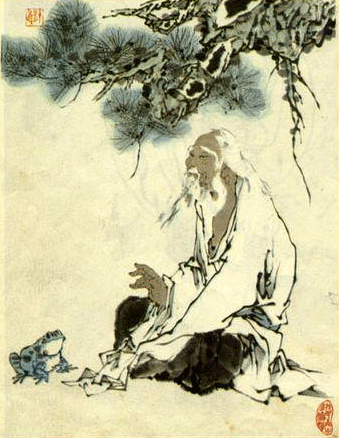
The Heart of Expression: Passion in Speech
Chuang Tzu's assertion that "great speech is impassioned" invites us to reflect on the profound connection between emotion and communication. In a world often dominated by superficial exchanges, this quote serves as a reminder that authentic expression is rooted in genuine feeling. The stakes are high; without passion, our words risk becoming mere echoes, devoid of the life and energy that can inspire and transform. To speak with passion is to engage deeply with our own truths and the truths of others, creating a bridge that connects hearts and minds.
Delving deeper, we recognize that Chuang Tzu's insight transcends the mere act of speaking; it speaks to the essence of art itself. Whether in poetry, storytelling, or everyday conversation, the infusion of passion elevates our expressions from the mundane to the extraordinary. This understanding compels us to consider how we communicate in our daily lives and the impact our words can have when they resonate with the fervor of our inner experiences. In this light, the quote becomes a call to cultivate a more profound relationship with our own emotions and the art of expression.
The image / the metaphor
At its core, Chuang Tzu's statement evokes a vivid image of speech as a living entity, one that thrives on the energy of passion. The word "great" suggests a quality that transcends the ordinary, while "impassioned" conveys a sense of urgency and vitality. This imagery invites us to envision speech not merely as a tool for communication but as an art form that requires the artist's heart and soul. The verbs chosen—"great" and "impassioned"—imply that true speech is not a passive act; it is a dynamic interplay of emotion and intention, a dance that invites listeners into a shared experience.
Going deeper into the metaphor, we can see that passion in speech is akin to the fire that fuels a forge. Just as a blacksmith shapes metal with heat and force, so too does passion shape our words, imbuing them with strength and clarity. This metaphor extends to the idea that without the fire of passion, our speech may become cold and unyielding, failing to resonate with those who hear it. In this sense, Chuang Tzu is not merely advocating for emotional expression; he is urging us to recognize the transformative power of our words when they are infused with genuine feeling.
In the speaker's tradition
Chuang Tzu's insights are deeply rooted in the Taoist tradition, which emphasizes harmony with the natural flow of life. Central to this philosophy is the concept of "wu wei," or effortless action, which encourages individuals to align their actions with the rhythms of the universe. In this context, passionate speech can be seen as an expression of one's authentic self, flowing naturally from a place of inner truth. This alignment fosters a sense of connection not only with oneself but also with others, creating a shared space where communication can flourish.
Moreover, the idea of "prajna," or wisdom, in Taoism resonates with Chuang Tzu's assertion. When we speak from a place of passion, we tap into a deeper understanding of our experiences and emotions. This wisdom allows us to communicate in ways that are not only impactful but also transformative for both speaker and listener. In the "Zhuangzi," we find numerous examples of characters who embody this principle, using their words to convey profound truths that challenge conventional thinking and inspire deeper contemplation.
Living the teaching
Consider a modern scenario where Chuang Tzu's teaching on passionate speech finds relevance: a public speaking event. Imagine a speaker who stands before an audience, sharing a personal story that resonates with their own struggles and triumphs. As they speak with fervor, their words become a vessel for connection, drawing the audience into their narrative. In this moment, the speaker's passion transforms the experience from a mere presentation into a shared journey, illustrating how great speech can inspire and uplift those who listen.
In a different context, think about a difficult conversation with a loved one. When emotions run high, the challenge often lies in expressing our feelings authentically without succumbing to defensiveness or anger. By embracing the essence of Chuang Tzu's teaching, we can approach such conversations with a commitment to speak from the heart. This willingness to express our true emotions can pave the way for deeper understanding and healing, allowing both parties to engage in a dialogue that is not only honest but also deeply transformative.
A reflection
As we contemplate Chuang Tzu's assertion that "great speech is impassioned," we are invited to explore our own relationship with communication. How often do we allow our words to flow freely from a place of genuine feeling? In moments of silence, consider this question: What would it look like to speak from the depths of your passion, to let your words reflect the richness of your inner experience? In this inquiry, we may discover pathways to more authentic connections with ourselves and others.




Join the BrightStar Community
Stay connected with daily inspiration, event announcements, and community wisdom