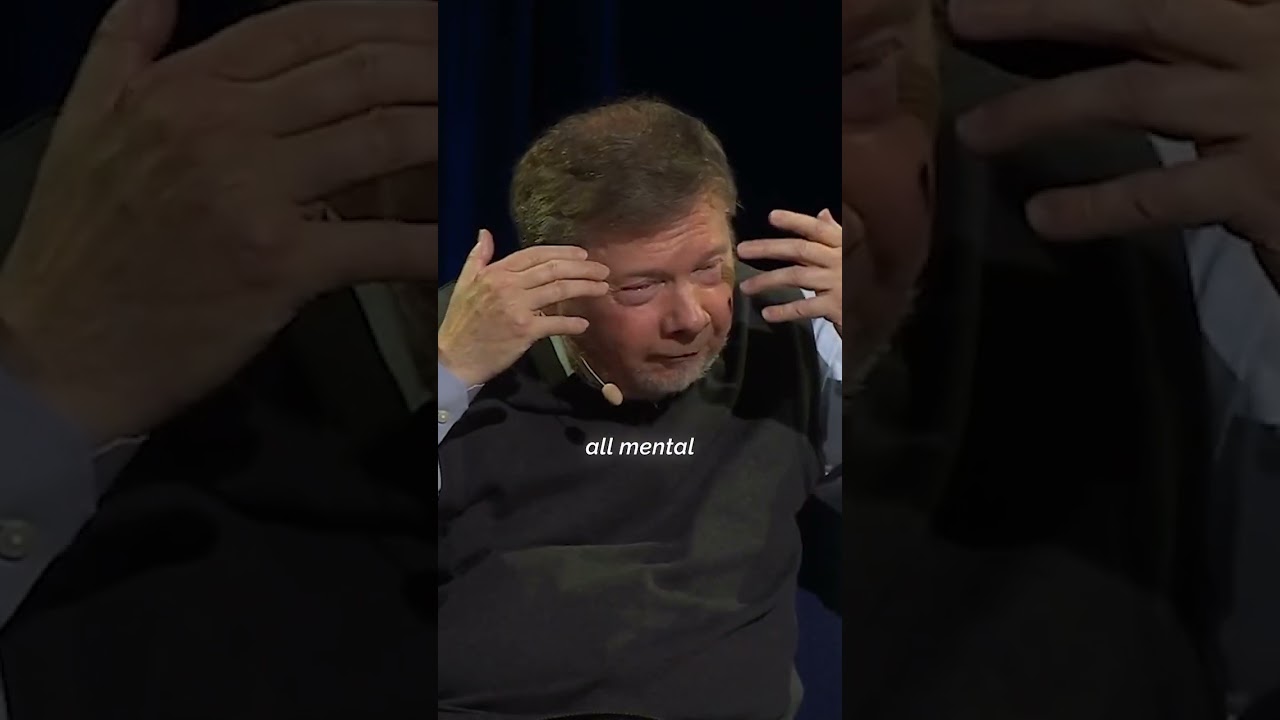
Thoughts are invisible forms of energy that exist beyond physical detection, yet they exert profound control over our lives. Unlike material objects that can be examined under a microscope, thoughts operate in a realm of pure energy and consciousness. Understanding this paradox—that something invisible and unmeasurable can be so powerful—is central to understanding why our inner mental landscape shapes our external reality and why awareness of thought itself becomes a tool for liberation.
What makes a thought physically undetectable?
One of the most striking aspects of thought is its fundamental intangibility. A thought cannot be isolated, preserved in a laboratory, or examined under a microscope. Unlike cells, atoms, or viruses—phenomena that can be directly observed through magnification—thoughts exist in a dimension that resists physical quantification. This absence of material form is not a limitation or weakness; rather, it points to a deeper truth about the nature of consciousness itself.
The invisibility of thought distinguishes it from all other phenomena we can measure and analyze. While scientists can track neural activity, measure electrical impulses in the brain, and observe correlations between mental states and brain function, the thought itself remains elusive. The subjective experience of thinking—the awareness of an idea, a memory, a worry, or an insight—cannot be located in space or weighed. This gap between observable neural activity and the lived experience of thought points to a mystery at the heart of consciousness.
This does not mean thoughts are unreal. Rather, it indicates that thought belongs to a different order of reality than matter. Thoughts are energy, but not the kind that a physicist can measure with conventional instruments. They are more akin to information, awareness, and intention—qualities that shape reality without being reducible to material substance.
How do invisible thoughts control our lives?
Despite their lack of physical presence, thoughts exercise enormous control over human existence. The thoughts we habitually think determine what we perceive, how we interpret events, and ultimately the choices we make. A single recurring thought can reshape an entire life trajectory. Fear-based thoughts trigger avoidance behaviors. Thoughts of worthlessness generate depression and inaction. Thoughts of possibility open pathways to creativity and growth.
The mechanism by which invisible thought governs visible reality operates through multiple channels:
- Perception: We do not perceive reality objectively. We perceive reality filtered through the lens of our thoughts and beliefs. Two people witnessing the same event will experience it differently based on the thoughts they bring to that moment. A critical thought colors perception negatively; a compassionate thought allows the same situation to be seen differently.
- Emotion: Thoughts generate emotional states, which in turn generate physiological responses. A anxious thought triggers cortisol release, elevated heart rate, and muscle tension. These physical effects then influence behavior—avoidance, defensiveness, or withdrawal. The invisible thought becomes a cascade of visible consequences.
- Decision-making: Every choice we make arises from our thought patterns. The thoughts we are not aware of—the automatic, habitual ones—often exert more control than conscious deliberation. A thought of inadequacy may silently prevent someone from pursuing an opportunity. An unconscious thought of scarcity may drive compulsive behavior.
- Reality construction: Over time, our dominant thoughts literally construct our lived reality. They shape what opportunities we notice, what relationships we attract, what outcomes we move toward. This is not mystical—it is the result of selective attention, interpretation bias, and the alignment of behavior with inner conviction.
The paradox is that while thoughts are invisible and unmeasurable, their effects are entirely concrete and visible. A thought can end a relationship, start a business, heal a wound, or create disease. The invisible becomes manifest through the mind-body system and through behavior.
Is there a difference between awareness of thought and thought itself?
A critical distinction emerges when we consider the space between thought and awareness of thought. Most people are identified with their thoughts—they believe the thought is who they are. "I am anxious" rather than "I am experiencing an anxious thought." This identification with thought is the source of most suffering, because it means the person is governed entirely by the thought patterns they inherited, learned, or accumulated.
When awareness turns toward thought—when you observe a thought rather than being the thought—a different possibility opens. In that moment of observation, you are no longer entirely controlled by the thought. There is space between the thinker and the thought. This space is awareness itself, and it is prior to thought. It is the ground in which thoughts arise but which is not itself a thought.
This shift from identification with thought to awareness of thought is not merely intellectual. It is practical. When you can observe a fearful thought without being consumed by it, the fear loses its automatic power over your body and behavior. When you can watch an angry thought pass through consciousness without acting on it, you have access to choice. This is why awareness of the nature of thought is so significant—it is the gateway to freedom from the tyranny of automatic mental patterns.
Why do thoughts feel so real if they are invisible energy?
Thoughts feel utterly real because of their intimate entanglement with the body and emotions. When a thought arises, it immediately triggers a cascade of physical sensations and emotional colorations. The thought is accompanied by a feeling, which is accompanied by a somatic response. This integration makes the thought seem solid and unquestionable.
Additionally, we are so thoroughly identified with our thinking mind that we rarely question what we think. The thoughts feel like direct perception of reality rather than interpretation of reality. This is because thought moves so fast and operates so automatically that we mistake it for reality itself. We are not usually aware that we are thinking—we are just aware of the content of the thought. It feels like we are perceiving the world directly, when actually we are perceiving through a filter of conceptual mind.
The sense of reality that thoughts carry is also reinforced by repetition. A thought that arises again and again, day after day, year after year, begins to feel like fact rather than mental event. Chronic worry feels like realistic assessment. Habitual self-doubt feels like truth about oneself. But repeated thought is still thought—it is not reality, even though it shapes reality.
What happens when we become conscious of the thought-making process?
When awareness turns toward the process of thinking itself—rather than only toward thought content—something shifts. You begin to notice the patterns, the triggers, the habitual loops of your mental activity. You see how thoughts arise seemingly from nowhere, claim your attention, generate emotion, and subside. You notice that thinking is not a unified, continuous process but rather a stream of fragmented mental events.
This observation is not purely intellectual analysis. It is direct perceptual awareness of the mind's activity. As this awareness deepens, you may notice gaps in thinking—moments where there is no thought, only awareness. In those gaps, there is often a sense of ease, clarity, or presence that is typically obscured by the constant mental chatter.
With continued awareness, the grip of automatic thought begins to loosen. Not because you are trying to stop thinking—effort only perpetuates the mind's dominance. But because awareness itself is liberating. Once you see that a thought is a thought rather than reality, you are no longer entirely controlled by it. This does not mean thoughts stop arising. It means the relationship to thought transforms.
How does understanding thought's nature change how we live?
Recognizing that thoughts are invisible energy with no material existence, yet exercises enormous control over our lives, creates the possibility of a fundamental shift in how we relate to our inner experience. If thoughts are not facts, but rather movements of energy and information, then we need not be enslaved by them.
This recognition leads to practical changes in how life unfolds. When faced with a fearful or limiting thought, one who understands the nature of thought can observe it without immediately acting on it. Where there is space between stimulus and response, there is freedom. Habitual reactivity begins to dissolve. Choices that are more aligned with one's deeper values become possible.
Over time, as consciousness becomes more dominant than thought, the quality of thoughts themselves often shifts. Thoughts arise less frequently, appear less dense, and carry less emotional charge. More importantly, the background of awareness—the consciousness in which thoughts appear and disappear—becomes the dominant experience rather than thought-content. This is the ground of inner peace, not because thoughts have stopped, but because consciousness has recognized itself as something prior to and independent of thought.
Understanding that thoughts are invisible energy also opens the question of what creates thought. Where do thoughts come from? The answer is not ultimately found through more thinking but through the awareness that observes thought. This inquiry itself becomes the gateway to understanding the nature of mind and consciousness at a deeper level.
Where to go from here
If this exploration resonates, several directions for deepening are available. First, direct observation: notice your own thoughts without trying to change them. What do you observe about their origin, their nature, their effects? Second, explore the gap—seek the moments of non-thought, the spaces in which consciousness exists prior to mental activity. These gaps expand with gentle attention. Third, inquire into the difference between thought-content and the awareness that witnesses thought. What is this awareness? Is it also a thought, or is it something prior? Finally, consider how much of your life is governed by invisible thoughts you are not consciously aware of, and what becomes possible when consciousness illuminates those patterns. The nature of thought is not an abstract philosophical question—it is the most intimate and practical inquiry available to a human being.