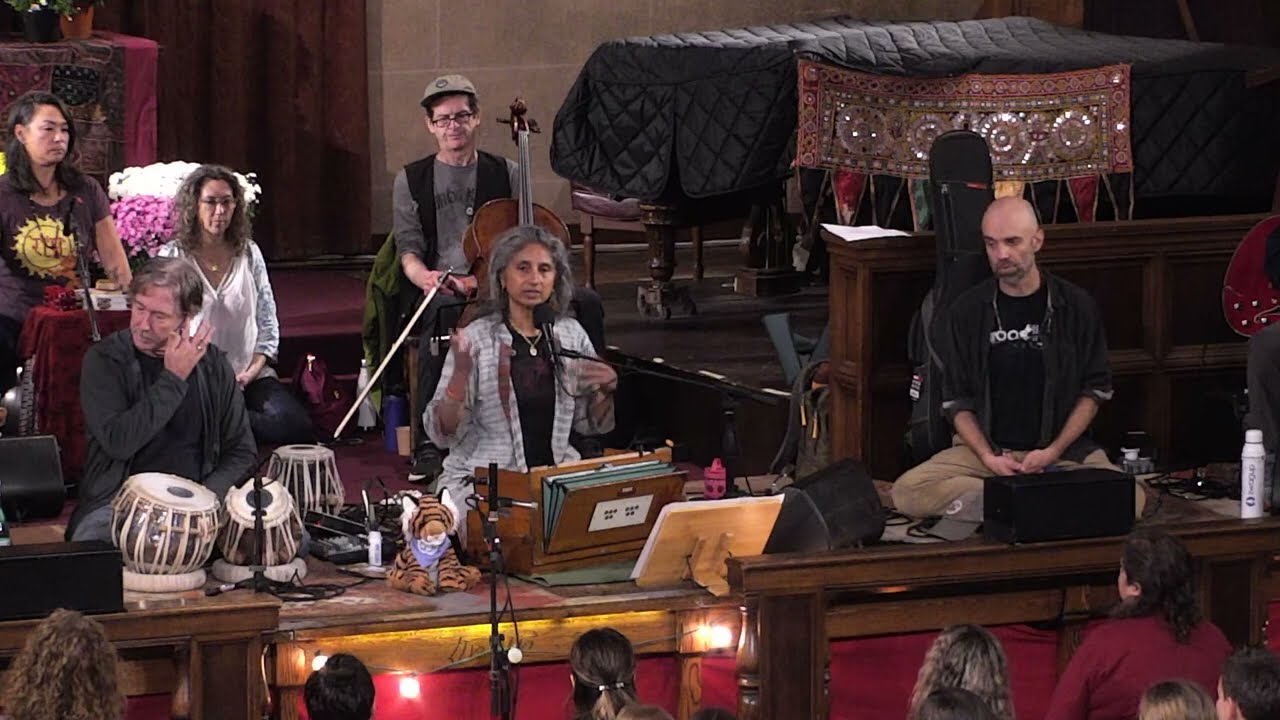
Trevor Hall's "Unpack Your Memories" is an acoustic meditation on the spiritual work of excavating one's past—digging through memory, grief, and longing to discover divine love and presence at the root of one's being. The song frames memory work not as psychological housekeeping but as sacred archaeology, where the soul's deepest longings and the traces of the divine intersect in the soil of lived experience.
What Does It Mean to Unpack Your Memories?
Hall begins his performance with a clear imperative: "Unpack your memories and dig in the soil." This is not a casual invitation to reminisce. The metaphor of unpacking—opening a bag, laying contents bare—combined with digging situates memory work as active, physical, and excavatory. To unpack is to take responsibility for what one carries; to dig is to go deeper, to turn soil, to reach beneath the surface.
The phrase "dig in the soil" recurs throughout the song as both anchor and refrain. Soil suggests fertility, groundedness, and death—the decomposition necessary for new growth. In spiritual traditions across cultures, soil is the place where the sacred meets the material: roots extend downward, seeds germinate in darkness, transformation happens unseen. Hall's metaphor invites listeners to treat their own memories not as static possession but as living terrain worth investigating.
Finding the Divine Within Personal History
The payoff of this excavation, according to Hall, is not catharsis or closure but encounter: "And there you will find my Lord / There you will find my love." The repetition here is crucial. The song does not promise that memories will be resolved or healed in a linear sense. Rather, it promises that within the soil of one's experience—the buried, the difficult, the long-carried—one discovers the presence of the divine. The Lord and love are not separate treasures hidden elsewhere; they are uncovered through the work of excavation itself.
This framework reframes spiritual seeking. Rather than looking upward or outward for transcendence, Hall suggests that the sacred is already embedded in one's history, waiting to be recognized. This aligns with contemplative traditions that emphasize divine immanence—the presence of God not as distant but as woven into the fabric of creation and experience. To unpack one's memories is therefore to practice a form of sacred attention to one's own life.
The Body's Role in Remembrance and Longing
Hall shifts the emotional register when he sings, "My heart was burning in a fire / I travel across oceans and seas / How long I've been waiting for you." The burning heart locates spiritual longing not in the mind but in the body—the heart as the seat of devotion, desire, and the soul's restlessness. The journey across oceans and seas, a traditional image of separation and seeking, underscores a theme of spiritual pilgrimage: the soul travels distance seeking reunion with the divine.
The line "How long I've been waiting" introduces temporality and patience. Spiritual longing, in Hall's framing, is not a moment but a duration—a sustained condition of the heart. This acknowledges that the path of memory work and divine seeking is not quick or easy. It is measured in the long expanse of time one spends in separation, in waiting, in the pilgrimage across separating waters.
At the Roots of the Tree
Hall returns to imagery of rootedness: "At the roots of this holy tree / Can you hear me?" The tree, rooted in soil, becomes a figure for both the individual soul and the cosmic order. To be at the roots is to be at the foundation, the place where sustenance flows upward and where the deepest structures are established. The question "Can you hear me?" is directed either to the divine at the tree's roots or to one's own deeper self—the voice that emerges when one digs down to one's foundation.
Trees in spiritual literature often represent connection between earth and heaven, roots and branches, the visible and the invisible. By positioning the listener at the roots, Hall invites an orientation toward the source, the ground, the foundation of being. The repetition of "Can you hear me" suggests both vulnerability—the plea to be heard—and insistence, as if the deeper self keeps calling until the conscious self attends to it.
How Do We Understand Spiritual Archaeology?
The work Hall describes—unpacking, digging, listening at the roots—is a form of spiritual archaeology. Unlike psychological excavation, which might aim at understanding the sources of trauma or wound, spiritual archaeology treats memory as a field where the sacred leaves traces. Every memory, every burned heart, every long journey contains information about the soul's relationship to the divine. Nothing is waste; everything signals something.
This approach does not deny suffering or difficulty. The burning heart and the long waiting are real. But it places them in a different frame: not as obstacles to overcome but as evidence of the soul's orientation toward something beyond itself. The pain of longing becomes a sign of connection, a proof of the soul's knowledge that it belongs to something greater.
The Casting Away of Fear
Toward the song's midpoint, Hall shifts into a more affirmative mode: "Cast away all fear / Dive in and splash around." After the long exploration of memory and longing, after acknowledging the burning heart and the waiting, the song extends an invitation to release constraint. Fear—perhaps fear of what one will find in the soil, or fear of the depth of one's own longing—is something to shed, not something to be solved or integrated.
The image of diving and splashing is playful, almost childlike after the gravity of what came before. It suggests that the excavation of memory, while serious, is also generative, creative, alive. To splash is to disturb the surface, to make waves, to inhabit one's experience with energy rather than resignation. This movement from grief and longing to playfulness and diving suggests a wholeness: the soul contains both the burning and the splash, the waiting and the joy.
Return and Cyclical Time
Hall includes a remarkable couplet: "Well, who knows how to read these stars? / Who knows, my friend, if you miss me this time I'll come back again." This introduces cyclical rather than linear time. The divine, or the beloved, operates in cycles of return. If one misses the moment—if grief or distraction or unpreparedness prevents meeting—there will be another cycle, another return. The stars, which humans struggle to read, contain a wisdom beyond our grasp; yet we can trust in the pattern of return.
This offers a profound comfort to the seeker: failure to recognize the divine in this moment is not permanent. The ocean returns to shore; the seasons cycle; the beloved returns. This framework releases the pressure of getting it right in a single moment and instead invites trust in larger patterns and multiple opportunities.
The Heart Beats Now
The final buildup—"And so the heart beats it / And so it beats now"—brings the song to a present-tense immediacy. After all the retrospection, the digging, the waiting, there is the simple fact of the heartbeat in this moment. The present tense, the word "now," anchors all the spiritual work of memory in the aliveness of the current instant. The heart, which burned in a fire, which waited across oceans, continues to beat—right now, in the listener, in the performer, in the temple of the body where longing and presence meet.
Acoustic Setting and Embodied Witness
The song is performed unplugged in an acoustic setting at Maya Yoga Studio in Maui. This choice of venue and instrumentation matters. A yoga studio is a space dedicated to embodied spiritual practice, to the union of breath and body and consciousness. The acoustic guitar—immediate, resonant, without electronic mediation—places the listener in close proximity to the performance. There is no barrier of amplification between the singer's voice and the listener's ear. This intimacy mirrors the work the song describes: getting close to the soil, digging without tools, listening at the roots.
Where to Go from Here
If you resonate with Hall's invitation to unpack your memories, consider beginning a simple practice of reflection. Sit quietly and ask: What memory keeps calling for attention? What part of my story have I not yet looked at? Then, rather than trying to solve or heal the memory, approach it with curiosity: What is this memory trying to teach me? Where is the sacred hidden in this experience? You might keep a journal of what surfaces, not to analyze it but to let it be witnessed.
You might also explore other spiritual teachers and artists who frame healing and transformation through the lens of sacred attention to one's own life—contemplatives who suggest that enlightenment is not elsewhere but woven into the very fabric of experience. And listen to Trevor Hall's broader work, which consistently explores the intersection of longing, devotion, and the search for divine presence in ordinary and extraordinary moments.
Finally, consider the places and practices that help you feel rooted—the soil, in Hall's metaphor. This might be literal (time in nature, gardens) or metaphorical (meditation, prayer, artistic practice). The work of unpacking memories requires a sense of safety and groundedness. Create the conditions for yourself to dig safely, knowing that at the roots you will find what you are seeking.