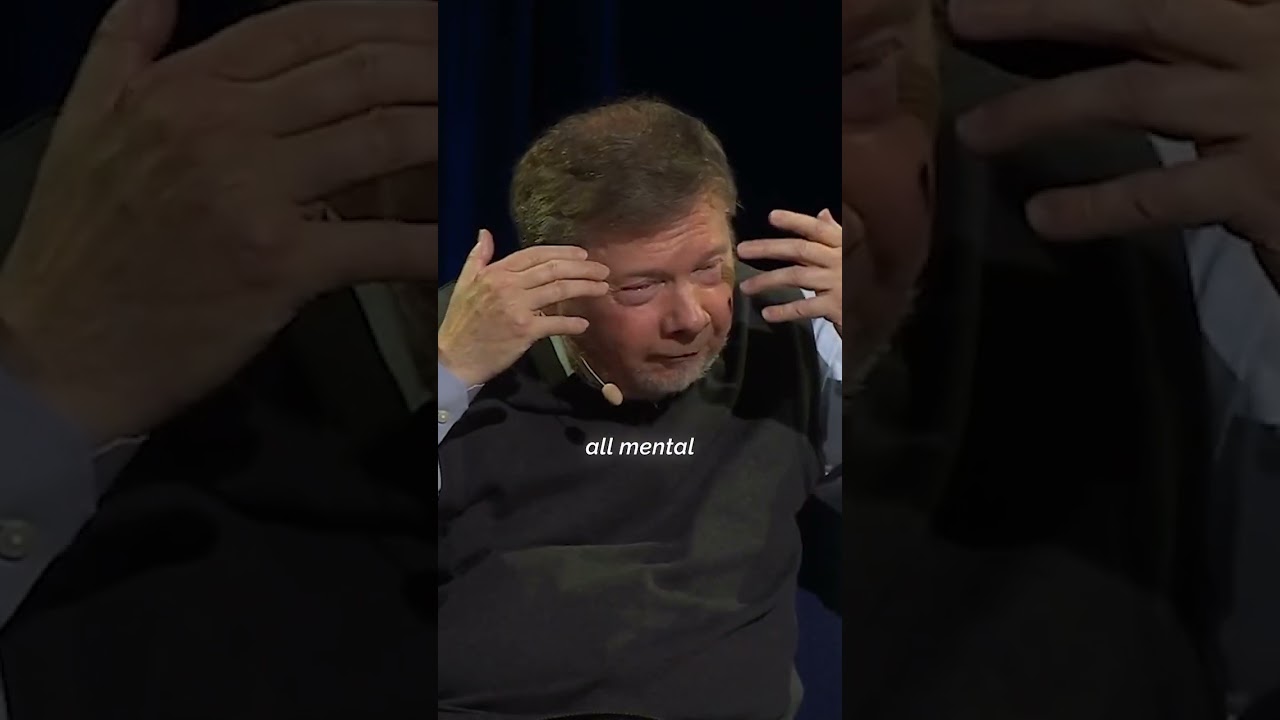
Eckhart Tolle teaches that your true self is not your body, name, or the accumulated stories that make up your identity. Beyond the physical form lies pure consciousness—an essential, unchanging presence that exists beneath all layers of ego and conditioning. This distinction between the constructed self and authentic being is central to liberation from suffering and the discovery of lasting peace.
What Is Your True Self?
The conventional understanding of self is rooted in form: your body, your name, your profession, your history. This identity feels solid and real because it has been reinforced since childhood through language, relationships, and social roles. Yet Tolle points to a fundamental limitation in this framework. The self you know through form is not your true self—it is a collection of mental constructs, sensory impressions, and learned patterns. Your true self is something entirely different: pure consciousness itself.
Pure consciousness is not something you acquire or achieve. It is the underlying awareness that animates all experience. It is always present, observing thought, emotion, sensation, and perception, yet remaining unchanged by any of them. This consciousness does not have a name because naming belongs to the mind. It has no history because history is a mental construct. It simply is—the fundamental aliveness and presence that makes experience possible.
Why Are We Trapped in Form Identity?
From infancy, the mind develops an identity structure necessary for survival and social functioning. You learn your name, your family role, your capabilities and limitations. Over time, this mental identity becomes so dominant that it eclipses your awareness of your true nature. You become identified with thoughts, emotions, and the story of "me"—a pattern of conditioning that Tolle calls the ego.
The problem is not the form identity itself, which serves practical purposes. The problem is exclusive identification with it. When you believe you are only your form, your thoughts, and your personal history, you lose touch with the consciousness that transcends these things. This creates a fundamental sense of lack, separation, and vulnerability. You become dependent on circumstances constantly changing to bring satisfaction, always fearful of loss, always seeking completion through external means.
How Does Pure Consciousness Differ from the Thinking Mind?
The thinking mind is inherently dualistic. It divides reality into subject and object, self and other, past and future. It narrates experience and creates a sense of time. The mind is necessary for practical functioning, but it is not your true nature. Pure consciousness, by contrast, is non-dual. It is the aware presence within which all mental activity occurs, but it is not affected by thought.
When you identify exclusively with the mind, you experience constant mental activity as your fundamental reality. Thoughts cascade endlessly, often driven by conditioning, fear, and reactive patterns. You feel you are the thinker, the author of your thoughts, when in truth thoughts arise within consciousness like clouds moving through the sky. The consciousness aware of the thought is not the thought itself. This is a radical shift in understanding: you are not your thoughts; you are the awareness in which thoughts appear.
Can You Access Your True Self?
Yes, and in fact it is already accessible. Your true self is not hidden in some distant spiritual realm—it is the most intimate and immediate dimension of your being. It is the presence you are aware of right now, before any thought about "I" arises. This presence is always here, available in the present moment.
The practice involves a shift of attention from the content of consciousness (thoughts, emotions, sensations) to consciousness itself. Rather than focusing on what you are thinking, notice the awareness that knows the thinking is happening. Rather than being absorbed in emotion, notice the space of presence in which emotion appears and dissolves. This is not intellectual; it is direct perception. As you rest in this awareness, the constructed self—the identity made of form and story—becomes less compelling, less solid, less "you."
What Happens When You Identify with Your True Self?
When identification with the form-based self loosens and you recognize yourself as the underlying consciousness, a fundamental shift occurs. The sense of separation diminishes. You no longer experience the world as something hostile or other, requiring your constant effort to secure happiness. Instead, there is a natural ease, a wholeness that does not depend on circumstances remaining favorable.
This does not mean you stop functioning in the world or lose practical concerns. Rather, your actions arise from presence and responsiveness rather than from the driven, reactive patterns of the ego. You can think and act with clarity and creativity because the mind is no longer running on automatic unconscious programs. You are no longer trapped in the prison of personal history, constantly defending a self-image or seeking validation through external achievements.
Relationships change as well. When you recognize the same pure consciousness underlying all beings, the illusion of fundamental separation dissolves. You see through the surface identities of others to the presence they are. This brings genuine compassion and understanding that does not depend on agreement or likability.
Is the True Self Related to Spirituality?
The recognition of your true self as pure consciousness is not a matter of belief or ideology. It is a direct recognition of what you are, independent of any spiritual tradition or religious framework. However, this recognition is often called "spiritual" because it involves moving beyond the purely material and mental layers of identity into something transcendent and essential.
Different spiritual and philosophical traditions have pointed to this throughout history. They use different language—the Atman in Advaita Vedanta, Buddha-nature in Buddhism, the true nature of mind in Dzogchen, the divine spark in mystical Christianity—but they are all pointing to the same fundamental reality: consciousness as the ground of being. What makes this recognition "spiritual" is not adherence to doctrine, but the direct and transformative perception of your true nature.
Why Does Form Identity Feel More Real?
Form identity feels more real because it is constant and familiar. You have decades of conditioning reinforcing it. The mind is always active, narrating, judging, planning. Its relentless presence creates an illusion of substance and solidity. In contrast, pure consciousness is often experienced as subtle, empty, or space-like. The ego interprets this as "less real" when in fact the opposite is true: consciousness is what makes all experience possible, including the experience of form and mind.
Additionally, the form-self is tied to survival mechanisms. Your nervous system has been wired to prioritize threats to the body and threats to self-image. This creates a gravitational pull toward form identity; it feels protective and necessary. Loosening this identification can initially feel destabilizing to the nervous system, which is why the transition is often gradual.
Where to Go From Here
If this exploration resonates, the next step is not intellectual understanding but direct investigation. Pause regularly and notice the awareness that is present right now. What is aware of your thoughts, emotions, and sensations? Can you point to it? Can you locate it? As you rest attention here, the artificial boundaries of the constructed self begin to soften. The belief that you are limited to the form you inhabit gradually reveals itself as belief, not truth. What remains is the simple, immediate presence of pure consciousness—your true self, already here, already whole.