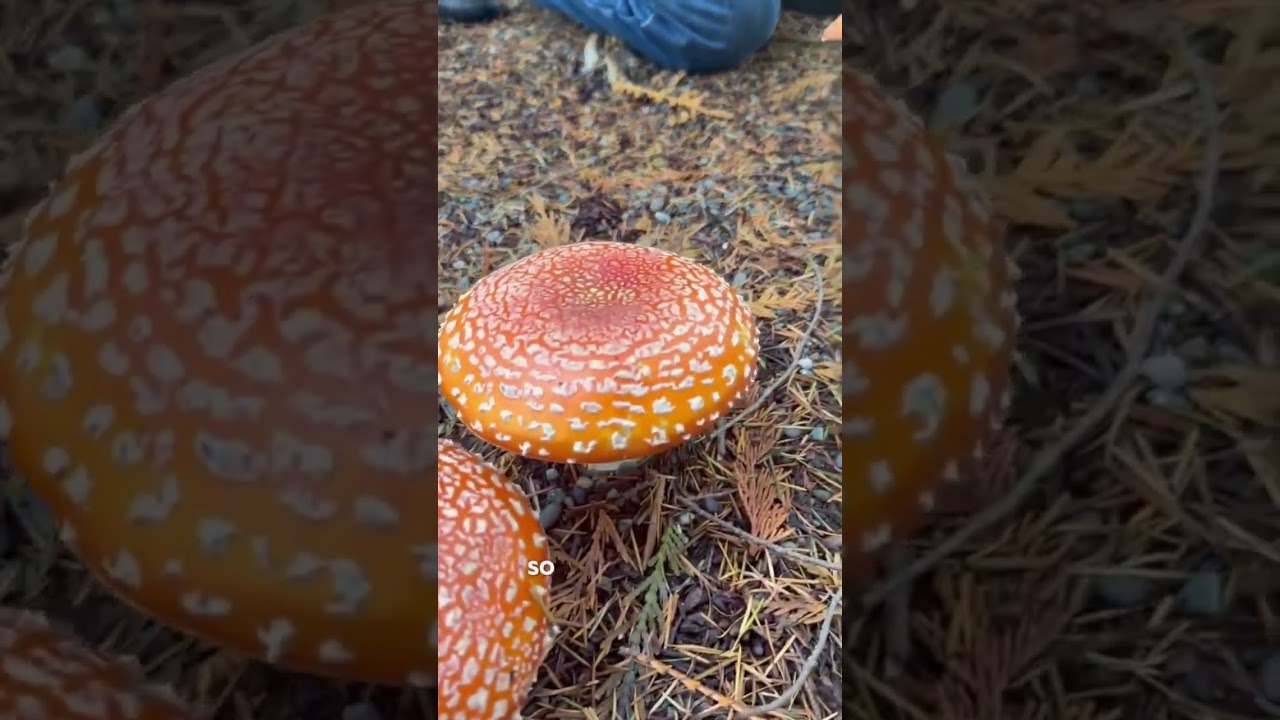
Paul Stamets captures a spontaneous mushroom hunting discovery featuring three edible species—hedgehog mushrooms (Hydnum repandum), winter chanterelles (Cantharellus tubaeformis), and pine matsutakes (Tricholoma magnivolare)—found within feet of each other. The encounter illustrates how intact ecosystems produce abundant fruiting bodies, and how mushroom hunting connects discovery, wonder, family memory, and ecological knowledge across cultures worldwide.
What Makes Mushroom Hunting So Rewarding?
Mushroom hunting taps into something deeper than the simple act of foraging. When Stamets describes finding three prime edible species clustered in one location, he identifies the psychological and emotional dimension of the experience: the eureka moment, the endorphin rush of spontaneous discovery, and the childlike wonder that arises when you stumble upon nature's bounty. This is not a contrived excitement or marketing language—it is the genuine neurochemical and emotional response to successful hunting and recognition. The act of identifying a mushroom, confirming it is edible, and harvesting it triggers a sense of accomplishment and direct engagement with the natural world that many modern activities do not provide.
The allure extends beyond individual satisfaction. Stamets emphasizes that many elderly people identify mushroom hunting as one of their most precious childhood memories—experiences shared with family, with the guidance of parents or grandparents, in forests or fields they visited year after year. These are not abstract nature experiences but embodied, multi-sensory, relational moments. The hunt itself becomes a vehicle for family bonding, knowledge transmission, and the formation of lasting memories. In this sense, mushroom hunting is a practice that sits at the intersection of ecology, culture, and personal narrative.
Which Edible Species Did Stamets Discover in This Hunt?
The three mushrooms Stamets found represent different ecological niches and culinary profiles. The hedgehog mushrooms (Hydnum repandum) are distinctive for their tooth-like structures underneath the cap rather than gills, making them relatively easy for novices to identify correctly. Winter chanterelles, also known by the scientific name Craterellus tubaeformis (formerly classified as Cantharellus tubaeformis), are prized for their delicate flavor and appear in cooler months. Pine matsutakes (Tricholoma magnivolare, also known as American matsutake) are especially valuable—highly sought in Japanese cuisine and in global markets—and their presence indicates a healthy forest ecosystem with intact fungal networks.
The significance of finding all three within a few feet of each other speaks to the ecological density and health of the location. When mushroom fruiting occurs at this density, it reflects an underlying mycelial network and soil conditions that support multiple species simultaneously. This is not random; it suggests an undisturbed ecosystem with established fungal relationships with trees and soil organisms. The proximity of these finds demonstrates the principle that once you locate a productive mushroom patch, it will likely produce fruit across multiple seasons and years.
Why Is Ecosystem Integrity Essential for Mushroom Abundance?
Stamets places explicit emphasis on the statement that "nature's abundance from intact ecosystems should not be underestimated." This is not merely a poetic observation but a scientific one. Mushrooms are the fruiting bodies of mycelial networks—vast underground fungal systems that interact with tree roots, decompose organic matter, and maintain soil health. When an ecosystem is intact, these networks have not been disrupted by clear-cutting, chemical inputs, soil compaction, or fragmentation. The result is robust fruiting.
Conversely, damaged or simplified ecosystems produce fewer mushroom fruiting bodies. The presence of multiple species fruiting in the same location indicates that the forest structure, soil biology, tree community, and moisture regimes are all functioning well enough to support diverse fungal relationships. This makes mushroom abundance an indicator of ecological health. When Stamets encounters a patch like this, he is essentially documenting a landscape where natural processes have been allowed to continue largely undisturbed.
How Does Mushroom Hunting Connect to Global Culture and Tradition?
Stamets notes that family mushroom patches are "guarded secrets amongst many, in particular in Europe, Eurasia, the Far East, Latin America, North America…ok,….I concede: Everywhere!" This observation reveals a universal human behavior and cultural pattern. Across virtually every continent, mushroom hunting has been a traditional practice, and the knowledge of productive patches is carefully preserved within families and communities. Specific forest locations known to fruit edible mushrooms are treated as resources of significant value—sometimes passed down through generations, sometimes kept strictly confidential to prevent overexploitation.
This global pattern suggests that mushroom hunting is not a niche or marginal activity but rather a deeply rooted human practice. In Europe, particularly Eastern Europe, mushroom hunting remains a common autumn activity. In Japan, the matsutake hunt is culturally significant and economically important. In parts of the Pacific Northwest, matsutake foraging is an established seasonal livelihood. In many Mediterranean and Eurasian cultures, the identification and harvesting of edible fungi is part of traditional ecological knowledge passed from elder to child. The universality of this practice points to something fundamental: the human drive to directly engage with and harvest from the living world, and to do so within a framework of family and community knowledge.
What Is the Connection Between Discovery and Wonder?
Stamets frames the mushroom hunting experience as inseparable from the phenomenon of discovery and wonder. The "eureka moment" he describes is the psychological experience of suddenly recognizing something valuable in your environment—a moment of clarity and connection. This is not manufactured or mediated by technology; it happens in real time, in the forest, through direct perception. A child or adult sees a mushroom, recalls the identifying features they have learned, confirms that it matches a known edible species, and in that moment experiences a genuine sensation of discovery and accomplishment.
This state of mind—the childlike wonder that arises from successful recognition and the physical thrill of finding food or treasure—appears to be something modern life increasingly lacks. Stamets's wish that "all of you share in these types of moments—especially with friends and family" is both a personal invitation and an implicit critique. In an age of passive consumption and mediated experience, the direct, embodied act of hunting and gathering offers something irreplaceable: the sensation of engaging with nature on its own terms, of using your own knowledge and perception to succeed, and of sharing that success with loved ones.
What Conditions Allow Multiple Edible Species to Fruit in Proximity?
The clustering of three distinct mushroom species in one small area reflects specific ecological conditions. Different mushroom species have different substrate and tree affinities, moisture requirements, and fruiting seasons. Hedgehogs and matsutakes may fruit on similar timelines and in similar forest types (coniferous or mixed forests). Winter chanterelles fruit in cooler conditions and prefer well-established forest floors with significant organic matter.
When all three appear together in one location, it indicates that the site offers diverse microhabitats, adequate moisture, proper temperature, intact fungal networks, and a healthy forest structure. The presence of specific tree species (particularly conifers for matsutakes) and the absence of soil disturbance are prerequisites. This is why Stamets notes that once you find such a patch, it will likely continue to produce across years—the underlying ecological conditions remain stable, and the mycelial networks persist and fruit predictably.
How Does Mushroom Hunting Preserve Ecological Knowledge?
The transmission of mushroom hunting knowledge from elders to children is a form of embodied environmental education. Unlike classroom learning, this knowledge comes through direct experience: learning to see the subtle color gradations that distinguish a false chanterelle from a true one, understanding the forest types where specific species appear, knowing the best time of year to hunt, and developing a spatial memory of productive locations. This knowledge is ecological literacy in its most practical form.
By engaging in mushroom hunting, particularly within family or community contexts, people maintain a living connection to local ecosystems and their seasonal rhythms. They learn which mushrooms are edible and which are toxic, how to identify them with certainty, and how to harvest sustainably without destroying the mycelial network. This knowledge becomes part of cultural identity and is passed forward through generations, preserving not just information but the entire experiential framework of how humans relate to forests and food systems.
Where to Go From Here
If you are interested in beginning mushroom hunting, start by learning the edible species native to your region and their identifying features. Join a local mycological society, where experienced foragers teach identification. Always hunt with someone knowledgeable until you are confident in your ability to identify species with certainty. Field guides specific to your geographic area are essential; general guides can be misleading. Learn the "key characters" that distinguish similar species, and never eat any mushroom unless you are completely certain of its identification.
Consider the ecological dimension: sustainable mushroom hunting means learning where patches are located, visiting them across seasons to understand fruiting patterns, and harvesting in ways that preserve the mycelium (typically by cutting mushrooms with a knife rather than pulling them). Think of mushroom hunting as a long-term relationship with specific forest locations rather than a one-time activity. Over years, you may discover family patches—locations that reliably fruit and become part of your personal and family history, much as Stamets describes in his discussion of the cultural significance of mushroom hunting across the world.
Beyond practical foraging, allow yourself to experience the emotional and psychological dimensions that Stamets emphasizes: the wonder of discovery, the embodied knowledge that comes from direct engagement with nature, and the relational aspect of sharing hunts and meals with others. These dimensions are as nourishing as the mushrooms themselves.