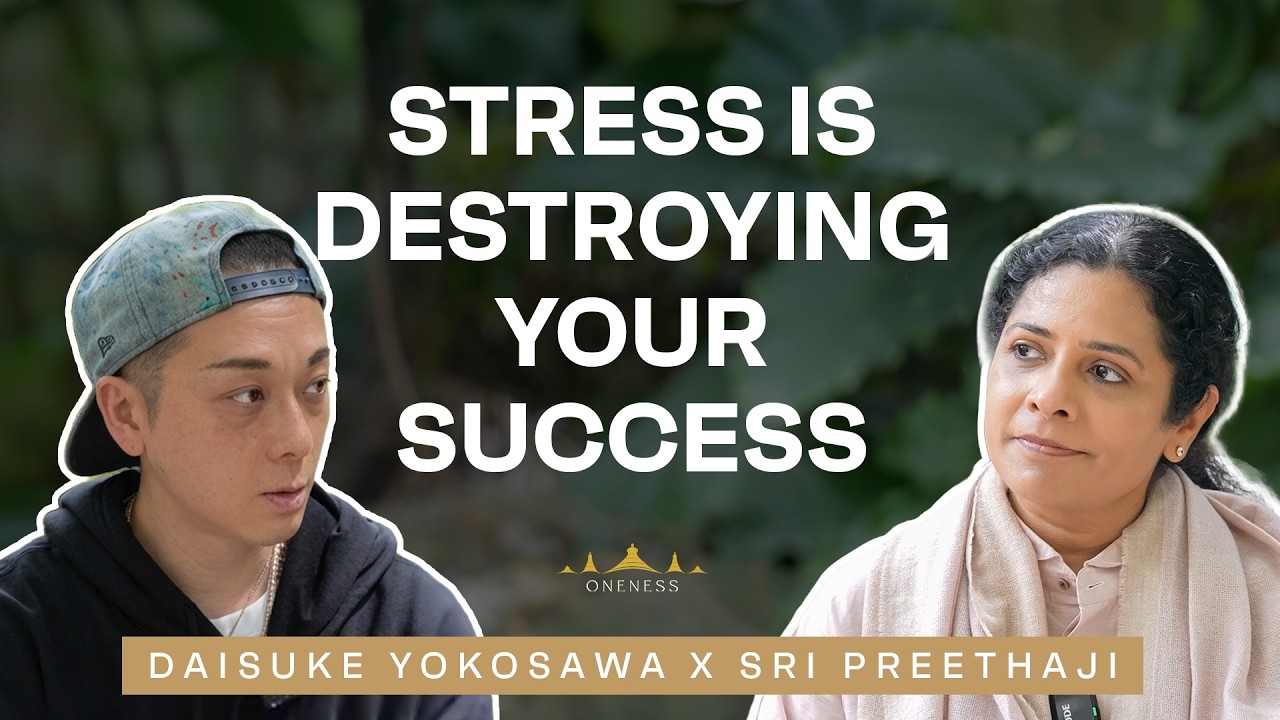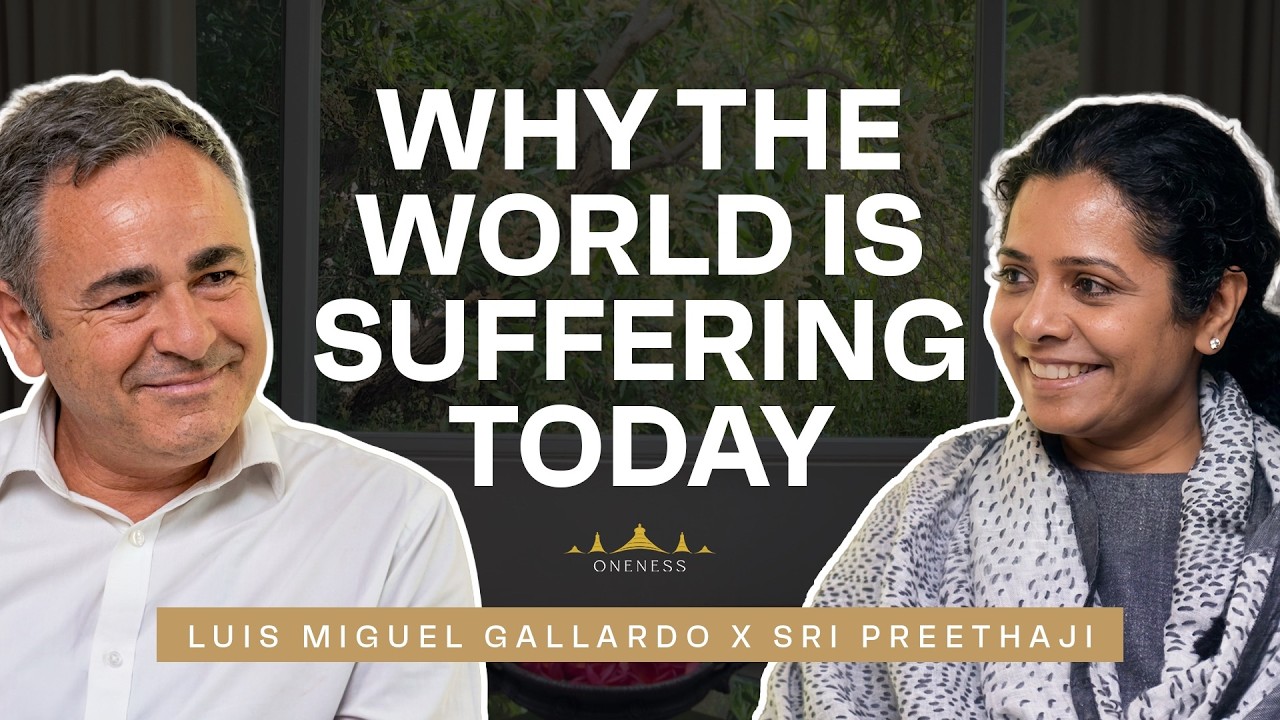
A person initially skeptical of spiritual movements experienced a fundamental shift in consciousness through an encounter with the Oneness movement, discovering profound clarity, inner connection, and a new sense of life direction. Rather than relying on belief systems or intellectual acceptance, his transformation came through direct experience and a tangible shift in his inner state—a pattern that illustrates how skepticism often dissolves when one experiences consciousness change directly.
What Moved a Skeptic Toward Spiritual Openness?
Skepticism is not a character flaw; it is often a protection mechanism and a demand for evidence. Many people arrive at spiritual spaces with legitimate doubt—they have been exposed to false promises, commercialized spirituality, or simply lack any reference point for inner transformation. Eric's story begins in this honest place: he was invited to something he did not yet believe in, and he carried reasonable doubt.
What the Oneness movement appears to have offered him was not more rhetoric or philosophy, but an actual doorway into a different quality of inner experience. The description notes that "what began as a simple invitation led him into profound clarity"—suggesting that the value lay not in convincing arguments, but in a direct encounter with a shift in consciousness itself. This is a crucial distinction. Skeptics are often persuaded not by claims about what is possible, but by experiencing it.
How Does Direct Experience Dissolve Intellectual Doubt?
The human mind operates in two registers: the intellectual and the experiential. A skeptic may argue against a spiritual concept indefinitely if the debate remains theoretical. But when the nervous system itself registers a genuine change—a settling of stress, a clarity that was not there before, a sense of connection that feels undeniable—the quality of doubt shifts.
Eric's journey suggests this pattern. He did not merely hear teachings about inner peace or clarity; he appears to have accessed a state in which those qualities became directly knowable. The Oneness tradition, particularly through its summit model, seems structured around creating conditions for such direct recognition rather than intellectual conversion. This aligns with contemplative approaches across traditions: the proof of deeper consciousness is not in words but in the felt shift of one's own being.
What Does "Profound Clarity" Mean in a Spiritual Context?
Clarity, in spiritual language, typically refers to a few interlocking qualities: the dissolution of mental noise or compulsive thought patterns; a heightened sense of presence; the ability to perceive one's own inner and outer life without the distortion of fear, anxiety, or conditioned reactivity; and an intuitive sense of direction or alignment with what one values. Eric's experience included this clarity—described as profound, suggesting it went beyond a temporary mental ease.
This kind of clarity is distinct from mere positivity or emotional elevation. It is cognitive and phenomenological: the mind becomes more lucid, perception sharpens, and one's sense of what is true or valuable becomes more direct. For someone accustomed to the noise of skepticism, stress, and the constant demand to prove or disprove, this clarity would be genuinely striking.
What Role Does Inner Connection Play in Transformation?
The description mentions that Eric found "inner connection"—a phrase that deserves unpacking. In the Oneness framework, inner connection often refers to a sense of coherence between different layers of one's being: between intellect and heart, between the surface self and deeper awareness, between one's actions and one's deeper values. It is not sentiment; it is coherence.
When someone experiences genuine inner connection, they often report a sense of wholeness that was previously fragmented. Stress and doubt fragment us—we are at war with ourselves, divided between what we think we should believe and what we actually experience. Inner connection is the resolution of that division. For a skeptic, this experience is profound because it offers something that argument never could: a felt sense of wholeness.
How Can a Single Encounter Shift Life Direction?
One might reasonably ask: how can a brief summit or encounter produce lasting change in someone's sense of life direction? The answer lies in the nature of consciousness itself. A genuine shift in one's inner state does not just feel good in the moment; it reorganizes one's priorities, values, and sense of what is possible. When someone experiences clarity and inner connection for the first time, or after a long absence, it functions as a reference point. They now know, from direct experience, that such a state exists—and that realization itself redirects the energy and intention of one's life.
Eric's life direction did not change because someone told him what to do. It changed because he experienced a quality of consciousness that made certain choices obvious and others irrelevant. This is how genuine spiritual transformation operates: it is not imposed from outside but emerges naturally when the inner landscape shifts.
What Does It Mean That His Family's Journey Also Transformed?
Transformation is not solitary. When one person in a family system experiences a genuine shift in consciousness—becoming less reactive, more present, more aligned with what they value—the entire system registers that change. The description notes that "his family's journey transformed because of one powerful encounter." This suggests that Eric's inner shift had a ripple effect, likely altering the relational dynamics within his family system.
In contemplative traditions, this is understood as natural. Consciousness is not sealed within individual skulls; presence and clarity radiate outward and influence the nervous systems of others. When one person becomes less driven by stress, fear, and compulsive reactivity, the people closest to them experience less of those forces directed at them. The family system begins to self-organize around a different quality of presence.
How Can Stress Dissolution Change One's Overall Life Quality?
The Oneness Global Summit explicitly promises to help people "dissolve stress, find clarity, and awaken a beautiful state." Stress is not incidental to modern life; it is architectural. It shapes perception, constrains possibility, drives reactivity, and creates the conditions for suffering. When stress genuinely dissolves—not through distraction or suppression, but through an actual shift in the nervous system's baseline—nearly everything changes.
A person who has dissolved stress operates from a different ground. They perceive more options where stress-driven perception saw only threats. They connect with others more genuinely. They access creativity and intuition that were locked away behind the wall of reactive tension. They experience what the tradition calls "a beautiful state"—not manic happiness, but an ease and rightness in being alive that does not depend on external circumstances.
Why Does Direct Experience Matter More Than Belief?
The power of Eric's story lies in this: he did not have to believe in the Oneness movement. He had to experience something real in himself. Belief is fragile; it can be argued against, questioned, or undermined by doubt. But direct experience is solid. You cannot argue someone out of their own consciousness. If someone has felt their nervous system settle, their mind clear, their sense of connection deepen, no amount of skeptical rhetoric will erase that knowing.
This is why the Oneness approach emphasizes encounter and direct transmission rather than doctrine. A teaching can be forgotten or dismissed. But an actual shift in one's inner state becomes part of one's lived knowledge. It becomes the ground from which a new life emerges.
Where to Go From Here
Eric's transformation illustrates several principles worth considering: First, skepticism is not the opposite of spiritual growth; it is often a sign that someone is genuinely seeking rather than accepting easy answers. Second, direct experience of consciousness change is more persuasive than any argument. Third, when one person genuinely transforms, the effects ripple outward to affect everyone in their sphere. And finally, the dissolution of stress and the clarification of consciousness are not luxuries or escapes from reality—they are the ground from which a more aligned, authentic, and purposeful life naturally emerges.
The Oneness Global Summit (January 23–25, 2026) is structured specifically to create conditions for this kind of direct encounter. For those arriving with doubt, skepticism, or simple curiosity, the invitation is not to believe beforehand, but to show up and allow direct experience to speak for itself.