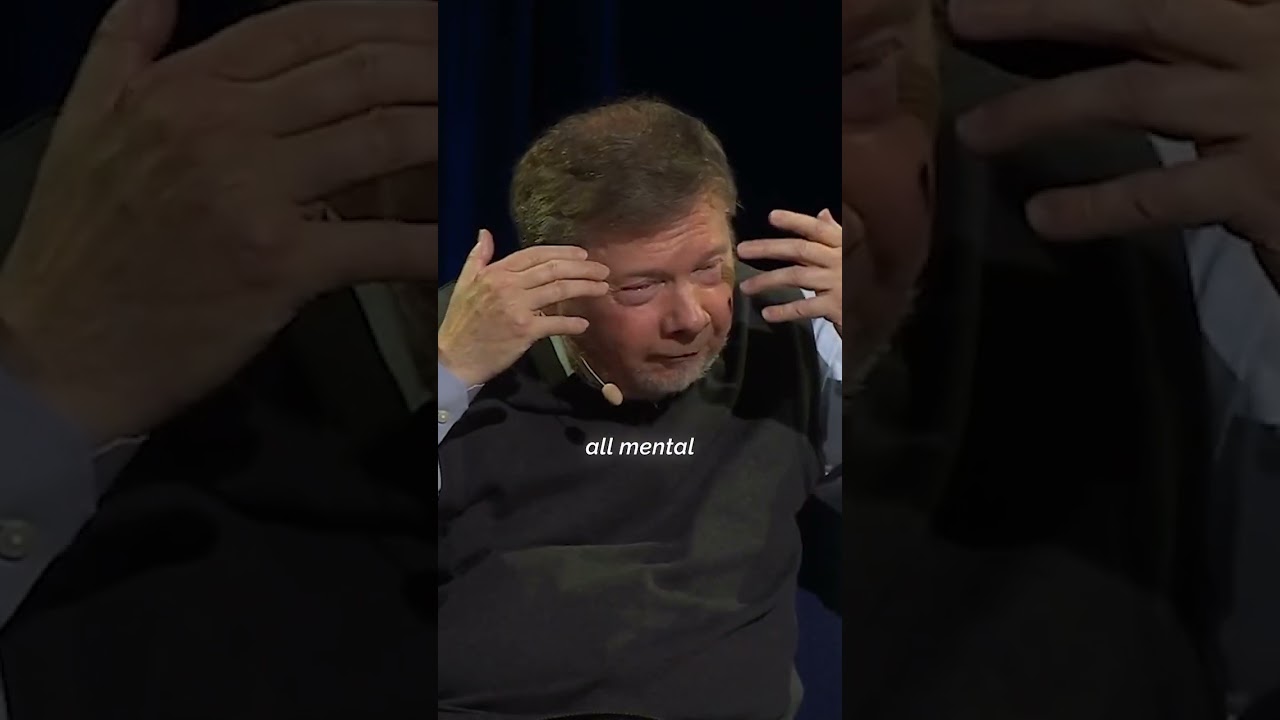
When you genuinely cease thinking and enter the space of no-thought, something counterintuitive occurs: the ego—which depends on mental activity for its sense of identity—experiences dissolution, yet consciousness itself remains intact. This isn't emptiness but a profound presence that feels calm, clear, and deeply familiar. The gap between thoughts, far from being a void, is the gateway to your actual nature, unmediated by the conceptual mind.
The Nature of Thought and Ego Identity
Eckhart Tolle's teaching rests on a fundamental distinction: thought and ego are inseparable. The ego is not a thing but a process—a continuous narrative construction built from past memories, future projections, and a running commentary on experience. When you think, you are simultaneously reinforcing a sense of "I," a localized self that opposes the world, judges situations, and seeks validation.
This ego-thought loop operates so seamlessly that most people mistake it for consciousness itself. You believe you are your thoughts, that consciousness arises from thinking. In fact, the reverse is true: thoughts arise within consciousness. The thinking mind is a tool, not the ground of being.
When you attempt to stop thinking—to genuinely enter silence—the ego initially panics. It trembles because its survival depends on continuity of narrative. A mind without thought is a mind without ego identity. This doesn't mean you cease to exist; it means the psychological construct that normally claims ownership of your experience goes quiet.
What Is the Space of No-Thought?
The space beyond thought is not blankness or unconsciousness. It is presence—a quality of awareness that is fully awake yet unburdened by conceptual overlay. In this space, you perceive and respond to life, but without the filter of "me and mine" constantly interpreting everything through the lens of self-protection and desire.
Tolle emphasizes that this space feels deeply familiar. This familiarity is crucial. You are not traveling to some exotic dimension of consciousness; you are returning to what you have always known but forgotten beneath layers of mental habit. The space of no-thought is not an achievement or an exotic state reserved for advanced practitioners. It is accessible in any moment you pause the narrative.
When you stop thinking, several things happen simultaneously:
- Perception sharpens. Without the mind's constant categorization and judgment, you perceive what is actually here rather than what you expect to see. Colors appear more vivid, sounds more distinct, the body's sensations more present.
- Emotional reactivity decreases. Most emotion is generated by thought—by the story you tell about an event. When thought ceases, the emotional charge attached to experience dissolves naturally.
- Time loses its grip. The sense of past and future, which thought constantly generates, loosens. You fall into the present moment, which is the only time that exists.
- A sense of wholeness emerges. Instead of the fragmented, defended self created by ego-thought, you experience a unified presence that includes both body and surroundings.
Why Does the Ego Tremble?
The ego's fear of silence is not paranoia; it is accurate self-preservation instinct. The ego cannot exist without thought. Remove the stream of mental content—the inner dialogue, the planning, the comparing, the judging—and the ego collapses. This is experienced as a threat precisely because it is a death, but only the death of a false identity, not of your actual being.
This trembling can manifest as anxiety when you first begin to practice presence. The mind may generate urgency ("I should be doing something"), self-doubt ("Am I doing this right?"), or even fear ("What if I lose my mind?"). These are not signs that you are doing something wrong; they are signs that the ego is encountering its actual nature, which is dependent and secondary rather than primary and substantial.
With continued exposure to the space of no-thought, the trembling diminishes. You realize through direct experience that nothing bad happens when the ego quiets. Life continues. You still function. In fact, you function more naturally, more intuitively, less driven by neurotic patterns. The fear itself becomes evidence that the ego was fabricated.
Presence as the Ground of Being
What remains when thought stops is presence. Presence is not a state you achieve but a dimension of consciousness you uncover by removing obstacles. It is described as calm and clear. Calm because it is not agitated by the friction of mental resistance. Clear because it perceives directly, without the distortion of conceptual interpretation.
Presence is not passive. In the space of no-thought, appropriate action still occurs. You respond to situations, move your body, speak when needed—but from direct seeing rather than from ego's defensive strategizing. This is why enlightened teachers can appear decisive and capable; they act from presence rather than from anxious self-protection.
The familiarity of presence is key to Tolle's teaching. You are not becoming someone new or attaining something foreign. You are recognizing what you already are beneath the noise of mental habit. This is radical because it means enlightenment is not a distant goal but an always-available reality that you have been overlooking.
The Gap Between Thoughts
Even in ordinary thinking, there are gaps—moments when one thought ends and another has not yet begun. These gaps are pure presence. Most people do not notice them because they are so brief and because attention is trained to follow thought. But gaps are there, and they are always accessible. The practice is simply to notice them, to rest in them even briefly, and to allow your sense of identity to shift from the thought to the awareness in which thoughts appear.
As you practice resting in these gaps, they expand. Not because you are doing something, but because you are stopping doing something—the incessant effort to maintain the ego-thought construction. Like a tense muscle that relaxes when effort ceases, consciousness naturally opens into more spacious presence when you stop the compulsive thinking.
The Dissolution of Time and Self
In the space of no-thought, clock time and psychological time both dissolve. Clock time (hours, minutes) becomes irrelevant to your inner experience. Psychological time—the constant mental movement between past regrets and future anxieties—simply ceases. What remains is the present moment, which is not a thin slice of time but the fullness of life as it is. This moment is eternal not because it lasts forever but because it is outside of time altogether.
When psychological time collapses, the sense of a separate self that stands apart from life also collapses. The "I" that feels like a subject locked inside a body, separate from the world, is revealed as a mental construct dependent on thought. In the space of no-thought, this illusion is transparent. You are still here—perceiving, responding, alive—but not as a defended, localized ego.
Where to Go From Here
The path forward is not to achieve some permanent state of no-thought—a common misunderstanding. Thought is a useful tool; the goal is not to eliminate it but to dethrone it, to see it clearly as a function rather than as your identity. Begin by noticing the gaps between thoughts, even if just for a breath. Observe how the ego reacts when you pause its narrative. Over time, moments of presence extend naturally. The trembling ego gradually becomes familiar with its own insubstantiality and relaxes. What you discover in the space of no-thought is not exotic but profoundly intimate: your own true nature, always here, always available, waiting only to be noticed.