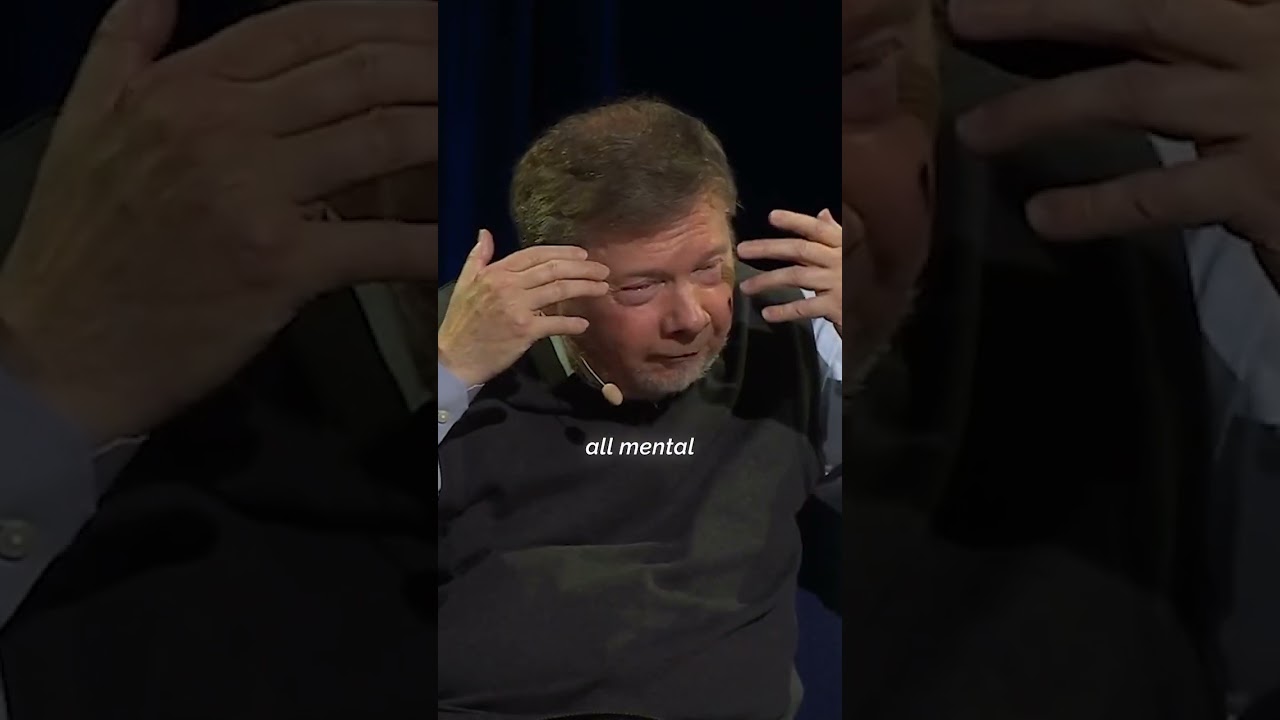
Spiritual unconsciousness is the state of being completely identified with your thoughts—believing that the constant mental voice is who you are. In this condition, every thought feels personal, every emotion seems to define you, and there is no gap between consciousness and the thinking mind. This identification is the root of suffering and the primary barrier to spiritual awakening. The path out begins with recognizing that you are the witness of thoughts, not the thoughts themselves.
What Is Spiritual Unconsciousness?
Spiritual unconsciousness is not a lack of intelligence or information. It is a fundamental misidentification—the mistake of treating the thinking mind as your true self. In this state, the constant internal narrator becomes indistinguishable from who you are. When a thought arises, it is immediately claimed as "me" or "my thought." When an emotion surfaces, it becomes "my feeling," and the sense of self expands to contain it entirely.
This condition is invisible to those living within it because it feels completely normal. The voice in your head has always been there; it has never occurred to you that you might be something other than this voice. There is no sense of separation between awareness and the stream of thought. You are lost in thinking, and you have no idea you are lost.
How Does Complete Thought Identification Trap You?
When you are completely identified with your thoughts, several consequences follow naturally. First, you lose the ability to question your thinking. If you are your thoughts, then questioning them would be questioning yourself—which feels dangerous and wrong. Second, you become enslaved to the mind's patterns. Repetitive thoughts, anxieties, old narratives, and reactive loops all feel like essential truths about reality rather than mental patterns. Third, your sense of self becomes fragile because it is constantly threatened by new thoughts, changing circumstances, and the unpredictability of the mind itself.
The voice in your head often criticizes, compares, judges, and worries. If that voice is you, then you are constantly criticizing, comparing, judging, and worrying. You cannot escape yourself. This creates an exhausting and often painful existence where you are trapped in an identity that is driven by compulsive thinking.
What Is the Difference Between Thoughts and Consciousness?
A critical shift occurs when you begin to see that consciousness and thoughts are not the same thing. Consciousness is the space in which thoughts arise. It is aware of thoughts, but it is not the thoughts themselves. When you become aware that you can observe a thought without being it, you have stepped outside the identification. The inner voice might be chattering, but you have become the listener rather than the voice.
This distinction is not philosophical—it is experiential. If you can notice a thought, something in you is separate from that thought. That something is your true nature. The thought is an object that appears in awareness; it is not awareness itself. Spiritual unconsciousness persists precisely because this separation has never been recognized or felt directly.
Why Does the Mind Create a False Identity?
The ego—the psychological sense of self—is essentially a thought construct. It is built from a collection of mental narratives: stories about your past, judgments about yourself, beliefs about what you need to be safe or successful, and interpretations of your experiences. The mind creates this identity because it serves a function. The ego feels like it protects you, explains you, and gives you a sense of continuity and control.
However, this identity is not real in the way you believe it to be. It is a habitual pattern of thinking, not an actual entity. When you are spiritually unconscious, you mistake this mental construct for your essential self. You defend it, elaborate it, and build your entire life around protecting and strengthening it.
What Role Does the Inner Voice Play in Unconsciousness?
The inner voice—the constant mental commentary—plays a central role in spiritual unconsciousness. This voice is the primary vehicle through which the ego maintains its sense of identity. It narrates your experiences, judges your actions, rehearses conversations, plans the future, and replays the past. It is always active, always available, and it claims to be you.
The peculiarity is that you have probably never questioned who is listening to this voice. You have been assuming you are the voice. But if you are the voice, who hears it? This simple question—Who hears the voice in my head?—can be the beginning of awakening from unconsciousness. The one who hears is your true nature; the voice is an activity of the mind.
How Does Thought Identification Create Suffering?
Suffering arises naturally from identification with thoughts because the mind, left to its own devices, tends toward negativity bias, rumination, and resistance to reality. Anxious thoughts create anxiety. Shame-based thoughts create shame. Thoughts about injustice or threat create anger or fear. When you identify with these thoughts completely—when there is no separation between you and them—you are trapped in the suffering they generate.
Moreover, because you believe you are your thoughts, you believe you must obey them or fix them. If your mind tells you that you are inadequate, you try to become adequate. If it tells you that something is wrong with the world, you try to fix the world. You are caught in an endless loop of reacting to mental content, believing it to be true and necessary.
What Is the First Step Toward Spiritual Awakening?
The first step is simple but profound: notice the gap between you and your thoughts. This can happen in small moments. When you catch yourself in an automatic thought pattern and realize you are watching it rather than being completely immersed in it, you have already begun to wake up. When you feel an emotion arising and notice it rather than immediately identifying with it, that is the beginning.
These moments of separation do not require any special technique. They arise naturally when attention shifts from the content of thought to awareness itself. You might notice the silence between thoughts, the space in which thoughts appear, or simply the fact that you can be aware of your own thinking. Each of these is a gateway to recognizing that you are not the mind.
How Can You Develop Awareness of Thought Without Judgment?
As you begin to notice the gap between yourself and your thoughts, it is important not to fall into a new form of ego activity—trying to control or suppress your thoughts. The goal is not to think less or to have better thoughts. It is to develop a different relationship with whatever thoughts arise. This means observing thoughts with curiosity rather than judgment, and without the urgency to change them.
A simple practice is to notice the inner voice without following its narrative. When it speaks, can you hear it without believing it, agreeing with it, or disagreeing with it? Can you let it be what it is—an activity of the mind—without making it mean something about you? This capacity to be aware of thoughts without identifying with them is the foundation of spiritual consciousness.
Where to Go From Here
Recognizing spiritual unconsciousness is the essential first move toward awakening. You cannot step out of a prison you do not know you are in. Once you have seen that you are not your thoughts—once you have felt the difference between awareness and mental content—your relationship to the mind fundamentally changes. The inner voice does not disappear, but it loses its power to define you.
The exploration deepens as you continue to notice the space of awareness itself. What is the nature of this consciousness that observes thoughts? Is it personal? Can it be touched by the content it observes? As these questions unfold in direct experience rather than as ideas, genuine spiritual transformation becomes possible. This is the move from unconsciousness to consciousness—from being lost in the mind to being awake as the space in which the mind occurs.