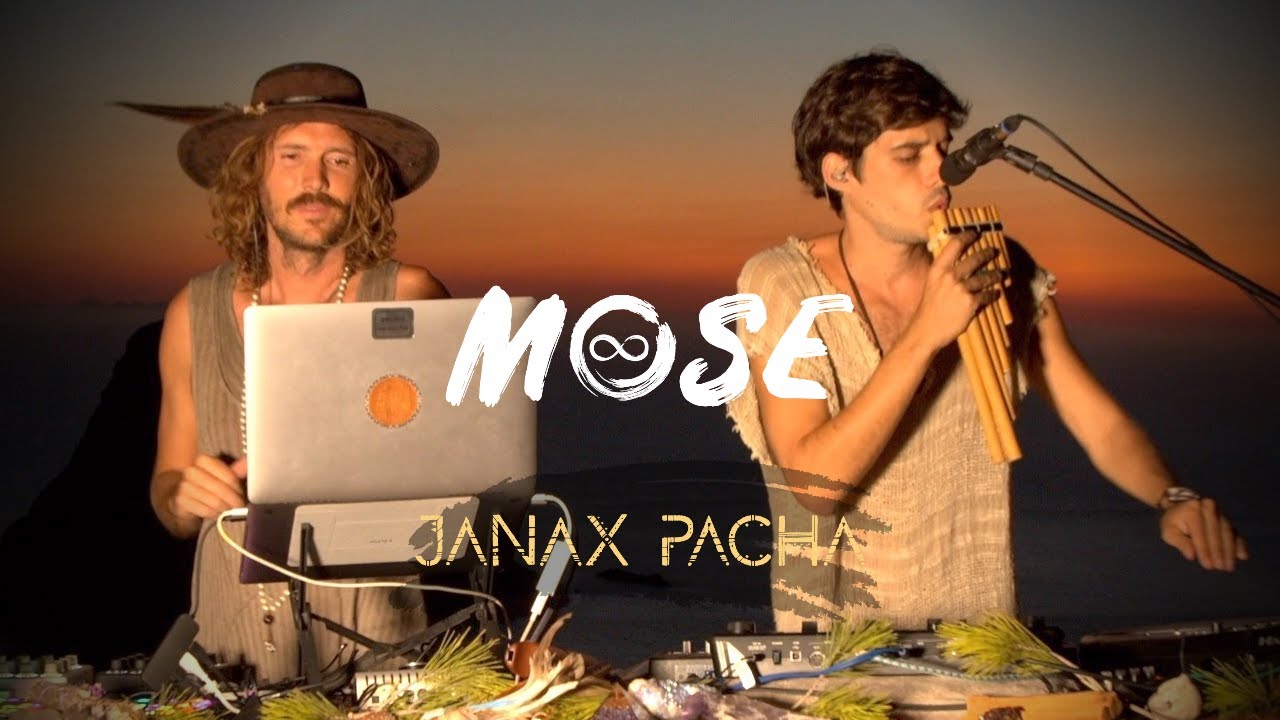
This is a 57-minute Goldcast mix featuring electronic, ambient house, and world music productions predominantly from the Resueño label. The selection spans unreleased tracks, remixes, and original collaborations—blending spiritual vocal samples (Sanskrit chanting, Latin hymns), deep house foundations, and world music influences from artists across South America and electronic music communities. The mix moves from opening ambient textures through mid-section devotional vocals into grounded, rhythm-focused house tracks, creating a listening arc suitable for focused work, meditation, or conscious movement.
What is the Resueño Label and Its Musical Foundation?
Resueño is an independent music label curated by Mose that operates at the intersection of electronic music, world music, and spiritual aesthetics. The label serves as a platform for artists exploring ambient house, techno, and electronic music that incorporates vocal traditions from Latin America, India, and beyond. Rather than chasing commercial trends, Resueño releases focus on production depth, textural sophistication, and sonic environments that support contemplative listening. The label's catalog includes work by artists like Sariel Orenda, Ape Chimba, Lemon and Soul, Bóveda Celeste, and others whose practices blur boundaries between club music and meditation music.
Mose himself operates as both curator and producer—selecting which artists and tracks align with the label's ethos while contributing remixes and original compositions. This mix, prepared for Goldcast (a respected selector and platform within electronic music), showcases the full breadth of Resueño's sonic palette. The track selection reflects a philosophy that electronic music production and spiritual sound can coexist meaningfully, that samples of chanting or prayer can function as compositional elements rather than decoration, and that rhythm, texture, and frequency can support states of attention and calm.
How Do Spiritual Vocal Samples Function in Electronic Music?
Several tracks in this mix center on recognizable spiritual vocal material: Sanskrit mantras, Christian hymns, Latin devotional phrases. Rather than using these as background texture or novelty, the producers integrate them as melodic and harmonic elements.
Cristo Redentor (ALUNA Remix) opens with what appears to be a hymn or prayer from a Latin Christian tradition. The remix surrounds the vocal sample with warm, filtered pad work and steady house rhythm, allowing the spiritual material to breathe while remaining embedded in a dance music context. This approach—keeping the vocal legible while supporting it with electronic texture—defines much of the mix's character.
Jai Shiva Shankar, a collaboration between Franko Heke, Monica Dogra, and Mose, takes its title from a traditional Sanskrit invocation to Shiva. Rather than sampling existing liturgical recordings, this track appears to feature original vocal performance layered into a house framework. The presence of Monica Dogra (an Indian artist known for work across Bollywood, indie, and electronic music) suggests a direct engagement with vocal production rather than sampling alone. The track sits at the mix's emotional center—around the 26-minute mark—functioning as a focal point where spiritual intention and electronic beat-making achieve particular clarity.
This approach differs from appropriation or tourism. By working with artists and traditions rather than extracting samples, by keeping the vocal material comprehensible rather than obscuring it, and by allowing the lyrics (whether Sanskrit, Spanish, or English) to carry meaning within the composition, these producers maintain respect for source material while expanding the contexts in which such material can exist.
What Is the Structural Arc of a 57-Minute DJ Mix?
The mix unfolds in recognizable phases, each sustaining a particular mood or energy level for several minutes before shifting.
Opening phase (0:00–11:11): Sariel Orenda's "Niendo" and Ape Chimba's "Niña del Mas Allá" establish atmosphere through sparse arrangement, minimal drums, and ambient textures. These unreleased and lesser-known tracks create a sense of discovery, signaling that this is not a hits mix but a deep-catalog exploration. The energy is low; the listener is invited to settle.
Devotional center (11:11–37:43): The ALUNA remix of "Cristo Redentor," Zentrip's "Govinda," Franko Heke and Monica Dogra's "Jai Shiva Shankar," and Bóveda Celeste's "Altilla Noyolo" (Mose Remix) form a sustained block where spiritual vocal material becomes most prominent. Rhythm is steady but not driving; the focus is on texture, vocal presence, and the interplay between electronic production and acoustic or semi-acoustic sound sources. This section occupies roughly the middle third of the mix and serves as its emotional and thematic core.
Rhythmic resolution (37:43–57:45): El Suchi's "Esperanza," Jai Cuzco's "Valley," and MUTA's "Que con Amor Todo se Cura" shift toward more pronounced rhythm and groove. The bass becomes clearer, the tempo more driving. These tracks remain musical and thoughtful rather than hedonistic—they are deep house and world-influenced electronic music, not peak-hour club tracks—but they offer forward motion and a sense of arrival. The final two minutes wind down without abrupt drops, allowing the mix to complete rather than simply stop.
This architecture mirrors many contemplative or focused-listening DJ mixes: establish calm, deepen into thematic material, and gradually return to engagement with beat and momentum. It is not designed for dancing in a club but for extended, uninterrupted listening in a home, studio, or meditation space.
Which Producers and Collaborators Define the Resueño Sound?
The mix credits nine separate tracks and introduces multiple producers, many of whom may be unfamiliar to listeners outside electronic music communities. A brief overview:
Sariel Orenda opens with "Niendo," an unreleased track that sets the mix's foundational texture. Orenda's work typically emphasizes ambient production, long sustains, and minimal percussion.
Ape Chimba provides "Niña del Mas Allá" via Rodrigo Gallardo's remix, anchoring the opening section with Latin-language vocal and drum machine work that blends reggaeton-influenced percussion with electronic texture.
Lemon and Soul appear via their "Cristo Redentor" track, remixed by ALUNA. ALUNA (the production/DJ project) is known for house music and remix work that emphasizes vocal legibility and warm sound design.
Zentrip Muzik contributes "Govinda," a track that introduces Indian classical influence (the title refers to a name of Krishna) into the mix through both vocal sample and compositional approach.
Franko Heke and Monica Dogra collaborate with Mose on "Jai Shiva Shankar." Heke is a producer/artist from Argentina; Dogra is an Indian vocalist and musician; Mose is the mix's curator and a remixer/producer. This collaboration exemplifies Resueño's cross-continental approach, bringing together artists from different traditions and geographies.
Bóveda Celeste ("Celestial Vault") is a project that Mose remixes here. "Altilla Noyolo" appears to draw on Peruvian or Andean musical traditions, with Mose's remix contextualizing it within house music frameworks.
El Suchi offers "Esperanza" (Hope), a track that bridges the mix's devotional center with its final rhythmic section. Suchi's work often blends Latin rhythmic traditions with electronic production.
Jai Cuzco provides "Valley," a composition that references place (Cuzco, Peru) and spiritual geography while maintaining a steady, house-informed groove.
MUTA closes with "Que con Amor Todo se Cura" (Love Heals Everything), a title that summarizes the mix's emotional thesis. MUTA's production here combines devotional vocal material with accessible, grounded house rhythm.
Across these artists, a pattern emerges: most are based in or draw from South American traditions (Argentina, Peru, Bolivia), many engage with Indian or Sanskrit material, and all work within electronic music production frameworks rather than as purist acoustic performers. Resueño functions as a space where these producers can collaborate and be heard together, creating a coherent aesthetic despite geographical and stylistic diversity.
How Does This Mix Function as a Curatorial Statement?
A DJ mix is not simply a playlist. The sequencing, the transitions between tracks, the choice of which version of a song to include (original vs. remix), and the pacing all represent curatorial decisions that shape the listener's experience. By preparing this mix for Goldcast—a respected selector with his own significant following—Mose is essentially making an argument about what constitutes coherent electronic music listening at this particular moment.
The argument might be stated as: electronic music production and spiritual or devotional vocal material are not opposites. A house beat, a filtered pad, and a Sanskrit chant are not contradictory elements; they can form a unified aesthetic. Producers from Argentina, Peru, India, and elsewhere can create together without erasing their own traditions. And a 57-minute listening experience can sustain attention and emotion without relying on shock, novelty, or climactic build-and-release structures.
By including unreleased tracks alongside established Resueño releases, by mixing remixes with originals, and by balancing known artists with emerging ones, Mose also signals that the mix is not a "best of" but a specific moment—a snapshot of the label's activity as of September 2021, when the mix was created. This contextual specificity makes the mix valuable for listeners tracking electronic music's evolution and for producers seeking models of how to sequence thematically coherent material.
Where to Go from Here
Listeners interested in this mix can explore several directions. First, visit the Resueño label directly across its platforms: the Bandcamp (which offers download options and detailed production credits), the Spotify playlist (updated regularly), and the YouTube channel (which often features long-form video mixes with visual accompaniment). Second, follow the individual artists whose tracks appear here—many have their own catalogs and collaborations available on Spotify, Bandcamp, and SoundCloud. Third, explore Goldcap's broader Goldcast series; the mix appears as part of a larger episode featuring Goldcap's own hour-long set, so listeners can extend the experience and compare curation styles. Finally, for those drawn to the spiritual and devotional dimensions of the music, seek out the original sources of the vocal material—Sanskrit mantra texts, Latin American liturgical traditions, and contemporary artists like Monica Dogra who bridge spiritual and electronic contexts.