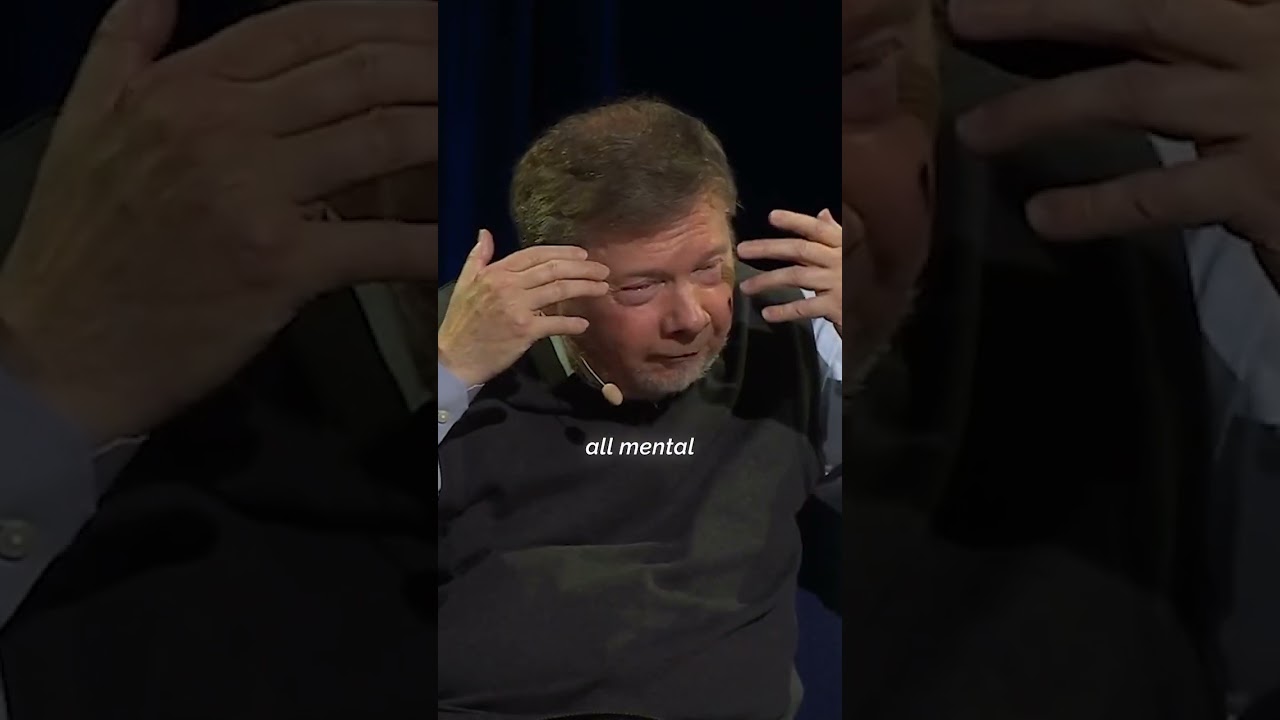
Eckhart Tolle argues that the greatest danger to humanity does not come from external threats but from the unconscious mind—the automated patterns of thought and reactivity that operate beneath our awareness. True forgiveness, he suggests, begins when we recognize this unconscious machinery both in ourselves and in others, shifting from blame to understanding and moving from reaction to presence.
Where Does Human Suffering Actually Originate?
Most people look outward when searching for the roots of human suffering. We blame circumstances, other people, injustice, or bad luck. Tolle redirects this gaze inward, identifying the unconscious mind as the actual source of collective and individual pain. This unconscious dimension operates automatically—it is the mechanical repetition of thought patterns, emotional reactivity, and conditioned behaviors that we inherit from our past, our culture, and our conditioning. The danger is not that it exists, but that it operates unseen.
The unconscious mind perpetuates suffering because it is, by definition, unconscious. We do not notice it running. We identify with it completely. When you are caught in an unconscious pattern—anger, fear, shame, resentment—you believe that feeling is you, that it is the truth of the situation. You react from it without realizing you are reacting from programming rather than from presence or wisdom. This automatic reactivity creates a loop: unconscious patterns generate suffering, suffering reinforces the patterns, and the cycle deepens.
How Does the Unconscious Mind Create Conflict and Pain?
The unconscious mind thrives on narrative. It tells stories about what has happened, what might happen, and who you are relative to others. These narratives are built from accumulated hurt, fear, and identity beliefs. When someone hurts you, the unconscious mind does not simply register the event—it creates a story around it: They did this to me. I am victimized. They are bad. This story then becomes the lens through which you perceive that person and similar situations going forward.
The danger escalates when these unconscious patterns operate in groups. Societies, nations, and cultures inherit collective pain and unconscious reactivity. Cycles of revenge, cycles of judgment, cycles of us-versus-them operate at scale without anyone necessarily being aware that they are trapped in an unconscious pattern. War, oppression, and systemic harm often perpetuate because unconscious people react to unconscious people, each believing their narrative is truth rather than recognizing it as an operating system they inherited.
What Is True Forgiveness?
Tolle's definition of forgiveness is radical because it is not sentimental. True forgiveness is not about absolving someone of responsibility or pretending harm did not occur. Rather, it begins with recognition—seeing that the person who harmed you was operating from their own unconscious machinery. The person who wronged you was caught in patterns, reactions, and conditioned beliefs they likely did not choose and may not even see.
This recognition is not an excuse for harmful behavior. It is clarity. When you see that someone acted from unconsciousness rather than from their deepest self, something shifts internally. The story of I was wronged by a bad person dissolves into a more accurate understanding: An unconscious person acted unconsciously. That shift from personal blame to systemic unconsciousness is where forgiveness begins.
Importantly, true forgiveness also requires seeing this truth in yourself. You must recognize your own unconscious patterns, your own reactivity, your own inherited pain that generates suffering. This is far more difficult than forgiving others, because it requires honesty about your own complicity in cycles of suffering. You are not bad—you are unconscious. The moment you truly see that in yourself, your judgment of others softens naturally, because you recognize the same machinery operating in them.
How Does Consciousness Transform the Pattern?
Consciousness is not a belief or a philosophy—it is a shift from living in the unconscious mind to being aware of it. Instead of being the anger, you notice the anger. Instead of believing the story, you observe the story being told. This shift from identification to awareness is what Tolle calls presence or the present moment. In presence, you are not caught in reactivity because you are not caught in the automated thoughts and emotions that generate it.
This is why forgiveness and consciousness are inseparable. You cannot truly forgive while remaining unconscious because you are still caught in the narrative of being wronged. But the moment you become conscious—aware of your own patterns and seeing the unconsciousness in others—forgiveness becomes possible. It is not a moral achievement; it is a natural byproduct of seeing clearly.
What Changes When You See the Unconscious Mind in Others?
When you begin to recognize unconscious patterns operating in others, a profound shift occurs. People stop being villains in your story and start being people caught in conditioning. A parent who wounded you becomes someone who was probably wounded themselves and acted from that wound. A person who was cruel becomes someone operating from fear or pain they likely did not know how to process. A political enemy becomes someone reacting from a different set of inherited beliefs and fears.
This recognition does not require you to condone harm or to have a relationship with the person. Boundaries remain important; protection remains necessary. But the emotional charge of blame, the energy of resentment, dissipates because you are no longer fighting against a person—you are recognizing a pattern. And patterns can be interrupted at a collective level through awareness.
How Does This Apply to Collective Suffering?
Tolle's insight extends beyond interpersonal relationships. Cycles of violence, systemic injustice, and collective trauma perpetuate because unconscious generations hand down their patterns to the next generation. A nation that has been invaded may harbor unconscious resentment for centuries. A group that has been oppressed may develop unconscious patterns of mistrust or reactivity. These are real—they are not imagined slights—but they operate automatically in the unconscious mind, generating reactive behavior without awareness.
Real healing at a collective level begins when a critical mass of people become conscious. This does not mean everyone must meditate or adopt a spiritual practice, though those can help. It means developing the capacity to notice when you are reacting from unconscious patterns, to pause, and to choose a different response. When enough people develop this capacity, collective behavior begins to shift because the automatic loops are interrupted.
Where to Go From Here
The implications of recognizing the unconscious mind as humanity's greatest danger are both humbling and empowering. Humbling, because it means the problems you see in the world are rooted in machinery that operates in you as well. Empowering, because it means change begins with awareness—your awareness, in this moment, of the thoughts, emotions, and reactions arising within you. You cannot control the unconscious mind through effort or willpower; control is itself a product of the same unconscious machinery. But you can become conscious of it.
True forgiveness, then, is not a goal to achieve someday when you have healed enough or grown enough. It is available now, in any moment, when you pause the automatic story and see clearly: the unconsciousness operating in the person in front of you, and in yourself. That seeing is forgiveness. And that seeing, multiplied across a society, is the only real path to the reduction of human suffering.