EveryEvent ATX

Alle Events durchsuchen

Live Music Capital of the World

events

Concerts & Live Music
Festivals
Sports & Recreation
Food & Drink
Arts & Culture
Community
Family & Kids
Nightlife
Comedy
Theater
Beliebte Reiseziele
BaliSedonaLos AngelesCosta RicaNew YorkSan FranciscoAustinMiamiJoshua TreeTulum
Alle Kategorien anzeigenAlle Reiseziele anzeigen

Alle Funktionen entdecken

Leistungsstarke Tools für Ihre Veranstaltungen

Plattform-Funktionen

Intelligente dynamische Preisgestaltung
Ticket-Kategorien
Sitzplatzreservierung
Warenkorbabbruch-Wiederherstellung
Besucher-Wiedergewinnung
Spenden & Staffelpreise
Affiliate-System
Ticket-Scanner
Rabattcodes
Individuelle Fragen
Ticket-Teilen
Upsells & Add-ons
Analysen & Berichte
E-Mail-Sequenzen
Warteliste / Benachrichtigen / Erinnern
Entdecken
Discovery HubArtists & PerformersVenuesKnowledge Base
Alle Funktionen anzeigenÜber uns
PreiseBlog
Alle Veranstaltungen durchsuchen

events

Concerts & Live MusicFestivalsSports & RecreationFood & DrinkArts & CultureCommunityFamily & KidsNightlife

Beliebte Reiseziele

BaliSedonaLos AngelesCosta RicaNew YorkSan Francisco

Entdecken

Discovery HubArtists & PerformersVenuesKnowledge Base

Plattform-Funktionen

Intelligente dynamische PreisgestaltungTicket-KategorienSitzplatzreservierungWarenkorbabbruch-WiederherstellungBesucher-WiedergewinnungSpenden & StaffelpreiseAffiliate-SystemTicket-ScannerRabattcodesIndividuelle FragenTicket-TeilenUpsells & Add-onsAnalysen & BerichteE-Mail-SequenzenWarteliste / Benachrichtigen / Erinnern
Alle Funktionen anzeigenÜber uns
PreiseBlog
AnmeldenRegistrierenVeranstalter
  • Browse All Events
  • Concerts & Live Music
  • Festivals
  • Sports & Recreation
  • Food & Drink
  • Arts & Culture
  • Community
  • Family & Kids
  • Nightlife
  • Alle Kategorien →
  • San Antonio
  • Hill Country
  • Fredericksburg
  • Houston
  • Dallas
  • All Destinations →
  • For Promoters
  • For Artists
  • For Venues
  • For Festivals
  • For Event Spaces
  • For Nonprofits
  • For Bloggers
  • For Speakers
  • Brand Ambassador
  • Case Studies
  • 350.000+ Käufernetzwerk
  • Warenkorbabbruch-Wiederherstellung
  • Intelligente dynamische Preisgestaltung
  • Ticket-Kategorien
  • Wiederkehrende Veranstaltungen
  • Sitzplatzreservierung
  • Affiliate-System
  • Warteliste / Benachrichtigen
  • Ticket-Scanner
  • Einbettungs-Widget
  • Event Syndication
  • Message Center
  • Integrations
  • Reports
  • Alle Funktionen →
  • Über uns
  • The Ecosystem
  • Blog
  • Glossar
  • Inspiration
  • Hilfe-Center
  • Kontakt
  • API-Dokumentation
  • Marken-Assets
  • Karriere
  • Presse
  • Nutzungsbedingungen
  • Datenschutzrichtlinie

Events

  • Browse All Events
  • Concerts & Live Music
  • Festivals
  • Sports & Recreation
  • Food & Drink
  • Arts & Culture
  • Community
  • Family & Kids
  • Nightlife
  • Alle Kategorien →

Getaways

  • San Antonio
  • Hill Country
  • Fredericksburg
  • Houston
  • Dallas
  • All Destinations →

For Organizers

  • For Promoters
  • For Artists
  • For Venues
  • For Festivals
  • For Event Spaces
  • For Nonprofits
  • For Bloggers
  • For Speakers
  • Brand Ambassador
  • Case Studies

Funktionen

  • 350.000+ Käufernetzwerk
  • Warenkorbabbruch-Wiederherstellung
  • Intelligente dynamische Preisgestaltung
  • Ticket-Kategorien
  • Wiederkehrende Veranstaltungen
  • Sitzplatzreservierung
  • Affiliate-System
  • Warteliste / Benachrichtigen
  • Ticket-Scanner
  • Einbettungs-Widget
  • Event Syndication
  • Message Center
  • Integrations
  • Reports
  • Alle Funktionen →

Unternehmen

  • Über uns
  • The Ecosystem
  • Blog
  • Glossar
  • Inspiration
  • Hilfe-Center
  • Kontakt
  • API-Dokumentation
  • Marken-Assets
  • Karriere
  • Presse
  • Nutzungsbedingungen
  • Datenschutzrichtlinie
EveryEvent
© 2026 EveryEvent Austin. Alle Rechte vorbehalten.
Inspiration

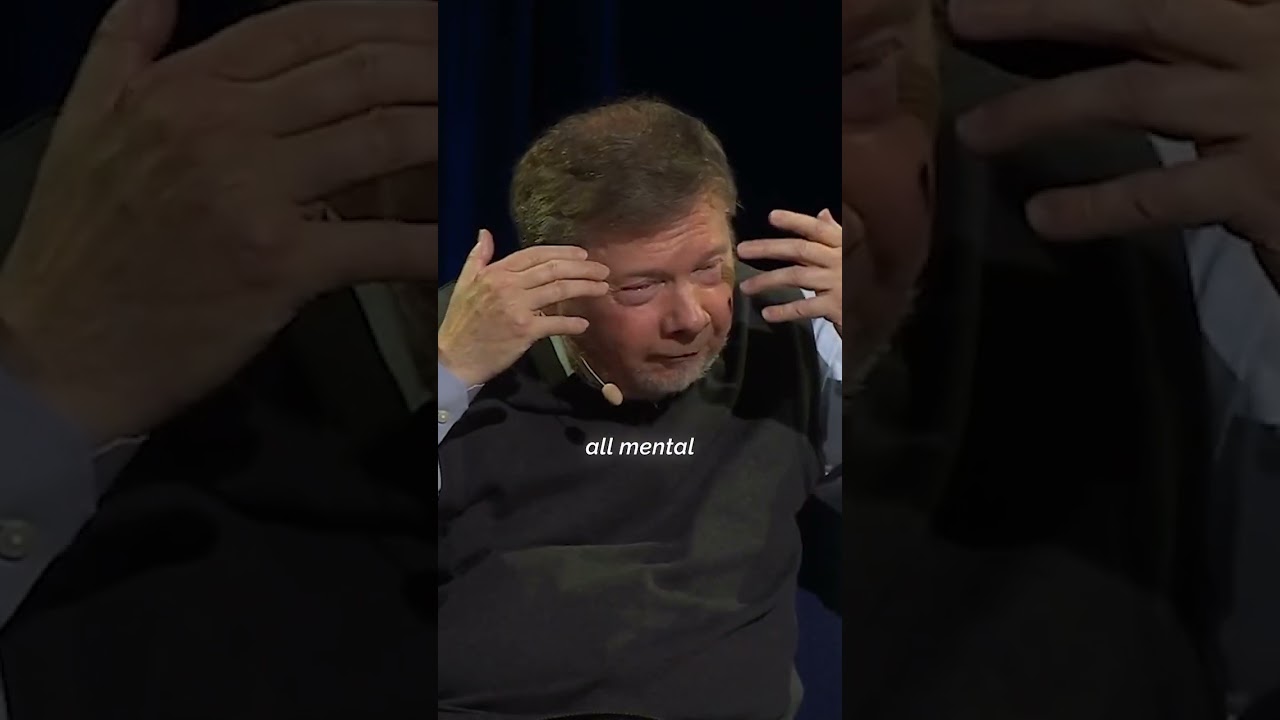
Reclaiming Awe and Wonderby Quieting Mental Commentary

Eckhart Tolle
Eckhart Tolle
Sep 19, 2025
6 min read

TLDR: Eckhart Tolle teaches that the constant mental commentary filtering your experience of the world has trained you out of the natural awe and wonder you possessed as a child. By observing and loosening the mind's grip on perception—its naming, judging, and interpreting—you can recover a direct, unmediated relationship with existence itself. This shift involves recognizing the difference between perception and the mental overlay, then practicing moments of silence where thought steps back and lets reality shine through as it did before language colonized your awareness.

Read · 6 sections

What Is Mental Commentary and How Does It Block Wonder?

In childhood, the world arrives fresh. A flower, a shadow, a stranger's face—each is encountered directly, without the buffer of explanation. But as you grow, the mind learns to label, categorize, and judge every stimulus. This process is necessary for functioning; it is not inherently harmful. The problem emerges when the commentary becomes so automatic, so constant, that it *replaces* direct experience rather than merely organizing it.

Mental commentary is the mind's perpetual narration: "That's a rose. Red ones mean passion. The gardener planted them badly. I should have a garden like that." Layer by layer, thought interposes itself between you and the simple fact of the flower. The wonder—the opening, the freshness—disappears under the weight of concept and comparison. You are no longer meeting the world; you are meeting your thoughts about the world.

This commentary operates largely below conscious awareness. It runs like background radiation, coloring everything you perceive. Tolle's teaching invites you to notice it, to recognize how thoroughly it mediates your experience, and to consider whether what you're actually experiencing is the world or your mental interpretation of it.

Why Did You Naturally Feel Awe as a Child?

Children exist in a state closer to pure perception. Before extensive vocabulary, before social judgment, before the conceptual frameworks of "good taste" and "appropriate response," the child encounters reality with minimal mental mediation. A puddle is not yet a "puddle"—a word that diminishes it to category. It is a mirror, a gateway, an infinite reflection. Wonder arises naturally because the mind has not yet learned to compress experience into pre-packaged meanings.

As language and thought develop—a necessary and beautiful aspect of human growth—the direct gate begins to close. The mind's utility increases, but its presence becomes oppressive. By adulthood, most people are locked in thought so completely that they have no access to the world except through mental filtering. This is the condition Tolle addresses: a kind of perceptual imprisonment disguised as normal functioning.

Reclaiming awe as an adult does not mean becoming childlike in an emotionally regressive sense. Rather, it means recovering the *capacity* for unfiltered perception while retaining adult intelligence and discrimination. It is a union of direct seeing with mature understanding.

How Can You Begin to Release Mental Commentary?

The first step is awareness—noticing the commentary without judgment. When you observe thoughts arising, labeling, interpreting, you create a small gap between yourself and the thought-stream. This gap is consciousness itself, aware of thought but not identical to it. In that gap lies freedom.

Tolle's teaching points to the possibility of moments of silence—not silence of the ears, but silence of the mind's running narration. These moments occur naturally: when you are absorbed in beauty, in danger, in genuine presence. The mind pauses. The world arrives whole. These fleeting instances prove that awe is still available to you; it has not been erased, only covered.

To practice: Pause during your day and notice what the mind is saying about what you're perceiving. If you're looking at a tree, catch the thoughts: "That's an oak. I could climb it. It needs trimming. That reminds me of..." See how the real tree becomes secondary to the mind's story about the tree. Then, deliberately, let the commentary soften. Withdraw attention from thought and place it directly on the object itself—its shape, its texture, the movement of light on its leaves. Not thinking about the tree, but meeting it.

What Is the Difference Between Perception and Mental Overlay?

Perception—the raw data of sight, sound, sensation—is direct and immediate. Mental overlay is the added layer of meaning, association, and evaluation that the mind projects onto perception. Both are real, but they are not the same thing. Most people confuse them completely, assuming that their interpretation is their perception.

Consider a piece of music. The perception is frequencies, rhythms, patterns of sound entering your ear. The mental overlay is "This is Beethoven. It's supposed to be profound. I should feel moved. Other people understand this better than I do." The music itself—the pure acoustic event—is drowned out by thought. You miss the actual experience by inhabiting the commentary about the experience.

The invitation is to distinguish between the two: to notice where perception ends and interpretation begins. In that recognition, you can choose to rest more in perception, less in overlay. The world doesn't need your thoughts to be real; it already is. Your thoughts are secondary—useful sometimes, but not primary. When you allow perception to be primary again, awe and wonder naturally emerge, because they are what consciousness does when unobstructed.

Why Does Awe Feel "Lost" in Modern Life?

In modern life, the mind is continuously engaged. Technology, information, social comparison, entertainment, planning—all of these feed the commentary machine. The mind has rarely learned to stop. Even when you're not actively thinking, the background hum of mental activity continues. This is the "noise" that makes wonder nearly impossible; you are too internally busy to receive the world.

Additionally, familiarity breeds dismissal. You pass the same street corner daily until you no longer *see* it. The routine becomes invisible. The mind has filed it away and no longer bothers with detailed perception. Awe requires freshness—the capacity to encounter something as if for the first time, even if you've seen it a thousand times.

Breaking this pattern requires deliberate attention. It is not something that happens to you but something you can practice: the conscious choice to release narration and allow perception to dominate awareness, at least for moments.

Where to Go from Here

The teaching on reclaiming awe is not a call to constant transcendence or peak experience. Rather, it is an invitation to occasional moments of relief—gaps in the commentary where the world touches you directly. These moments accumulate. As you practice noticing them, as you learn to relax the grip of mental narration, your baseline experience shifts. The world becomes more vivid, more engaging, more alive. Colors appear richer not because they have changed, but because fewer thoughts stand between you and them.

Begin with small practices: a five-minute observation of a natural object without naming or judging. A walk where you release the internal monologue and simply perceive. Moments before sleep where you let the mind settle and feel the texture of existence beneath thought. These are not exotic or difficult. They are simple reductions—taking away the mental overlay and noticing what remains.

Awe and wonder were not lost; they were only covered. They are still available to you whenever the mind grows quiet enough to let them through.

Eckhart Tolle
AuthorEckhart Tolle

German-born spiritual teacher whose 1997 book The Power of Now became one of the most widely read spiritual works of the 21st century. After a profound transformation at 29 — movin…

View profileWebsite
Explore Topics
Awe-wonderMental-silenceConsciousnessPerceptionPresence

Got Questions?

Frequently Asked Questions

You can't force the mind to stop, but you can practice observing the narration without resistance. Notice when the commentary is happening, then deliberately shift your attention away from thoughts and toward direct sensory perception—the actual sights, sounds, and textures—rather than the mental interpretation of them. Short daily practices of 5-10 minutes of focused observation can gradually train your attention to rest more in perception than in mental overlay.
Yes. Wonder isn't lost; it's covered by layers of mental commentary and familiarity. When the mind quiets—even briefly—and you meet reality directly rather than through thought, awe naturally emerges. It requires practice and intention, but the capacity for wonder remains available throughout life, it simply needs the mental noise to step back.
Perception is the raw, unmediated sensory data—what your eyes, ears, and body actually receive. Mental commentary is the layer of naming, judging, and interpreting that the mind adds on top of perception. When you're lost in thought about something, you're experiencing your ideas about it, not the thing itself. Direct perception happens when you withdraw attention from the mental overlay and let pure sensation come through.
Mental commentary becomes automated through years of language development and social conditioning. The mind learns to instantly label and interpret everything because this is useful for survival and function. By adulthood, it runs mostly below conscious awareness, like a constant background radio station. Noticing it requires deliberate attention, since you've been trained not to see the process itself, only its output.
Releasing the grip of constant mental commentary doesn't mean becoming non-functional. Rather, it means allowing thought to work when it's actually needed—for problem-solving, communication, planning—while resting in silence and perception at other times. This actually improves functioning because the mind becomes fresher and less exhausted, and perception-based awareness often provides better practical clarity than rumination.
Yes. While nature or quiet settings make it easier, you can practice anywhere by creating small windows of attention—a few minutes of focused observation on any object, even in an urban environment. The key is learning to withdraw attention from mental narration and place it on direct sensory experience, regardless of what's happening around you. Small, consistent practices build the capacity.

Continue Reading

More from Eckhart

View All
God Beyond the Sky: Rethinking Divine Nature
Featured

God Beyond the Sky: Rethinking Divine Nature

God is not an external judge deciding human suffering. Suffering itself becomes the mechanism through which consciousness awakens to itself.…

1 min read
God, Suffering, and the One Life Across Traditions
Featured

God, Suffering, and the One Life Across Traditions

Eckhart Tolle explores how Islam, Buddhism, and Greek philosophy all point to the same ultimate reality—and why the problem of suffering dis…

1 min read
Why Humanity Cannot Sit in Silence: Disconnection from Being
Featured

Why Humanity Cannot Sit in Silence: Disconnection from Being

The root of human conflict lies in disconnection from the being dimension—the inability to find peace when alone. When disconnected from bei…

1 min read
Who You Really Are Beyond Surface Identity
Featured

Who You Really Are Beyond Surface Identity

You are not your body, name, or conditioned mind. Eckhart Tolle reveals the distinction between surface identity and deeper being.…

1 min read

Keep exploring

Continue your journey

More wisdom and gatherings from across the BrightStar directory.

More Articles

Browse the full library of teachings, interviews, and guides.

Back to all articles →

Teachers & Artists

Explore the lineages, musicians, and guides of the conscious world.

Explore artists →

Find an Event

Kirtan, retreats, sound baths, breathwork, festivals — happening soon.

Browse events →
Read more from BrightStarCreate Free Account
Host your own gatherings?Try the Demo