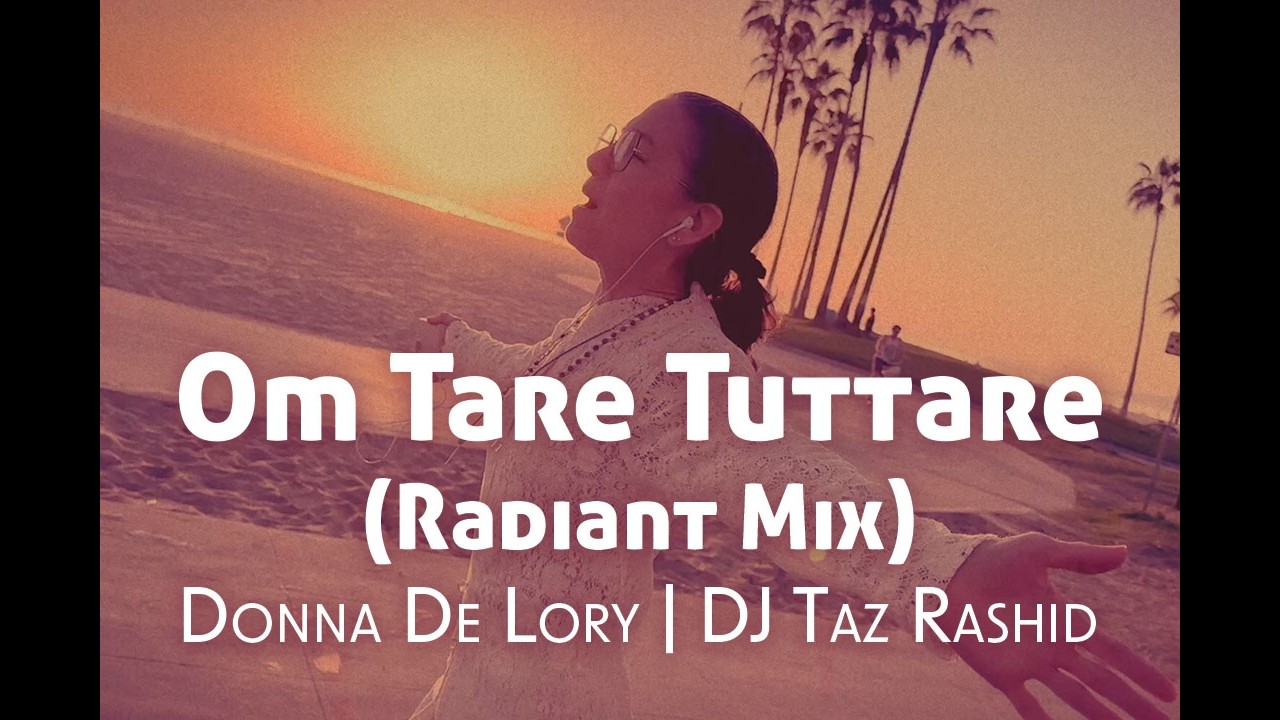
Donna De Lory's "Om Tare Tuttare (Atom Smith Mantra Flow Remix)" merges the sacred invocation to the Buddhist deity Tara with contemporary electronic sound design, creating a bridge between traditional Tibetan Buddhist practice and modern wellness culture. The track appears on her album Universal Light, part of a larger project called The Unchanging and Bonus Tracks, demonstrating how classical mantras can be reimagined through production without losing their spiritual efficacy or depth.
What is the Om Tare Tuttare mantra?
The mantra "Om Tare Tuttare" is a core invocation within Tibetan Buddhism, specifically directed toward Tara, the female bodhisattva of compassion and swift liberation. The Sanskrit phonetics break down as follows: "Om" (the universal sound of creation and consciousness), "Tare" (the name of the deity and a verb meaning "to liberate" or "to cross over"), and "Tuttare" (a form suggesting "the one who liberates from all fears").
Tara herself holds a unique place in Buddhist cosmology. Unlike some bodhisattvas depicted in meditative repose, Tara is characteristically shown in a pose of action, one leg extended as if ready to stand and assist practitioners immediately. She embodies the principle that enlightenment is not a distant goal but an immediate, accessible reality. The mantra is therefore not merely a prayer but an invocation of that active, compassionate energy within the practitioner's own being.
Recitation of this mantra traditionally serves multiple purposes: it cultivates devotion, invokes Tara's blessing for protection and liberation from suffering, and through the vibrational properties of the syllables themselves, works to align the practitioner's consciousness with the qualities represented by the deity. The practice assumes that sound carries transformative potential—a principle found across Hindu, Buddhist, and Sufi contemplative traditions.
How does Donna De Lory approach the remix?
De Lory, a Los Angeles-based vocalist and composer with decades of experience in both secular music production and spiritual music, brings her understanding of both worlds to the "Atom Smith Mantra Flow Remix." Rather than treating the mantra as a museum piece, she integrates the sacred Sanskrit invocation with contemporary electronic production, creating what might be termed a "mantra flow"—a musical form that emphasizes the rhythmic, melodic, and energetic dimensions of the chant.
The remix approach allows De Lory to strip away or reimagine accompaniment without compromising the integrity of the mantra itself. The original mantra—the core words and their pronunciation—remains the spiritual anchor, while production elements provide a modern sonic container. This strategy acknowledges a fundamental principle in Buddhist practice: the mantra's power derives not from period authenticity but from sincere recitation with clear intention.
By pairing the mantra with "Mantra Flow" production, De Lory suggests that contemporary listeners seeking spiritual practice need not choose between musical sophistication and authentic spiritual content. The track validates both impulses: the desire to engage with traditional Buddhist teaching and the preference for sounds that reflect contemporary aesthetic sensibilities.
Why remixes of spiritual music matter
The decision to create and release remixes of spiritual material—including bonus tracks on The Unchanging and Bonus Tracks—reflects a significant shift in how spiritual traditions are transmitted in the digital age. Rather than gatekeeping sacred material behind cultural or musical authenticity claims, producers like De Lory recognize that accessibility and relevance are themselves forms of respect for a teaching.
Remixing is not new to spiritual traditions. Bhakti Hindu music has long adapted the same devotional songs across folk, classical, and contemporary idioms. Sufi music transformed across Persian, Turkish, Arabic, and South Asian contexts. What has changed is the technological ease and global reach of remixing, alongside the expectation that spiritual content can and should exist in multiple sonic formats simultaneously.
The "Mantra Flow Remix" credit to Atom Smith acknowledges the producer's specific creative role while positioning the mantra itself as the primary spiritual element. This model—mantra + production credit—normalizes collaboration across genres and disciplines without diluting the authority of the source tradition.
How Tara practice connects to liberation themes
The repeated invocation of Tara's name in the mantra carries significance beyond poetic resonance. In Tibetan Buddhism, Tara is understood to exist in multiple color emanations (green Tara, white Tara, red Tara, etc.), each representing different aspects of awakened activity. Green Tara, the most commonly invoked in contemporary practice, is associated with swift action, protection, and the removal of obstacles. White Tara is linked to longevity and peaceful compassion.
When practitioners chant "Om Tare Tuttare," they are not making a petition to an external being but rather awakening those qualities of liberation (Tare, Tuttare) within their own awareness. The mantra is self-recognition: a statement that liberation is not foreign to one's nature but inherent and accessible. This explains why such mantras have remained central to Buddhist practice across centuries and cultures—they are technology for shifting consciousness from bondage-identification to freedom-identification.
De Lory's musical framing of this mantra—set in a contemporary sonic landscape—amplifies this immediacy. The listener is not directed toward a distant past or a transcendent realm but toward presence in the act of listening and chanting. The "flow" in "Mantra Flow Remix" suggests movement, presence, and direct engagement rather than reverent stasis.
Where to go from here
For those new to mantra practice, this track serves as an entry point. Listen repeatedly without need for analysis; the mantra works through accumulated exposure and sincere intention. If interested in deepening practice, explore the full album Universal Light and De Lory's other devotional compositions. Complementary practices include researching Tara iconography and the principles of Tibetan Buddhist visualization (though full visualization requires direct teaching from a qualified teacher).
For those already familiar with mantra, the remix approach invites reflection on how you relate to contemporary musical production in your spiritual practice. Does electronic accompaniment enhance or distract from your connection to the mantra? Does remixing diminish or amplify the teaching's accessibility? These questions have no universal answer but may clarify your own preferences and needs in spiritual sound.
De Lory's catalog—available through her website and streaming platforms—demonstrates the breadth of contemporary spiritual music production. Exploring her discography alongside traditional chanting resources offers a map of how one tradition is currently being transmitted to Western practitioners.