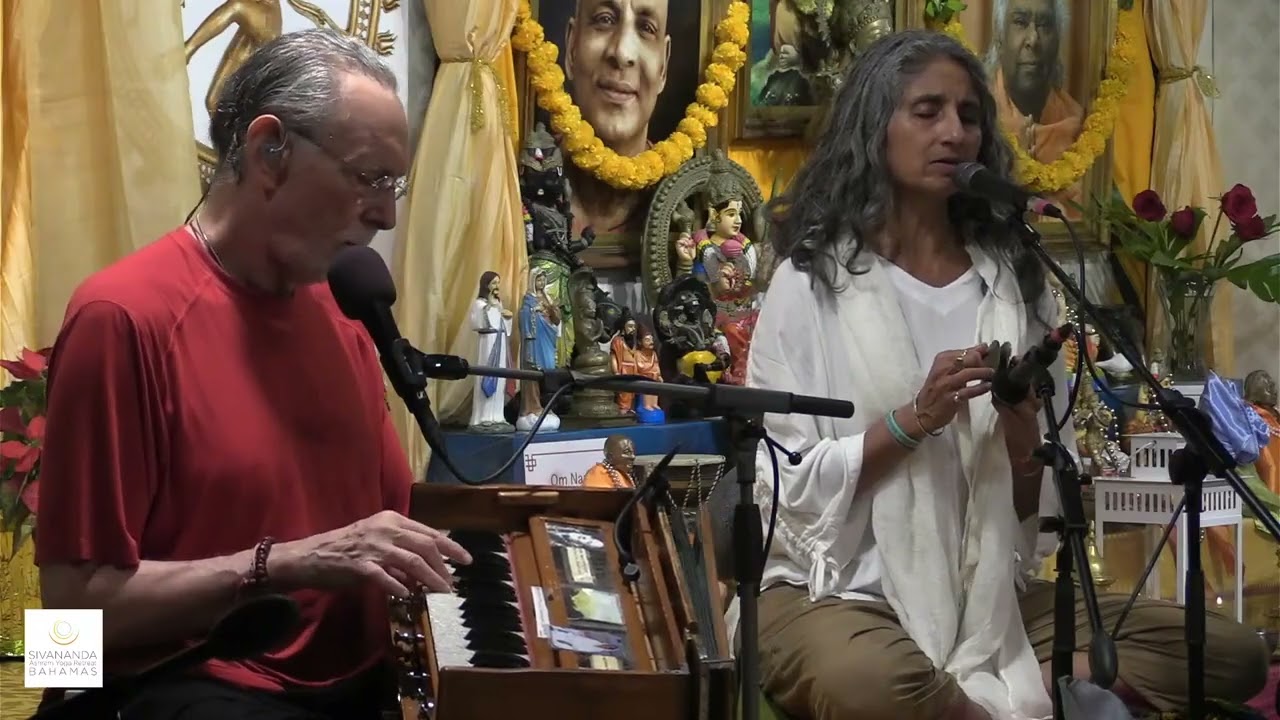
This kirtan session features Krishna Das leading call-and-response devotional chanting—a centuries-old Sanskrit practice designed to attune the nervous system and open the heart to states of love and unity. Through repeated mantra singing, participants engage a contemplative technology that dissolves the boundary between self and the divine, shifting consciousness beyond ordinary thought patterns into states of presence and connection.
What Is Kirtan and How Does It Work?
Kirtan is a participatory form of devotional singing rooted in Hindu and yogic traditions, where a lead vocalist (the kirtan leader) offers a mantra or call, and the community responds in unison. Unlike concert performances, kirtan is relational—it depends on the presence and engagement of participants to create its transformative field.
The practice operates on the principle that sound, particularly sacred Sanskrit syllables, carries vibrational and psychological effects. When repeated rhythmically in a group context, these chants are believed to activate specific energy centers in the body, calm the fluctuations of the mind, and open channels for devotional experience. Krishna Das, who has been teaching kirtan internationally for decades, brings a lineage-based approach to this practice, grounded in his study with the Hindu guru Neem Karoli Baba.
The structure of kirtan is simple but potent: a mantra (often names of the divine in Sanskrit, such as "Rama" or "Krishna") is introduced by the leader, then repeated call-and-response style with the group. Over time, the external chanting becomes internalized, and the practitioner's individual identity can dissolve into the rhythm and meaning of the words, creating what many describe as a meditative or trance-like state of unity consciousness.
Why Do Spiritual Traditions Use Chanting?
Chanting has been used across spiritual and religious traditions for millennia as a direct technology for altering consciousness and accessing states beyond ordinary thought. In the context of kirtan, chanting serves several functions simultaneously:
- Nervous system regulation: Rhythmic vocalization, combined with group sound, engages the parasympathetic nervous system (the relaxation response), lowering stress hormones and creating physiological safety for healing and opening.
- Mind stilling: By giving the mind a focused object—the mantra—practitioners move away from discursive thinking and into a state of concentrated attention, which classical yoga texts describe as essential for meditation.
- Heart activation: Devotional chanting, particularly when focused on divine names, is designed to cultivate bhakti—a state of loving devotion in which the ego softens and the heart opens to a sense of connection beyond personal concerns.
- Collective coherence: Group kirtan creates a shared sonic field; the unified sound and intention of many voices singing together generates a palpable energetic presence that amplifies individual experience and creates a sense of belonging and unity.
Krishna Das teaches that kirtan is not about intellectual belief or performance skill—it is about presence and surrender. The mantra is an invitation to release one's fixed identity and merge with something larger, whether understood as divine love, universal consciousness, or the unified field underlying existence.
What Mantras Are Used in Kirtan?
Kirtan typically focuses on the names of the divine in Sanskrit, each carrying specific resonance and meaning within Hindu philosophy and practice. Common mantras include "Hare Krishna," "Hare Rama," "Om Namah Shivaya," and "Gayatri," among many others. Each name is understood not as abstract theology but as a direct expression or invocation of divine qualities.
The repetition of these names is believed to attune the practitioner to the qualities they represent. "Rama," for example, is associated with divine joy and righteousness; "Krishna" evokes divine love and play; "Shiva" points to the unchanging witness consciousness underlying all phenomena. By chanting these names repeatedly, practitioners internalize their vibration and meaning, allowing these divine qualities to become present within their own consciousness.
The choice of mantra in a kirtan session often depends on the teacher's lineage and intention for that gathering. Krishna Das draws on his relationship with his guru and the needs he perceives in the group, selecting mantras that will resonate most deeply with the participants present.
How Does Group Singing Deepen the Experience?
While kirtan can be practiced alone, its power is exponentially amplified in group settings. When many people sing together with sincere intention, the individual nervous system synchronizes with the collective rhythm and intention, creating what researchers in sound healing and collective consciousness have termed "entrainment." This is not merely psychological; studies show that group chanting produces measurable changes in heart rate variability, brainwave frequency, and markers of emotional openness.
In a live kirtan session, participants often report experiences of profound peace, spontaneous emotional release, and dissolution of the sense of separation between self and others. This happens not through instruction but through the direct transmission of the teacher's presence, the power of the mantra, and the coherent field generated by collective singing.
Krishna Das has been a pioneering figure in bringing kirtan to Western audiences who may have no background in Hindu philosophy or Sanskrit. His approach emphasizes the universal human capacity for devotion and opening the heart, regardless of one's cultural or religious background. The mantra is a vehicle; the destination is the state of consciousness it opens.
What Is the Role of the Kirtan Leader?
The kirtan leader holds several roles simultaneously: musician, spiritual teacher, and energetic catalyst. Unlike a concert performer focused on entertaining an audience, a kirtan leader is responsible for holding the container of practice—creating safety, maintaining rhythm, tracking the energy of the group, and intuiting when to shift mantras, tempo, or intensity based on what he senses the group needs.
Krishna Das brings decades of experience in this role. His teaching is grounded in the lineage of Neem Karoli Baba, a Hindu saint who emphasized that the name of God (or the divine principle) is always available as a refuge and source of healing. Krishna Das' own journey—including his transformation from a musician seeking enlightenment through psychedelic exploration to a devotee finding it through chanting—gives his teaching credibility and warmth that attracts sincere practitioners across many spiritual backgrounds.
The leader's presence matters profoundly. As practitioners merge with the kirtan, they are also in a subtle field of transmission with the teacher. If the leader is genuinely present, open-hearted, and established in the experience being invoked, that state becomes contagious; participants naturally move toward it. This is why studying with an authentic teacher in this tradition is valued—the practice itself is straightforward, but the depth one can access depends significantly on the quality of presence and realization the leader embodies.
Can Kirtan Be Practiced Without Religious Belief?
One of the most profound aspects of Krishna Das' teaching is his insistence that kirtan does not require belief in any particular theology or doctrine. The mantra works whether one understands it as a call to a personal God, as a vibrational technology, or simply as a rhythmic focus for the mind and heart. What matters is presence, intention, and opening.
For many contemporary practitioners in the West, kirtan serves as a secular meditation practice—a way to quiet the mind, regulate the nervous system, and access states of peace and connection without requiring subscription to any dogma. For others, it functions as devotional prayer within their own spiritual or religious framework. Both approaches are valid; the practice is large enough to hold many understandings.
Krishna Das' teaching reflects this inclusivity. He speaks of the mantra as a "namegiving" of the infinite—not claiming to define what that infinite is, but simply inviting the practitioner to rest in the experience of boundlessness that the practice opens. This universality has made kirtan increasingly accessible to people of all backgrounds seeking practices that deepen consciousness and compassion.
Where to Go From Here
If this kirtan session with Krishna Das resonates, consider exploring the practice more deeply through attending live sessions, listening to recordings, or learning to lead or participate in kirtan in your own community. The practice deepens over time as the nervous system becomes more attuned to the mantras and the heart's capacity for devotion expands naturally.
You might also explore Krishna Das' teachings through his books, recordings, and interviews, which provide context for understanding how kirtan fits within the larger landscape of yoga, meditation, and consciousness practices. Many teachers in the Krishna Das lineage offer kirtan sessions and workshops worldwide, making the practice increasingly accessible.
Most fundamentally, kirtan is an invitation to stop, sing, and open the heart—to allow the mantra to do its work of dissolving separation and revealing the unity underlying all existence. It requires no preparation, no belief, and no previous experience. It only asks for presence and a willingness to be moved.