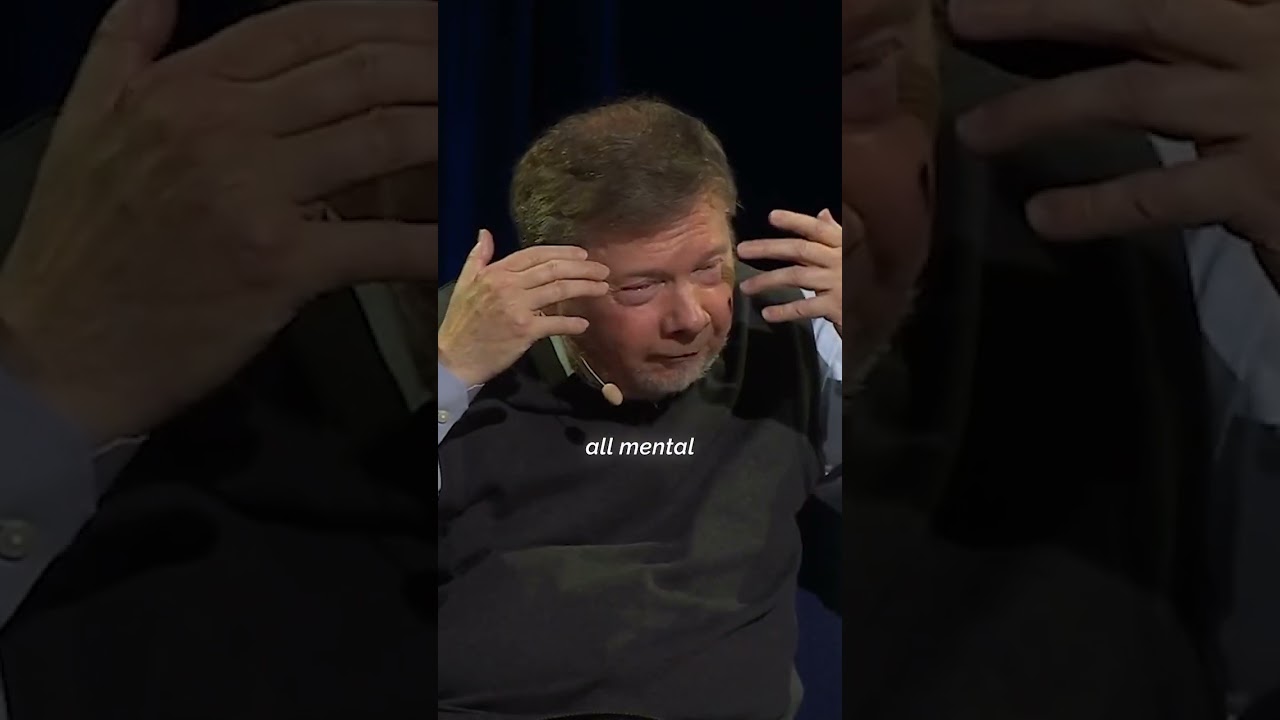
According to Eckhart Tolle's teaching, consciousness expands not through comfort but through difficulty. When life presents challenges that force you beyond your habitual patterns and comfortable existence, you access deeper dimensions of awareness. Growth is not something that happens in ease—it requires the friction, resistance, and pressure of difficult circumstances to activate consciousness and facilitate genuine transformation.
Why Does Difficulty Play a Role in Awakening?
The conventional narrative suggests that growth comes from positive circumstances, good fortune, and comfortable situations. Yet Eckhart Tolle's teaching inverts this assumption. Difficulty serves as a catalyst because it disrupts the ego's automatic patterns. When life is smooth and predictable, the mind continues operating on autopilot—repeating the same thoughts, reactions, and behaviors. Consciousness remains contracted, identified with the small self.
Difficulty breaks this trance. When you face a genuine challenge—loss, illness, conflict, or failure—the familiar strategies no longer work. Your habitual responses prove inadequate. In this gap between the old way and the new necessity, consciousness has space to emerge. The challenge essentially forces you to wake up, to become present, to access resources beyond your conditioned mind.
This doesn't mean suffering is good or that you should seek pain. Rather, when difficulty arrives—and it inevitably does—it carries an opportunity embedded within it. The awakening potential exists not in the difficulty itself but in how you meet it. When you stop resisting the challenge and instead turn toward it with awareness, the consciousness within difficulty becomes accessible.
How Does Resistance Prevent the Expansion of Consciousness?
Many people experience difficulty and immediately contract further, tightening around the problem, fighting against what is. This resistance—the mental struggle against reality—actually blocks the consciousness that the difficulty is attempting to awaken. When you say "this shouldn't be happening" or "this is unfair," you split your awareness between what is and what should be. This split is itself suffering, and it prevents the clarity that difficult situations offer.
The consciousness that awakens through difficulty emerges only when you cease the inner war with circumstances. This doesn't mean passivity or acceptance of harmful situations. Rather, it means meeting difficulty with a quality of presence and clear seeing rather than reactive struggle. When you stop fighting against the reality of the situation and instead look directly at what is required of you, you access a different dimension of consciousness—one that contains wisdom, capability, and insight unavailable to the reactive mind.
What Is the Relationship Between Comfort and Stagnation?
A life of uninterrupted comfort can become a prison of its own kind. Without the stimulus of challenge, the ego settles into predictability. The same patterns repeat, the same thoughts cycle through consciousness, and genuine development stalls. This is not harsh or punitive—it simply reflects how consciousness operates. Growth requires pressure, friction, the feeling of being stretched beyond what was previously possible.
This is why successful people often credit their greatest growth to their most difficult periods. The comfortable years, while pleasant, didn't demand anything new. The difficult years forced expansion. They had to learn new skills, develop new strengths, discover new aspects of themselves. The difficulty was the gift precisely because it was difficult.
How Does Rising Beyond What's Easy Create Consciousness?
When Tolle speaks of "rising beyond what's easy," he points to a specific shift in consciousness. The easy path is the path of least resistance—it's what your conditioned patterns naturally incline toward. To rise beyond it requires something more than habit. It requires conscious choice, presence, and a quality of being that transcends the automatic self.
In that rising, consciousness expands because you are no longer identified with the automatic mind. You are witnessing your own reactions, making deliberate choices, operating from a wider perspective. This is true consciousness—not the narrow band of conditioned thought but a larger awareness that can observe thought and choose differently.
The difficulty becomes the teacher. It shows you where your consciousness is still limited, where you are still identified with small self, where you still believe you need things to be a certain way to be okay. Each point of friction is an opportunity to expand beyond those limitations. As you do this repeatedly, across different situations and challenges, consciousness itself deepens and steadies.
Can Difficulty Be Approached as a Spiritual Practice?
Rather than waiting for difficulty to strike and then scrambling to respond, you can approach difficulty itself as a conscious practice. This means deliberately choosing challenges—not masochistically, but wisely. It means not avoiding discomfort when growth is on the other side of it. It means staying present with difficulty rather than immediately numbing or distracting from it.
When you face a difficult conversation, a challenging project, a physical limitation, or an emotional wound, you can meet it with the intention to stay conscious. This transforms the difficulty from something that happens to you into something you engage with deliberately. The result is accelerated growth and a deepening of consciousness that would not have occurred without your willingness to meet the challenge aware.
What Happens When You Stop Seeking Comfort as Your Primary Goal?
Much of modern culture is organized around the pursuit of comfort—avoiding pain, ease, convenience, pleasure. While comfort itself is not the problem, making it your primary goal creates a life organized around contraction rather than expansion. When comfort becomes your north star, you naturally avoid anything difficult, and in doing so, you avoid the very conditions that activate consciousness.
When you release the demand that life be comfortable and instead ask "what is this situation asking of me?" or "how is this difficulty asking me to grow?", your entire relationship to life shifts. Difficulty no longer feels like an intrusion or failure. It becomes the pathway through which consciousness naturally expands. You move from a defensive, contracted stance to one of openness and engagement with life as it actually is.
How Does This Teaching Apply to Specific Life Challenges?
Consider loss, one of the most universally difficult experiences. When you lose something or someone you love, the natural impulse is to contract, to resist, to demand that it not have happened. Yet in the space of grief, when you allow yourself to feel fully rather than numb yourself, a deeper consciousness often emerges. You become aware of what truly matters. You contact a part of yourself that loves beyond the small self. Your consciousness expands into dimensions it didn't access during comfort.
Or consider failure in work or relationships. The difficulty forces you to look honestly at yourself, to recognize patterns, to develop new capacities. The consciousness that emerges through working with failure is qualitatively different—and more real—than any achieved through constant success.
This principle applies across all domains: health challenges awaken consciousness about what your body actually needs, relational conflicts reveal unconscious patterns, financial pressure reveals where you've been living unconsciously. Each difficulty, when met with presence rather than resistance, becomes a teacher and an awakener.
Where to Go From Here
Reflect on your own experience. Where has difficulty led to genuine growth? When have you discovered capacities or awareness you didn't know you possessed? Often, these discoveries came not from comfortable moments but from times you had to rise beyond what felt easy.
Consider how you typically meet difficulty. Do you immediately resist and fight against it, or can you pause and ask what it's asking of you? Can you stay present with discomfort rather than contracting or numbing? These questions point toward a practice: the conscious meeting of difficulty. Not seeking it out unnecessarily, but when it arrives—as it inevitably does—meeting it as an opportunity for consciousness to awaken.