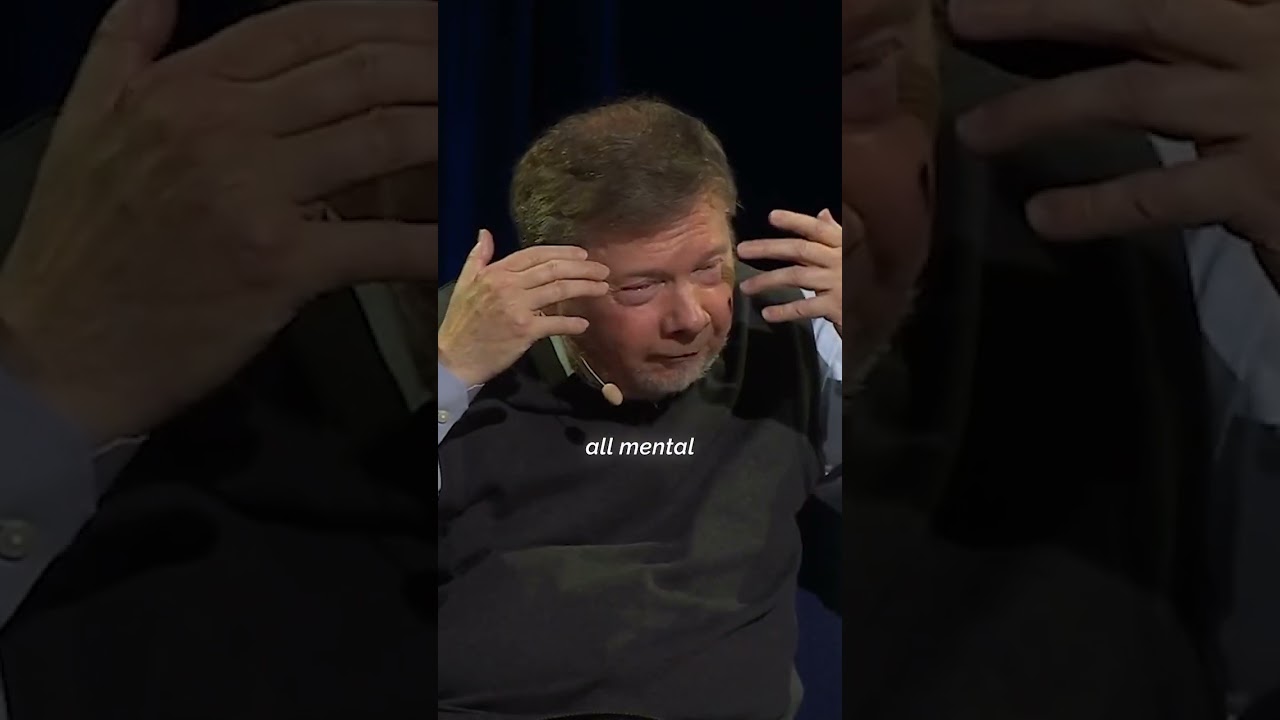
Eckhart Tolle teaches that while the thinking mind perpetually searches for certainty through knowledge, logic, and beliefs, the only truth that never changes is the simple, direct awareness of "I am"—the fundamental presence that witnesses all thoughts, emotions, and experiences. This presencing awareness transcends the mind's endless questioning and dissolves confusion at its root.
Why Does the Mind Crave Certainty?
The human mind is fundamentally a seeking mechanism. It evolved to solve problems, predict outcomes, and create narratives that make sense of the world. This survival function has a built-in hunger for certainty—the feeling that we know what's happening, what will happen, and who we are. Uncertainty triggers anxiety because it signals a lack of control to the ego-mind.
Tolle suggests that this relentless pursuit of certainty through thought, analysis, and accumulated knowledge is itself a trap. The mind collects information, forms beliefs, and constructs identities, always reaching for the next piece of data that will finally settle the question of "What is true?" Yet no amount of thinking ever arrives at a stable, unchanging answer. Beliefs conflict, knowledge becomes obsolete, and the self-concept fluctuates with circumstances and time.
What Does "I Am" Actually Mean?
The simple statement "I am" points to the most fundamental fact of conscious existence—that you are aware. Not aware of something in particular, but the bare fact of awareness itself. This is not a belief, a memory, or a thought. It is the direct, immediate knowing that you exist right now.
This "I am" is prior to all content of consciousness. It is present before and after every thought, emotion, sensation, and perception. Unlike the thinking mind, which constantly changes as it cycles through different thoughts and narratives, "I am" awareness is always here. It does not age, does not improve or degrade, and does not depend on circumstances. Whether you are in pain or pleasure, success or failure, asleep or awake, the basic presence "I am" continues unbroken.
How Is "I Am" Different From the Thinking Mind?
The mind operates through discrimination—separating subject from object, self from other, good from bad. This fragmentation is useful for practical living but creates a sense of separation and inadequacy. The mind asks: "Who am I?" and generates endless answers through memory, social roles, and achievements. Yet none of these answers are final because the mind itself is impermanent.
"I am" awareness, by contrast, is prior to all such divisions. It is not an answer to the question "Who am I?" but rather the fundamental consciousness in which all such questions arise and dissolve. When you rest in this presence without needing to know anything about yourself, all the neurotic seeking stops.
What Does It Mean That "All Questions Dissolve"?
Questions arise because the mind perceives a gap between what is known and what is unknown, or between what is and what is desired. This gap generates the constant mental activity of seeking, analyzing, and planning. But when consciousness shifts from identification with thinking to resting in presencing awareness, the urgency of questioning naturally subsides.
This doesn't mean you become intellectually incapable or lose access to knowledge. Rather, knowledge and thinking function without the overlay of existential anxiety. The questions "What is the meaning of life?" "Who am I really?" and "What should I do?" no longer demand an answer from the thinking mind because they dissolve into the living reality of presence itself. The answer is not conceptual but experiential: you are the awareness in which all experience occurs.
In this shift, the distinction between knower and known collapses. You are not separate from life, observing it and analyzing it from a distance. You are the aliveness itself, which requires no external validation or certainty to justify its existence.
How Can You Recognize This "I Am" Presence?
The invitation in Tolle's teaching is not to believe in "I am" awareness intellectually, but to notice it directly. Right now, before you think about it, you are aware. That bare fact of awareness is always accessible. It is not hidden or difficult to find because it is what you are.
Many contemplative traditions call this the "witness consciousness" or the "self-aware presence." It is the awareness behind your eyes, the sense of "I" that is present even when your mind is quiet. Unlike thoughts, which come and go, this presence is steady. Unlike emotions, which rise and fall, this awareness remains constant.
The recognition of this presence often comes through relaxing the mind's grip rather than through effort. When you stop trying to think your way to certainty, when you pause the internal commentary and simply rest in the awareness that is aware of the pause, you are directly acquainted with what Tolle points to. This acquaintance is more reliable than any belief because it is self-evident and self-validating.
What Happens When You Stop Seeking Certainty?
When the mind's desperate search for certainty quiets, a natural shift occurs. Anxiety decreases because anxiety is fundamentally the ego's protest against the unknown. Without the constant demand for certainty from thought, you relate to life more naturally. You respond to what is actually happening rather than to the mental story about what is happening.
This does not lead to passivity or recklessness. Practical intelligence and appropriate action flow more easily from a mind that is not contracted by the need to be certain. When you are not defending a fixed identity or seeking external validation, your energy is available for genuine engagement with life.
Moreover, the shift from mind-based certainty-seeking to presence-based awareness often brings a sense of peace that does not depend on external circumstances. This is because "I am" awareness is intrinsically whole. It lacks nothing. The seeking was always rooted in the false sense that something is missing and must be found. In presence, that fundamental incompleteness dissolves.
Where to Go From Here
Tolle's teaching invites direct experimentation rather than belief adoption. The next time you notice your mind urgently seeking certainty—through worry, planning, analysis, or decision-making—pause and simply notice that you are aware of this mental activity. That noticing is the "I am" awareness itself. Rest in that awareness for a moment without trying to think your way further. Notice how the urgent quality of the seeking softens when consciousness is not completely identified with the thinking mind.
Over time, this recognition deepens naturally. The "I am" presence becomes more familiar, not as a goal achieved but as an ever-present reality that was overlooked while attention was trapped in thought. As this familiarity grows, the compulsion to seek certainty through the mind loses its grip, and life begins to flow with less resistance and more authenticity.