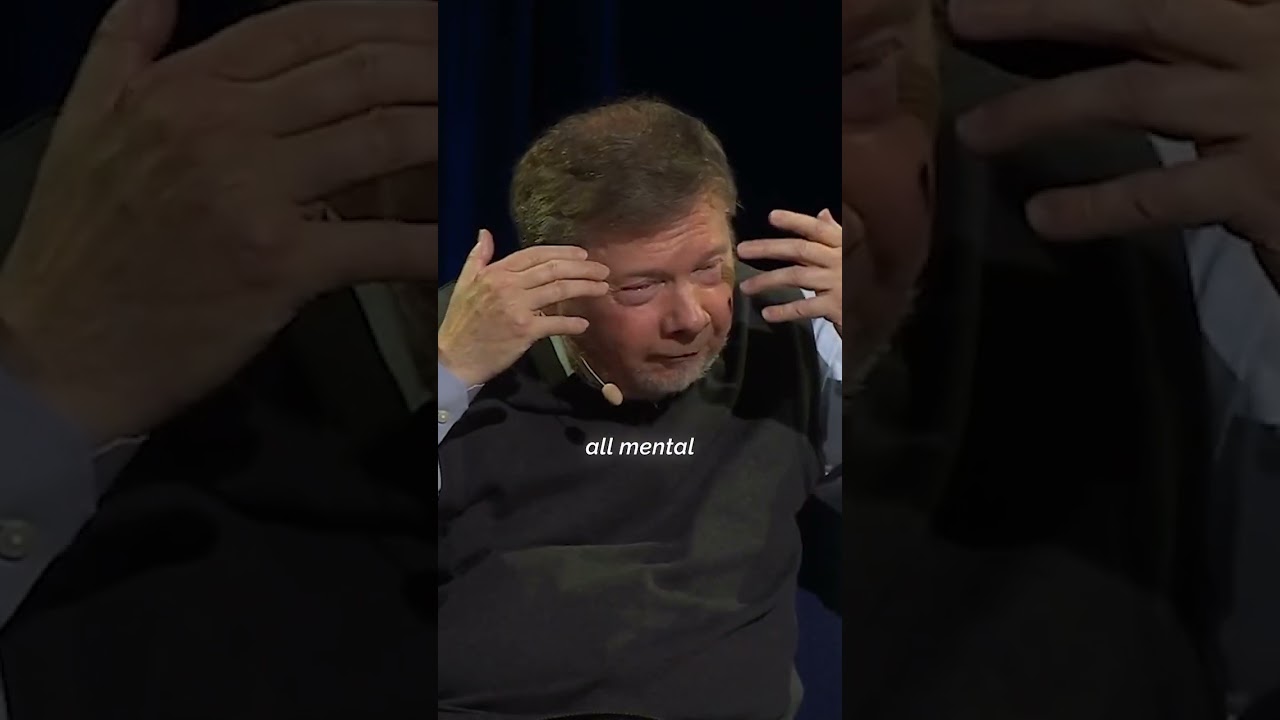
Most of us live from a constructed identity—the personality shaped by body, mind, conditioning, and memory. Yet beneath this surface layer exists a deeper essence: still, aware, formless presence untouched by thought. Eckhart Tolle explains how awakening occurs when we recognize and shift into this truer sense of self, which was always already here but obscured by constant mental activity and identification with form.
What Is Your Surface Identity?
The identity most people take as "me" is fundamentally constructed. It arises from the body—its appearance, age, sensations, attractiveness in the eyes of others. It arises from the mind—the accumulated thoughts, memories, beliefs, and stories we tell ourselves about who we are. It includes our personality: the habitual reactions, preferences, and ways we present ourselves to the world. This identity is shaped by family conditioning, cultural messaging, past experiences, and the relentless narration of the thinking mind.
This surface identity feels real and solid because it has continuity. The same body wakes up each morning. The same stream of thought continues, often picking up mid-story from yesterday. Memories connect one moment to the next, creating a sense of an "I" that persists through time. We invest heavily in this identity—we defend it, promote it, fear its dissolution, and spend enormous energy maintaining and improving it.
Yet this surface self is ultimately unstable and incomplete. It depends entirely on external conditions: the body ages and decays, thoughts arise and pass away, memories fade, and circumstances constantly shift. When we base our sense of self solely on these changing forms, we live in a perpetual state of vulnerability. We are always at risk of losing what we cling to, always anxious about maintaining our image, always seeking validation from a world that cannot ultimately provide it.
Where Is Your True Being Located?
Beneath the personality, thoughts, and bodily sensations exists something fundamentally different: a presence that does not change. This is not something you think about or become aware of through mental effort. Rather, it is the very awareness itself—the silent, spacious knowing in which all experience occurs.
Tolle points to a dimension of existence that is still. Not still in the sense of absence or blankness, but still in the sense of not moving, not becoming, not struggling. This dimension is prior to and independent of thought. While thoughts arise and pass, while the body moves and sensations change, this awareness remains untouched. It is sometimes called the "I Am"—not the "I am this" or "I am that," but the bare sense of presence, of being aware.
This true identity is beyond form. Form is what changes: the body, thoughts, emotions, circumstances. But the aware presence in which form appears is formless. It has no qualities that can be pinned down or described. Any description—spacious, peaceful, still—is already a thought, already a pointer to something that transcends language. The true self cannot be objectified, because it is the subject, the very witnessing awareness that experiences all objects.
What is striking about this deeper essence is that it has always been present. You have never been without it for a single moment. Even now, in this very reading, there is an aware presence taking in the words, sensing the body, aware of emotions or thoughts. This presence was here during your childhood, during sleep, during every moment of your life. But most of us never recognize it, because we are hypnotized by the content of consciousness—the constant parade of thoughts, sensations, and experiences—rather than aware of consciousness itself.
How Does Awakening Happen?
Awakening is not achieving something new or traveling somewhere else. It is recognition—a fundamental shift in where you place your sense of self. Instead of residing in and identifying with thoughts and the body, you recognize and rest in the still awareness that was always already present.
This recognition typically does not happen through more thinking. In fact, more thinking typically obscures it, because the mind is preoccupied with itself. Awakening often begins with a pause in thinking—a gap, a moment when the thought-stream stops. In that gap, the background of awareness becomes apparent. You notice: there is presence here. There is something aware, even without any thought happening. This is often experienced as surprising, even shocking, because it is so contrary to the habit of identifying exclusively with the mind.
Sometimes this recognition is triggered by crisis or suffering. When life circumstances strip away the normal supports and distractions—when illness, loss, or upheaval make the surface identity's fragility undeniable—there is a natural opening to something deeper. The usual ways of seeking happiness through success, possessions, or validation become revealed as insufficient. In that vulnerability, attention can turn toward what remains: the bare fact of being alive, of existing, prior to any storyline about what that existence means.
Other times, awakening occurs through simple noticing. You observe the stream of thought and realize: "I am aware of thoughts, but I am not those thoughts." You notice sensations in the body and realize: "I am aware of sensations, but I am not limited to them." This discrimination between the content of consciousness and consciousness itself is the beginning of true understanding. It opens the possibility of resting as the aware presence, rather than clinging to and identifying with the ever-changing forms that consciousness contains.
What Changes When You Identify With Your True Self?
When identity shifts from the surface self to true being, the entire quality of existence transforms—not because external circumstances necessarily change, but because your relationship to them changes.
The constant anxiety of protecting and promoting a fragile ego diminishes. If your sense of self is no longer dependent on the body remaining young, or on achieving certain things, or on others approving of you, then you are no longer in a state of perpetual threat. You can still take care of the body, achieve goals, and be kind to others—but from a place of freedom rather than fear. The desperation falls away.
Suffering loses its grip. Suffering occurs when we resist what is happening, when we tell ourselves the story that things should be different. But when identity is rooted in the changeless presence that underlies all experience, even difficult experiences can be met with acceptance. Pain may arise, but the need to struggle against it, to make a drama of it, becomes optional. There is space around the experience. You are no longer completely identified with it.
Relationships deepen because you are no longer using others as mirrors to validate your surface identity. You can see others as they actually are, not as characters in your personal story. Presence becomes possible—genuine meeting with another person, rather than ego defending itself against ego.
Life becomes simpler because the exhausting project of becoming someone or proving something relaxes. You begin to act from what is needed in this moment, rather than from the desperate scripts of the false self. There is a natural intelligence and responsiveness that emerges when you are not consumed by thoughts about yourself.
How Do You Recognize the Difference in Practice?
The shift from surface to true identity is not merely philosophical—it is immediately verifiable in direct experience. When you are identified with thoughts and personality, you are typically caught in mental time: past regrets and future anxieties dominate. You are in a state of doing, becoming, striving. You feel separate from others, from nature, from the moment itself.
When you recognize and rest in true being, attention shifts to the present moment. The thinking mind quiets—not by suppression, but by a natural relaxation of the grip it holds. You notice the body more vividly: the texture of what you touch, the rhythm of breath, the play of sensations. There is a sense of openness, of space, of okayness with what is. Even difficulties are held in a larger context of awareness that is not troubled by them.
This is not a permanent achievement you reach once and keep forever. Most practitioners find that the mind's habitual patterns reassert themselves, and identification with thoughts and personality returns. But each time you notice this and return to presence, to the still awareness beyond thought, you are deepening the recognition. Over time, there is a gradual settling into true being as the primary sense of self, and the surface identity becomes less tyrannical, less compelling.
What Is the Practical Value of This Understanding?
Recognizing the distinction between surface and true identity addresses the fundamental human problem: a sense of lack, incompleteness, and anxiety rooted in identification with a form-dependent self. As long as you believe you are the body-mind, you are inherently in jeopardy. That form will age, suffer, and die. No amount of enhancement or achievement can change that basic vulnerability.
But when you recognize yourself as the formless awareness in which all form appears, a profound relaxation becomes possible. You still inhabit and care for the body, you still engage in life—but from a foundation that cannot be shaken. The very peace and wholeness that the surface self desperately seeks through endless striving is found already to be your nature, your deepest identity.
This is not escapism or denial of the world. Rather, it is the most practical realism: you are being held in existence by something infinitely more stable and real than the fragile personality. When you are rooted in that, you can engage fully with life without the neurotic need to control everything or the despair when you cannot.
Where to Go From Here
The invitation implicit in this teaching is to investigate directly: What is aware right now? Not as a belief or concept, but as an immediate, lived recognition. Pause the mental narrative for a moment. Notice: there is awareness present. Notice the body, the breath, the space around you—without the mind needing to say anything about it. That noticing itself, that bare awareness, is what Tolle is pointing toward.
From there, you can begin to distinguish between the content of consciousness and consciousness itself. What arises and passes away? Thoughts, sensations, emotions, perceptions. What remains constant? The aware presence in which all of it occurs. Begin to rest attention there, to familiarize yourself with that dimension of yourself.
This is not a onetime realization but an ongoing deepening. Each moment offers a fresh invitation to wake up from identification with form and recognize the still presence that you fundamentally are. That recognition is the beginning of freedom.