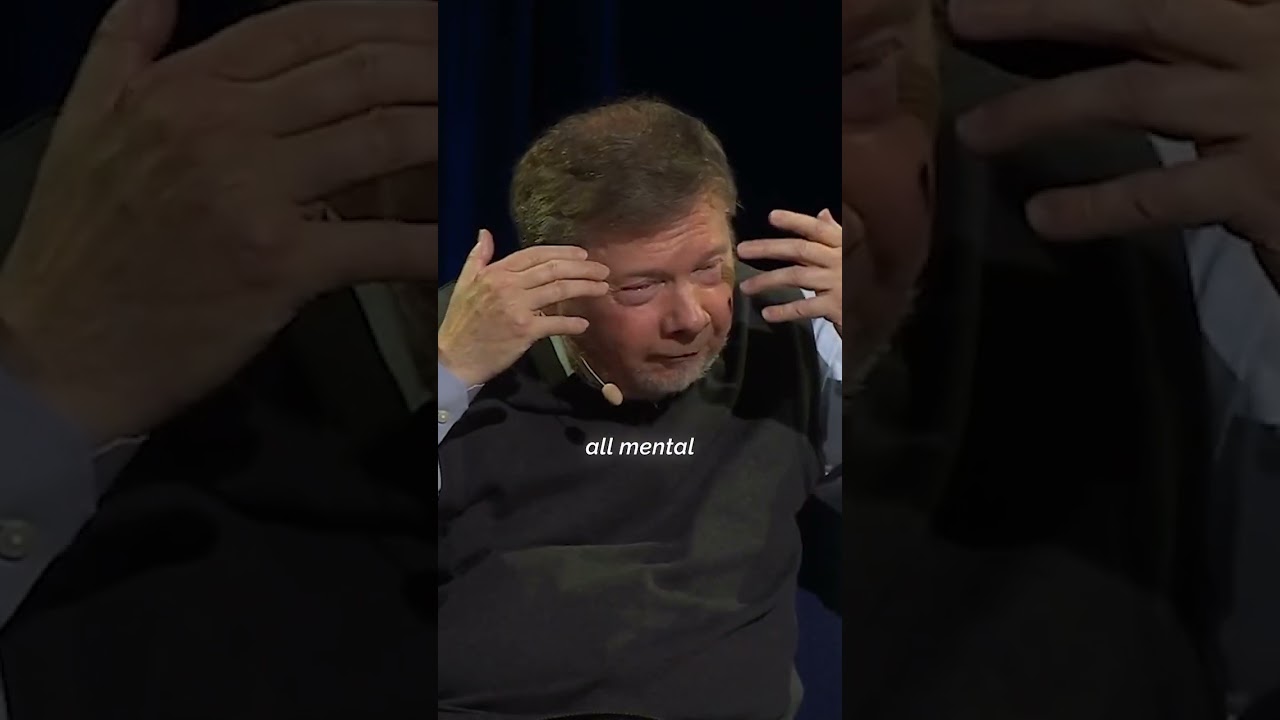
In this teaching on the paradox of time, Eckhart Tolle examines the paradoxical nature of spiritual awakening—that we each awaken to the present moment in our own time, and that readiness for realization unfolds as we mature and grow. He argues that true understanding of the Now is not merely an intellectual idea but a felt experience that transcends the thinking mind, and explores how we can shift from conceptual knowledge about presence to living the direct experience of timeless awareness.
Why Does Readiness for Awakening Change Across Your Life?
One of the central insights Eckhart Tolle emphasizes in this teaching is that spiritual readiness is not static. Our capacity to receive and understand teachings about the present moment evolves as we move through different phases of life. What may seem impossible or irrelevant to grasp at one stage becomes accessible and vital at another. This is not because the teaching changes, but because our lived experience—our suffering, our joy, our encounters with loss and transformation—progressively opens us to deeper layers of understanding.
This evolution of readiness is worth taking seriously. Many people encounter the message of presence early on, perhaps through reading or hearing about the power of the Now, yet it remains mostly intellectual. The words make sense, but there is no embodied recognition. Later, perhaps through crisis, loss, or sustained practice, the same teaching suddenly becomes alive—not as an idea, but as a direct knowing. This shift from concept to experience is where true awakening begins.
How Does the Mind Prevent Direct Experience of the Present?
A striking theme in Tolle's work is the relationship between the thinking mind and presence. He uses language that reflects this challenge: our habitual identification with thought and the voice in our head obscures our access to the timeless dimension that exists beyond time and space. The mind, valuable as it is for certain functions, is fundamentally rooted in time—it trades in past and future, in narratives and judgment.
When you are identified with the voice in your head, you are locked in a temporal existence. You are reliving the past or rehearsing the future. Breaking free from this identification means recognizing the thinking mind for what it is: a tool, not the totality of who you are. Behind the voice, beneath the stream of thoughts, there is a dimension of awareness that is not bound by time, that does not need the past to know itself.
This is why intellectual understanding of presence, while useful as a starting point, is insufficient. You can read every word Tolle has written or hear every concept about the Now, yet remain trapped in thought-identification. True realization requires a shift in where your sense of self is anchored. It requires learning to rest as awareness itself, rather than as the stream of mental content.
What Is the Paradox of Time That Awakening Reveals?
Tolle uses a striking analogy in this teaching: time is like a criminal we never catch. This captures something essential about the nature of time and our relationship to it. Time is never truly here—the present moment is always just beyond our grasp if we approach it through thought and the mind's temporal mechanisms. We speak of "the present," but by the time we think about it, it has already passed into the past.
This paradox gets to the heart of why awakening cannot be achieved through more thinking or more effort in the conventional sense. The more you chase presence as a goal to be achieved in the future, the more you perpetuate the very structure of time and seeking that keeps you bound to temporal consciousness. Awakening, then, is not a future achievement but a shift in awareness happening now—a recognition of the timeless presence that is already operating as your deepest nature.
The paradox resolves itself not through solving the problem intellectually but through a fundamental reorientation of where your sense of self is located. When you are truly present, you are not thinking about presence. You are not trying to catch time. You are simply aware, moment by moment, of what is.
How Can You Move Beyond Intellectual Understanding to Lived Presence?
One of the most practical insights Tolle offers is that the shift from understanding to experience is essential. Many spiritual seekers get stuck in the realm of ideas. They understand the philosophy of presence; they can articulate why being in the now is important; they know all the arguments. Yet this knowledge has not fundamentally altered how they actually exist from moment to moment.
Making this transition requires what might be called a felt shift. It means moments of actually being present—not thinking about presence, but being it—and allowing those moments to accumulate and deepen. These moments often come not from intense effort but from relaxation, from letting go of the demand that you be enlightened. They come when something—a moment in nature, a moment of genuine listening to another person, a moment of crisis that strips away all pretense—brings you into direct contact with the now.
The teaching points to the importance of sensing the timeless awareness that is always here, not as a future acquisition but as something you can become conscious of right now. This sensing is a felt experience. It has a quality to it—a sense of presence, an alive awareness that is not dependent on what you are thinking about.
Why Is Awakening About More Than Just Understanding Ideas?
Tolle emphasizes that true realization is more than an intellectual idea. It is a transformation in the mode of consciousness itself. An intellectual idea exists in the realm of thought; it can be entertained, debated, and forgotten. But awakening is a change in the very ground from which you perceive and act. It is a shift in your sense of being.
This distinction matters because it explains why two people can hold identical beliefs about the power of the Now, yet one lives from that understanding and one does not. One has moved from ideas about presence into presence itself. The other remains in the realm of concepts about consciousness while consciousness itself remains unaltered in their actual experience.
This teaching suggests that if you find yourself stuck at the level of understanding, that is not failure—that is part of the unfolding. It may be exactly where you need to be at this stage of your journey. The readiness for something deeper will emerge in its own time, through its own conditions. But awareness of this gap between understanding and being is itself valuable. It points you toward the real work: not accumulating more knowledge, but allowing knowledge to dissolve into direct experience.
What Does It Mean to Experience a Dimension Beyond Time and Space?
At the heart of this teaching is an invitation to contact something that exists beyond the ordinary temporal consciousness we inhabit most of the time. This dimension is not mystical or distant—it is available now. It is the ground of awareness itself, the context in which all experience arises. When Tolle speaks of a dimension of reality beyond time and space, he is pointing to consciousness itself, liberated from identification with thought and its temporal structures.
In this dimension, there is no past or future pressing in on the now. There is no narrative self telling a story about who you are. There is only immediate presence, a kind of spacious awareness that is aware of experience without being trapped in it. This is described as timeless because time—past, present, future—is a construct of thought. Beyond thought, these categories dissolve.
Contacting this dimension is not about achieving some extraordinary state but rather about recognizing what is already true about consciousness itself. You have always been aware. Awareness has always been operating. The shift is in recognizing your true nature as awareness rather than as the content of mind.
Where to Go From Here
If this teaching resonates, the invitation is to experiment with presence in your own direct experience. Rather than taking it as doctrine, test it: notice moments when you are truly present, when the voice in your head has quieted and you are simply aware. What is that like? What is the quality of that awareness?
Practice, too, the simple act of sensing that you are aware. This is not thinking about awareness but the direct sense of being conscious. As you rest in this sense, noticing the thoughts that arise without identifying with them, you may find that presence becomes less of an idea and more of a lived reality. The readiness within you for this deeper understanding will unfold in its own time—but the possibility is here now.